Adult orthodontics · Taepyeong, Seongnam

Adult Orthodontics near Taepyeong Station, Seongnam

Adults can have orthodontic treatment, and there is no age limit.

₩2.5M–₩7MInvisalign
₩2.8M–₩3.2MMetal, combination or ceramic braces
₩3.6MClippy-C self-ligating braces
No age limitAdult treatment
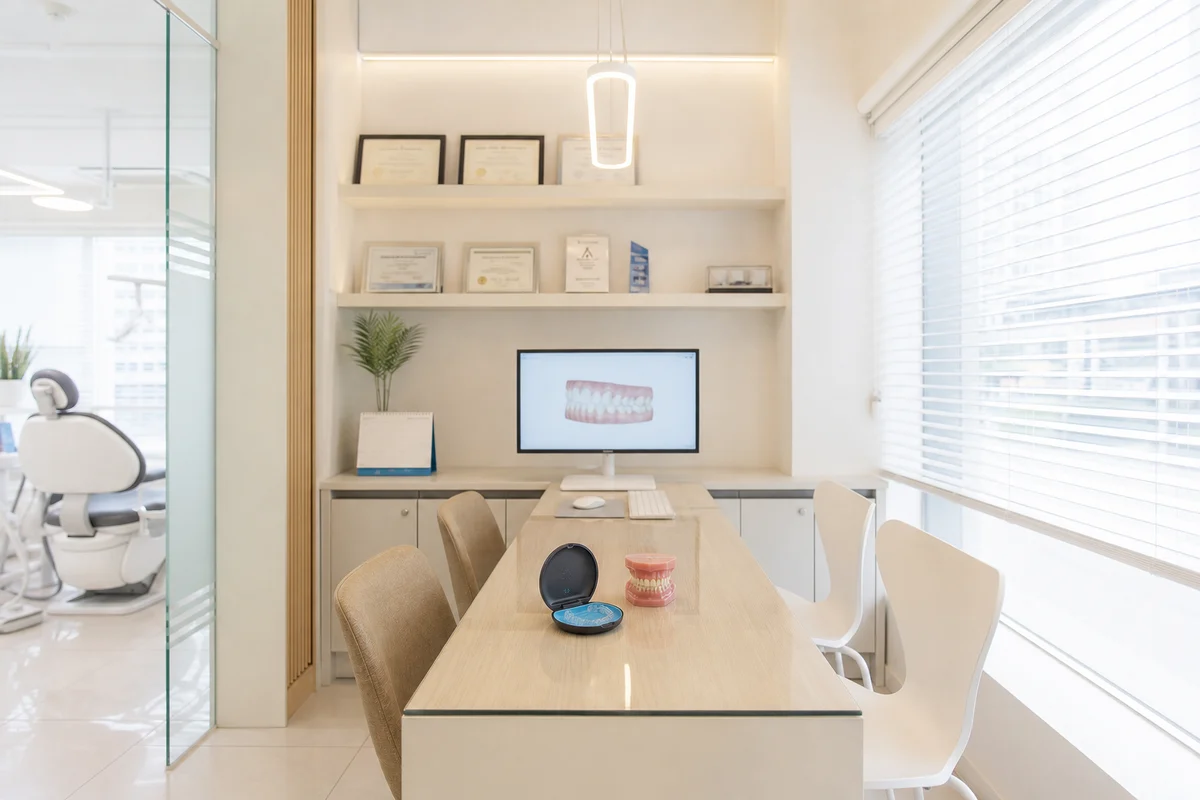
The two clinic directors reviewing a treatment plan on a tablet

Ask about Adult Orthodontics

Tap what fits — your message is prepared for you. Nothing is sent until you press send.

Send opens your email app addressed to theseouldc@naver.com. Prefer chat? KakaoTalk channel · Instagram DM · or call +82-31-757-1525.

The short answer

Adults can have orthodontic treatment, and there is no age limit. Options at the clinic include Invisalign (₩2.5M to ₩7M), metal braces (₩2.8M), combination braces with ceramic upper and metal lower brackets (₩3.1M), ceramic braces (₩3.2M) and Clippy-C self-ligating braces (₩3.6M). Whether you need full or partial treatment is decided after examination, and the health of your teeth and gums matters more than your age.

Is It Too Late for Braces?

No. Teeth can be moved at any age as long as the teeth and gums are healthy enough. Many adults choose treatment later in life for crowding, gaps, a bite that feels wrong or teeth that have shifted over time.

The difference for adults is that gum health and existing dental work matter more. Fillings, crowns, missing teeth and gum problems can affect the plan, so the dentist checks these first and may treat them before or during alignment.

Results and timing depend on your case, so ask for a personal assessment rather than relying on general claims. Adult bone is fully grown, which means the jaw cannot be guided as it can in a child, and some bite problems have limits that your dentist should explain plainly.

Teeth that moved after braces in the past, or after losing a tooth, are common reasons adults return. If you wore braces as a teenager and stopped wearing a retainer, a short assessment can show whether a smaller correction is possible.

  • Healthy gums and enough supporting bone are the key conditions.
  • Existing crowns, bridges and implants affect the plan but do not rule treatment out.
  • Tell your dentist about medicines and health conditions at the start.
Adult Orthodontics: how the treatment is planned

Adult Orthodontics for Taepyeong, Moran, Sujin and Bundang Residents

Orthodontic treatment means regular visits over many months. Being close to home or work helps. The clinic is by Taepyeong Station Exit 5 in Sujin-dong, reachable from Moran and Sujin on Line 8 and from Bundang by the Suin-Bundang Line.

If you are an expat who may move away during treatment, mention it at the first consultation so the plan can be made realistic. Opening hours are Mon–Wed 09:30–20:30, Thu 09:30–19:00, Fri 09:30–18:30 and Sat 09:30–13:00, with no lunch break; the clinic is closed on Sundays and open on public holidays.

Living in Korea as a foreigner, you may also worry about how to communicate during a long treatment. English consultation is available, so you can ask what each step involves, report problems clearly and understand your plan. Use a map app to plan your route; we do not quote travel times.

Full vs Partial Orthodontics

Full orthodontics moves the whole set of teeth and corrects the bite. Partial orthodontics works on a limited area, usually the front teeth, to improve alignment or close a small gap.

Partial treatment suits only some patients. If the bite itself is the problem, it is generally not enough. The dentist will tell you which is appropriate after examining your teeth and bite.

People often ask for partial treatment because they hope it will be shorter or cheaper. That can be true when the problem is small, but a limited plan applied to a bite problem can leave you unhappy. A fair assessment says plainly which group you are in.

  • Full: whole arch, bite correction
  • Partial: limited area, mainly the front teeth
  • Your dentist decides which fits your case
FullPartial
Area treatedWhole arch and biteLimited area, mainly front teeth
Typical aimAlignment and bite correctionTidy small crowding or close a small gap
SuitsBite problems, moderate to complex crowdingMild, cosmetic concerns with a sound bite
Decided byYour dentist after examinationYour dentist after examination

Treatment Options

Adults usually choose between clear aligners and fixed braces. Each has trade-offs in visibility, comfort, cleaning and what problems they can fix.

Appearance often drives the choice. Clear aligners are less visible, while fixed braces stay in all day without relying on you to wear them. Ceramic brackets are a compromise, being less noticeable than metal. Retainers after treatment are important with every method.

₩2.5M–₩7M

Invisalign

Removable clear trays. Less visible and easier to clean around, but they only work if worn as instructed. Suits many mild to moderate cases; your dentist advises on yours.

₩2.8M–₩3.2M

Metal or ceramic braces

Brackets fixed to the teeth. They work all day without relying on you, and offer strong control. Ceramic is less noticeable than metal. Metal braces are ₩2.8M, combination braces (ceramic upper, metal lower) ₩3.1M and ceramic braces ₩3.2M.

₩3.6M

Clippy-C self-ligating braces

A built-in clip replaces elastic ties. Some people find them easier to clean around; your dentist explains whether they suit your plan.

₩100K–₩200K

Retainers

Worn after treatment to hold the new position. Teeth can drift back without them, so plan for retainers from the start. Fixed retainers are listed at ₩100,000 to ₩200,000 and removable retainers at ₩150,000 to ₩200,000.

Cost Overview

Published non-covered fees are shown below. VAT may apply, and the final fee depends on the plan agreed at consultation.

Total cost can also include retainers, check-ups and any dental work needed beforehand, such as treating decay or gum problems. Ask for the whole plan in writing.

OptionPublished fee
Invisalign₩2,500,000 – ₩7,000,000
Metal braces₩2,800,000
Combination braces (ceramic upper / metal lower)₩3,100,000
Ceramic braces₩3,200,000
Clippy-C self-ligating braces₩3,600,000
Orthodontic diagnosis₩100,000
Fixed retainer₩100,000 – ₩200,000
Removable retainer₩150,000 – ₩200,000

Price list as published; confirm at consultation. The Invisalign range reflects differences in case complexity.

Your Treatment Path

Every plan is individual, but most adult cases follow a similar order. Your dentist will give you the details for your own treatment.

Examination and records

Teeth, gums and bite are checked, with X-rays and photos. Any decay or gum problem is noted.

Plan and written quote

Options, limits, expected visit pattern and cost are explained in English, and you receive the plan in writing.

Active treatment

Aligners or braces move the teeth with regular check-ups. Tell the clinic early if something breaks or feels wrong.

Retainers

Retainers hold the result. Wearing them as advised is what keeps the teeth where they are.

Questions to Ask at Your Consultation

Prepare a short list of what you want to change and what worries you. You can send it in English before the visit.

If you may leave Korea during treatment, say so on the first visit. The plan, the type of appliance and the retainer arrangements can then be chosen with that in mind.

  • Do I need full or partial treatment, and why?
  • Which option do you suggest for my teeth, and what are the limits?
  • How often are the visits, and what happens between them?
  • What is the total cost, including retainers and check-ups?
  • Do I need any dental work before starting?
Clinical case

A case from the clinic

Orthodontics

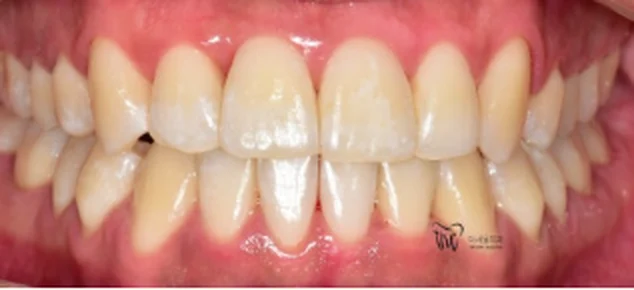
Crowded, protruding front teeth treated with Invisalign without extractions

Treated by Dr. Hyeonjoon Park

BeforeBefore: Crowded, protruding front teeth treated with Invisalign without extractions
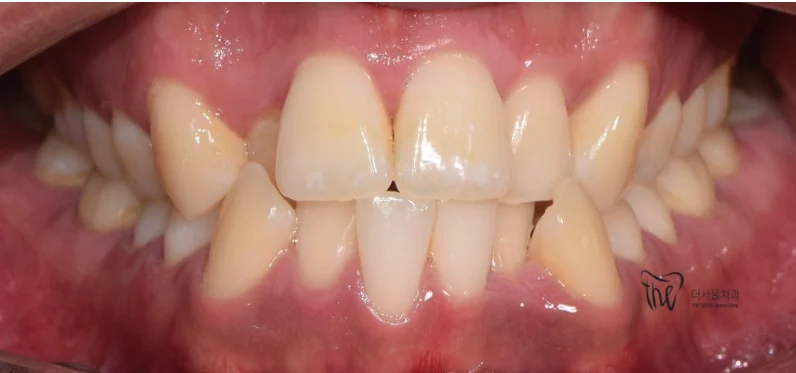
AfterAfter: Crowded, protruding front teeth treated with Invisalign without extractions
Front view before and after treatment
BeforeBefore: Crowded, protruding front teeth treated with Invisalign without extractions
AfterAfter: Crowded, protruding front teeth treated with Invisalign without extractions
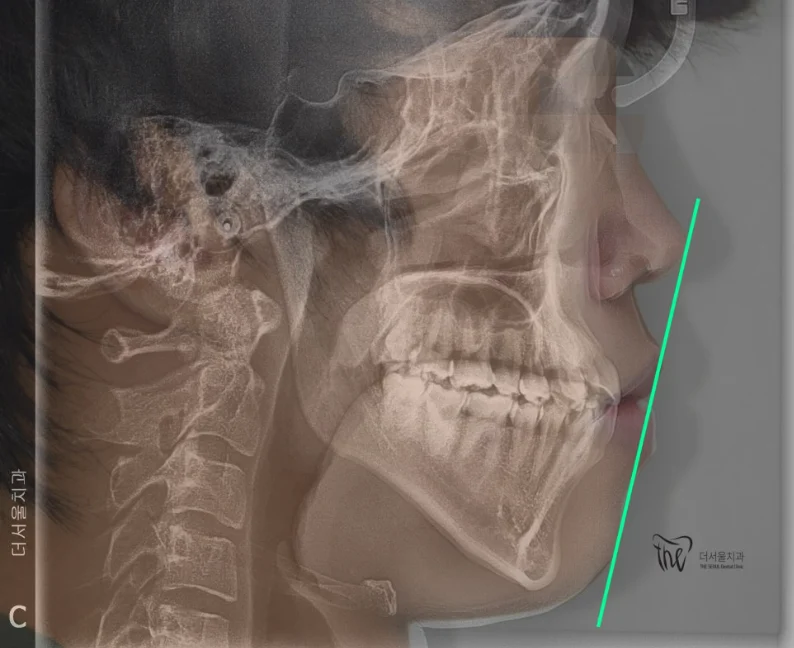
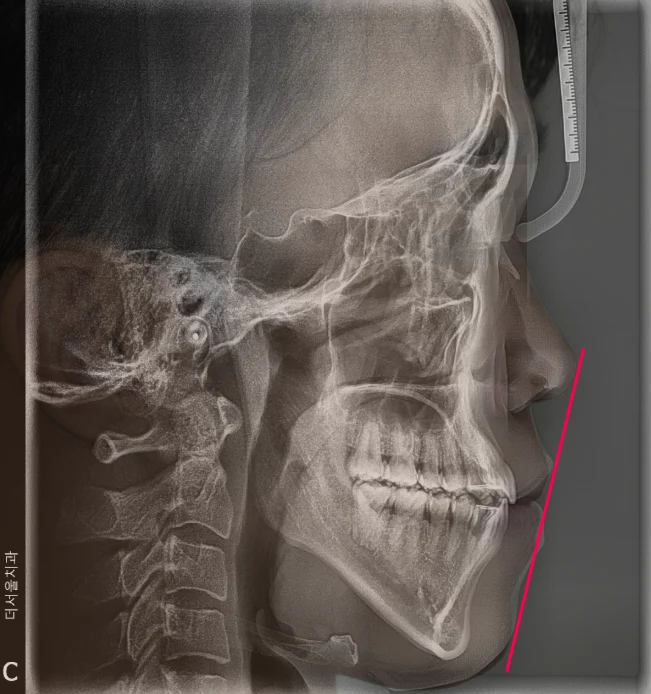
Lateral cephalometric X-rays before and after: lip position against the aesthetic line

Why the patient came in

The patient came in for a protruding mouth and crooked teeth. The front teeth were severely crowded and tilted inward, the dental arches were narrow, and the lips were strained when closed. Crowding like this also makes thorough brushing difficult.

What was done

  1. The patient chose Invisalign clear aligners.
  2. A ClinCheck simulation was used to plan the tooth movements and preview the expected result.
  3. The arches were widened to create space for the crowded teeth, so no teeth were extracted.
  4. At the end of treatment the teeth were evenly aligned and the lips sat behind the aesthetic line on the X-ray.
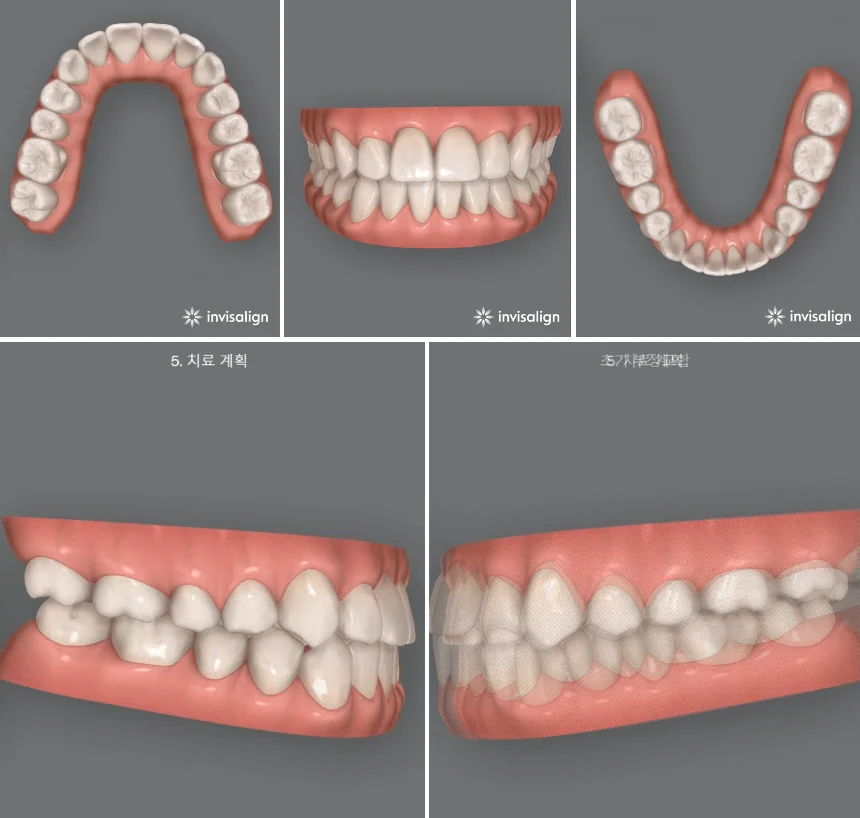
ClinCheck simulation of the planned result

Published with the patient’s consent. Photos and X-rays are from the clinic’s records. Treatment plans and results differ for every patient; only an examination can show what is possible for you. Orthodontic treatment can cause early discomfort, gum inflammation or root resorption. Retainers are needed afterwards to keep the result.


See more before and after cases →

Your dentists

English-speaking dentists in Seongnam

The clinic was founded by two brothers trained at Seoul National University who direct it together. Three further dentists hold Ministry of Health and Welfare specialist certifications. Full credentials →

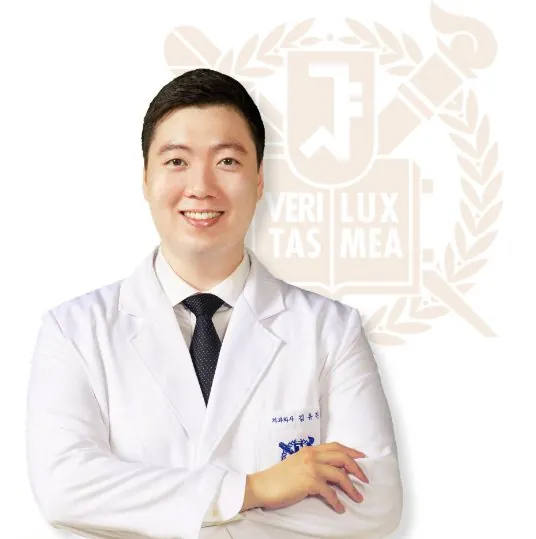
Dr. Hyeonjoon Park, Clinic Director at The Seoul Dental Clinic

Dr. Hyeonjoon Park

Clinic Director

  • Co-founder and joint clinic director
  • DDS, Seoul National University School of Dentistry
  • Master’s degree, SNU Graduate School of Dentistry
  • Former staff, Dept. of General Dentistry, SNU Dental Hospital
  • Affiliate Associate Fellow, American Academy of Implant Dentistry (AAID)
  • Certified Invisalign Provider; leads orthodontic treatment
  • Course completion, UCLA, USA
  • Member, UPenn Endodontics Study Club, USA
  • Member, International Congress of Oral Implantologists (ICOI)
  • Member, Seoul Prime Orthodontic Study Club
Dr. Hyun Sung Park, Clinic Director at The Seoul Dental Clinic

Dr. Hyun Sung Park

Clinic Director

  • Co-founder and joint clinic director
  • DDS, Seoul National University School of Dentistry
  • Master’s degree, SNU Graduate School of Dentistry
  • Former staff, Dept. of General Dentistry, SNU Dental Hospital
  • Microendodontics Programme, SNU
  • Course completion, UCLA, USA
  • Member, UPenn Endodontics Study Club, USA
  • Certified Invisalign Provider
  • Osstem Implant AIC Programme
  • Member, International Congress of Oral Implantologists (ICOI)
Dr. Yu Jin Kim, Dentist at The Seoul Dental Clinic

Dr. Yu Jin Kim

Dentist

  • Board-certified specialist, Advanced General Dentistry (Ministry of Health and Welfare)
  • Johns Hopkins University, USA
  • Master’s degree, SNU Graduate School of Dentistry
  • Former staff, Osaka University Dental Hospital, Japan
Dr. Min Ji Choi, Dentist at The Seoul Dental Clinic

Dr. Min Ji Choi

Dentist

  • Board-certified specialist, Conservative Dentistry
  • Board-certified specialist, Advanced General Dentistry
  • Internship and residency, Jeonbuk National University Dental Hospital
  • Master’s degree in Conservative Dentistry, Jeonbuk National University
Dr. Jin Young Choi, Dentist at The Seoul Dental Clinic

Dr. Jin Young Choi

Dentist

  • Board-certified specialist, Advanced General Dentistry
  • Clinical training, Faculty of Dentistry, University of British Columbia, Canada
  • Master’s degree, Kyungpook National University Graduate School of Dentistry
  • BA in English Language and Literature, Korea University
Video

Video: our dentists explain

In Korean. On YouTube, turn on subtitles and choose Settings → Subtitles → Auto-translate → English.

Can Orthodontic Treatment Be Sped Up? What to Know Before Braces7:36 · The Seoul Dental Clinic on YouTube
What this video covers

The dentists explain that teeth move because bone remodels around them: bone breaks down on the side where pressure is applied and new bone forms on the other side, through the thin periodontal ligament. For that reason, tightening wires harder does not finish treatment sooner and excessive force can lead to root resorption, while switching clear aligners ahead of schedule leaves the aligners ill-fitting because the teeth have not caught up with each planned step. They note that clear aligners must be worn about 20 to 22 hours a day and changed on the prescribed schedule, and that treatment continues after teeth look straight because the bite, tooth angles, and stability still need to be finished. The things patients can do to keep treatment on track are keeping appointments, coming in promptly if a bracket or attachment comes off, wearing elastics as instructed, and seating aligners fully.

  • Teeth move through gradual bone remodeling, so stronger force does not mean faster results
  • Clear aligners need about 20 to 22 hours of daily wear and the prescribed change interval
  • Keep scheduled appointments and report broken appliances right away to avoid delays

More videos on the clinic’s YouTube channel →

Adult Orthodontics: frequently asked questions

Is there an age limit for braces?

No. Teeth can be moved at any age if the teeth and gums are healthy enough. Your dentist checks this at the first examination.

Which is cheaper, Invisalign or braces?

It depends on the case. Invisalign is published at ₩2.5M to ₩7M, and fixed braces at ₩2.8M (metal) to ₩3.2M (ceramic), so a simpler Invisalign case can cost less and a complex one more.

Do I need a consultation first?

Yes. An examination decides what is possible, whether full or partial treatment fits, and what it will cost. English consultation is available.

Will I need a retainer?

Yes, retainers are advised after every method of orthodontics, since teeth can drift back. Fixed retainers are listed at ₩100,000 to ₩200,000 and removable retainers at ₩150,000 to ₩200,000.

Can I have partial orthodontics?

Sometimes, for mild front-tooth concerns with a sound bite. If the bite itself is the problem, partial treatment is generally not enough. Your dentist decides.

How long does adult treatment take?

It varies by case and by the option chosen. Your dentist gives an expected timeline after examination, and it can change as treatment progresses.

Can I be treated if I have crowns or missing teeth?

Often yes. Existing dental work and gaps affect the plan, and your dentist may suggest treating some things first. Tell the team about all previous work.

Can I get English explanations?

Yes. The clinic states that English-language consultation is available, and you can ask questions at every stage.

Plan your adult treatment

Send us your main concern, such as crowding, gaps or bite, and a few photos if you like. We will suggest the next step.

Visit

Visit us: Taepyeong Station Exit 5, Seongnam

2–3F, 1225 Seongnam-daero, Sujeong-gu, Seongnam-si, Gyeonggi-do (Taepyeong Station Exit 5)

Monday – Wednesday09:30 – 20:30
Thursday09:30 – 19:00
Friday09:30 – 18:30
Saturday09:30 – 13:00
SundayClosed
Public holidaysOpen
Lunch breakNone — continuous hours

Parking garage in the building; parking benefits for patients receiving treatment.

Directions from Taepyeong Station Exit 5 → · Naver Map

Entrance sign of The Seoul Dental Clinic