Inlays and Onlays near Taepyeong Station, Seongnam
Inlays and onlays are made-to-fit repairs for a tooth with a cavity too large for an ordinary filling but not damaged enough for a crown.
Ask about Inlays & Onlays
Tap what fits — your message is prepared for you. Nothing is sent until you press send.
Send opens your email app addressed to theseouldc@naver.com. Prefer chat? KakaoTalk channel · Instagram DM · or call +82-31-757-1525.
Message copied. Please call +82-31-757-1525 or email theseouldc@naver.com.
Inlays and onlays are made-to-fit repairs for a tooth with a cavity too large for an ordinary filling but not damaged enough for a crown. The published fees are ₩200,000 for a resin inlay, ₩300,000 for a ceramic inlay and ₩330,000 for a ceramic onlay, per tooth. Your dentist decides which repair fits after examining the tooth.
Inlay vs Filling vs Crown
A filling is placed directly in the tooth in one visit. An inlay sits inside the cusps of a tooth, and an onlay also covers one or more cusps. Both are made outside the mouth to fit precisely. A crown covers the whole tooth.
The more of the tooth is damaged, the more cover it usually needs. An inlay or onlay can save more healthy tooth than a crown, while being stronger than a large filling in some cases. The dentist decides after looking at the tooth and your bite.
The earlier you treat a cavity, the more tooth you keep and the simpler the repair. If you have a filling that keeps breaking, ask whether an inlay or onlay is better.
Think of it as a ladder. A small hole needs a small repair. As the damage grows and the walls of the tooth get thinner, the repair has to hold the tooth together rather than just fill a space. The table below sets out how the three options compare.
- Filling: small to medium cavities, one visit
- Inlay or onlay: large cavities with sound walls
- Crown: weak, cracked or root-treated teeth
Inlays & Onlays for Taepyeong, Moran, Sujin and Bundang Residents
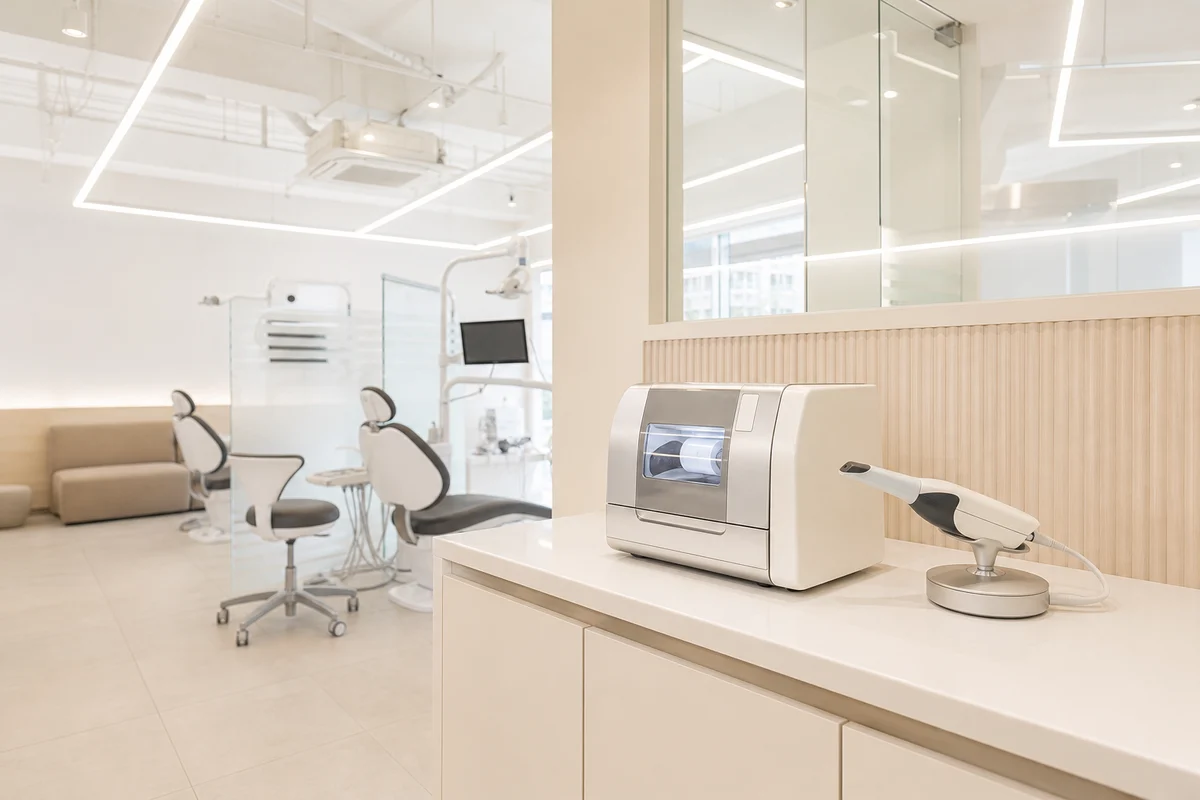
The clinic is by Taepyeong Station Exit 5 in Sujin-dong. Patients come from Moran, Sujin, Sinheung and Gachon along Line 8 and the Suin-Bundang Line, and from Bundang.
Because the restoration is made between visits, you will need to return, so ask about timing when you book. The clinic is open Monday to Saturday (Saturday until 13:00), closed Sundays.
The first step is an examination and X-ray so the dentist can see how deep the cavity goes and how much healthy tooth is left. They will explain whether a filling, inlay, onlay or crown is the better fit and give you the fee.
If you are visiting Korea for a short period, ask in advance how many visits are needed and how far apart they can be.
Two people with similar-looking cavities can need different repairs, because what matters is how much sound tooth remains and how hard you chew on that tooth. That is why the dentist examines before recommending.
Your dentist will also check the opposite tooth and your bite, since a restoration that sits too high can cause soreness.
Materials and Prices
Inlays and onlays are made from resin or ceramic. Both fall in the published range.
Resin is tooth-colored and generally lower in cost, while ceramic is a harder-wearing option. The dentist recommends a material based on the tooth and where it sits in your bite.
Use the comparison below as a guide to the decision, not as a prediction. The published fees are the only figures we state; how the options differ in practice for your tooth is something your dentist explains after examination.
| Option | Typical use | Published fee |
|---|---|---|
| Resin filling | Small to medium cavities, one visit | ₩70,000 – ₩250,000 (simple ₩100,000) |
| Inlay or onlay | Large cavity, sound walls remaining | Resin inlay ₩200,000; ceramic inlay ₩300,000; ceramic onlay ₩330,000 |
| Zirconia crown | Weak, cracked or heavily restored tooth | ₩450,000 (back tooth) / ₩550,000 (front tooth) |
| Core build-up or post (if needed) | Rebuilding support under a crown | ₩100,000 |
Prices are as published; confirm at consultation.
Procedure and Visits
It normally takes two appointments. Between them the restoration is made to fit your tooth, so the second visit is about checking and bonding it.
Tell your dentist if you have sensitivity to hot or cold, if a filling keeps coming loose, or if you grind your teeth. These details help choose the material and shape.
Local anesthesia is used when needed for comfort. If you are nervous about dental work, conscious sedation is listed on the clinic's price list at ₩300,000 (general) or ₩400,000 (with an anesthesiologist) and can be discussed.
Examination
The dentist checks the tooth, takes an X-ray and explains the options and fee.
Preparation
The decay is removed and the tooth is shaped. An impression or scan is taken.
Temporary filling
A temporary seals the tooth while the inlay or onlay is made.
Fitting
The restoration is tried, checked against your bite and bonded in place.
Care and Longevity
Brush and floss as you would normally, paying attention to the edges where the restoration meets the tooth. Regular check-ups let the dentist monitor those edges.
How long a restoration lasts depends on the material, your bite, grinding habits and oral hygiene. We cannot promise a fixed lifespan. If you grind your teeth, ask about a night guard.
Avoid chewing hard objects such as ice or pen caps, which can chip any restoration.
If a restored tooth becomes sore to bite on, feels high or develops a rough edge, contact the clinic rather than waiting. A small adjustment is easier than repairing a chipped piece.
- Floss gently at the edges of the restoration
- Keep regular check-ups and cleanings
- Mention grinding or clenching to your dentist
Inlay FAQ
Short answers appear below. For your own tooth, the dentist's examination decides.
A useful question to ask: if this tooth were left with a bigger filling instead, what would be the likely trade-off, and when would a crown become the more sensible option?
English-speaking dentists in Seongnam
The clinic was founded by two brothers trained at Seoul National University who direct it together. Three further dentists hold Ministry of Health and Welfare specialist certifications. Full credentials →

Dr. Hyun Sung Park
Clinic Director
- Co-founder and joint clinic director
- DDS, Seoul National University School of Dentistry
- Master’s degree, SNU Graduate School of Dentistry
- Former staff, Dept. of General Dentistry, SNU Dental Hospital
- Microendodontics Programme, SNU
- Course completion, UCLA, USA
- Member, UPenn Endodontics Study Club, USA
- Certified Invisalign Provider
- Osstem Implant AIC Programme
- Member, International Congress of Oral Implantologists (ICOI)

Dr. Min Ji Choi
Dentist
- Board-certified specialist, Conservative Dentistry
- Board-certified specialist, Advanced General Dentistry
- Internship and residency, Jeonbuk National University Dental Hospital
- Master’s degree in Conservative Dentistry, Jeonbuk National University

Dr. Jin Young Choi
Dentist
- Board-certified specialist, Advanced General Dentistry
- Clinical training, Faculty of Dentistry, University of British Columbia, Canada
- Master’s degree, Kyungpook National University Graduate School of Dentistry
- BA in English Language and Literature, Korea University

Dr. Hyeonjoon Park
Clinic Director
- Co-founder and joint clinic director
- DDS, Seoul National University School of Dentistry
- Master’s degree, SNU Graduate School of Dentistry
- Former staff, Dept. of General Dentistry, SNU Dental Hospital
- Affiliate Associate Fellow, American Academy of Implant Dentistry (AAID)
- Certified Invisalign Provider; leads orthodontic treatment
- Course completion, UCLA, USA
- Member, UPenn Endodontics Study Club, USA
- Member, International Congress of Oral Implantologists (ICOI)
- Member, Seoul Prime Orthodontic Study Club
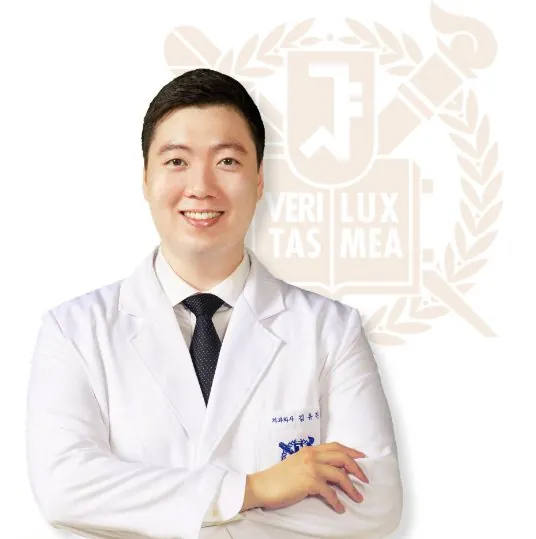
Dr. Yu Jin Kim
Dentist
- Board-certified specialist, Advanced General Dentistry (Ministry of Health and Welfare)
- Johns Hopkins University, USA
- Master’s degree, SNU Graduate School of Dentistry
- Former staff, Osaka University Dental Hospital, Japan
Inlays & Onlays: frequently asked questions
How much does an inlay cost?
Resin inlay ₩200,000, ceramic inlay ₩300,000 and ceramic onlay ₩330,000 per tooth, as published. Confirm at consultation.
Is an onlay better than a crown?
Not always. It preserves more tooth when the walls are sound, but a weak or cracked tooth may need a crown.
Will I need anesthesia?
The dentist will tell you what is appropriate for your tooth and your comfort.
Can I get one done in a single visit?
Inlays and onlays are generally made between visits. Ask the clinic about your case.
What is the difference between an inlay and an onlay?
An inlay fits inside the cusps of the tooth. An onlay also covers one or more cusps.
Resin or ceramic, which should I choose?
Both are in the published range. Your dentist recommends a material based on the tooth and your bite.
Do inlays need special care?
Brush and floss normally, with attention to the edges, and keep regular check-ups.
Can an inlay be placed on a root-treated tooth?
Sometimes, but root-treated teeth are often weaker and may need a crown. The dentist decides after examination.
Check your tooth
Describe the cavity or the tooth that keeps breaking. We will help you plan an examination.
Visit us: Taepyeong Station Exit 5, Seongnam
2–3F, 1225 Seongnam-daero, Sujeong-gu, Seongnam-si, Gyeonggi-do (Taepyeong Station Exit 5)
| Monday – Wednesday | 09:30 – 20:30 |
|---|---|
| Thursday | 09:30 – 19:00 |
| Friday | 09:30 – 18:30 |
| Saturday | 09:30 – 13:00 |
| Sunday | Closed |
| Public holidays | Open |
| Lunch break | None — continuous hours |
Parking garage in the building; parking benefits for patients receiving treatment.