Gum (Periodontal) Treatment near Taepyeong Station, Seongnam
Gum disease is inflammation of the tissue that holds your teeth.
Ask about Gum Treatment
Tap what fits — your message is prepared for you. Nothing is sent until you press send.
Send opens your email app addressed to theseouldc@naver.com. Prefer chat? KakaoTalk channel · Instagram DM · or call +82-31-757-1525.
Message copied. Please call +82-31-757-1525 or email theseouldc@naver.com.
Gum disease is inflammation of the tissue that holds your teeth. Early stages can often be controlled with deep cleaning and better home care, while advanced stages may need more involved treatment. The cost of gum treatment is not published and is quoted after examination.
Signs of Gum Disease
Gum disease often develops without pain, which is why many people do not notice it until it is well established. Bacteria in plaque irritate the gums, and if plaque hardens into tartar it becomes harder to remove at home. Over time, the inflammation can reach the bone that supports the teeth.
The earliest stage, gingivitis, affects the gum only and can often be reversed with a thorough clean and better home care. When the inflammation spreads below the gum line, pockets can form around the teeth, and these hold more bacteria than a brush can reach.
Smoking, diabetes, some medicines and pregnancy can raise the risk or make gums react more strongly. Tell your dentist about these, because they affect the plan and the check-up schedule.
None of the signs below proves you have gum disease, since other causes exist, but each one is a good reason to book an examination.
- Gums that bleed when brushing or flossing.
- Red, swollen or tender gums.
- Persistent bad breath or a bad taste.
- Gums that look like they are pulling back from the teeth.
- Teeth that feel loose or have shifted.
- Spaces opening between teeth that were not there before.
Gum Treatment for Taepyeong, Moran, Sujin and Bundang Residents
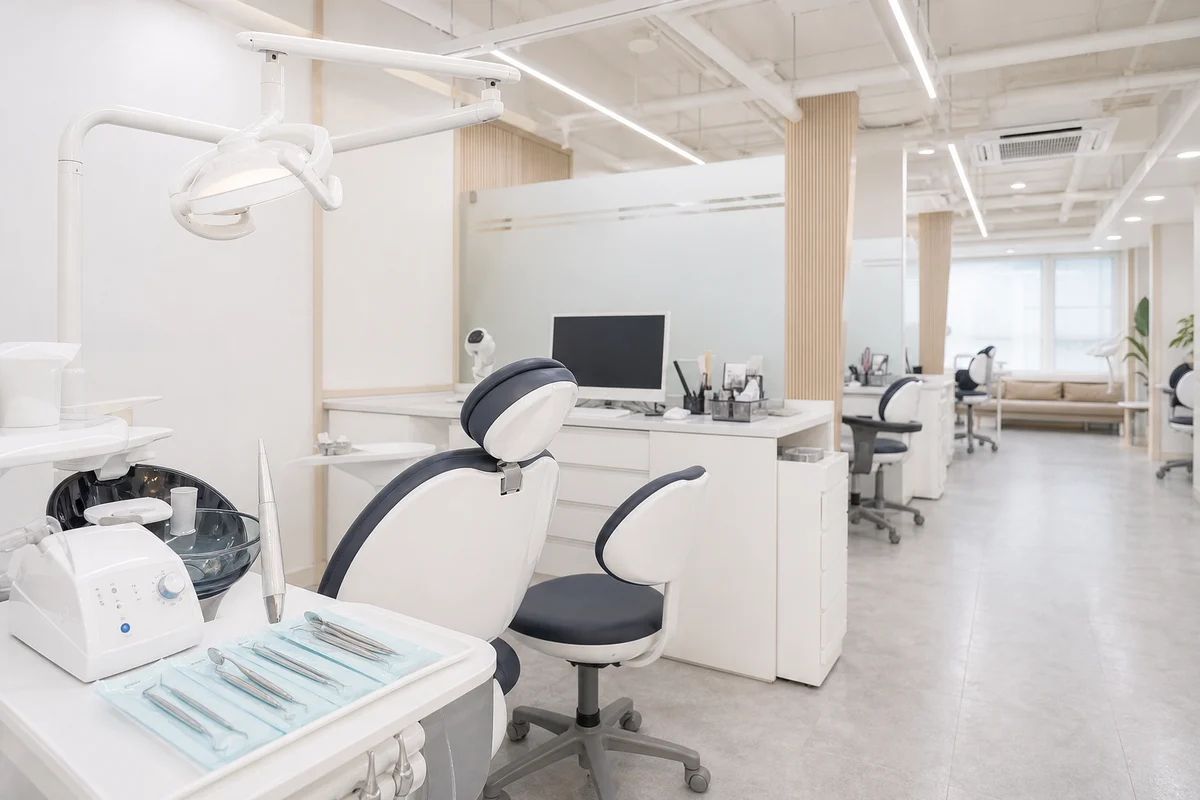
The clinic is in Sujin-dong, Sujeong-gu, Seongnam, by Taepyeong Station Exit 5. If you live near Moran, Sujin, Sinheung or Gachon University, or come from Bundang or Seoul, regular maintenance visits are simple to fit into your week.
Gum care is not a one-off. Even after successful treatment, most people need regular recall visits, so a clinic you can reach again and again matters as much as the first appointment.
English consultation is available, so you can understand what the dentist finds and why. The clinic is open Mon–Wed 09:30–20:30, Thu 09:30–19:00, Fri 09:30–18:30 and Sat 09:30–13:00, with no lunch break; it is closed on Sundays and open on public holidays. Ask which tests or X-rays are likely at the first visit.
Treatment Options
Treatment depends on how far the disease has gone. The examination, which may include X-rays and measuring the depth of the pockets around each tooth, decides which row of the table applies to you.
Only additional (non-covered) scaling has a published price, at ₩50,000; insurance-covered scaling follows national insurance rules. Gum treatment beyond scaling is not published and is quoted after examination, once your dentist knows what is needed.
| Stage | Typical approach | Cost |
|---|---|---|
| Gum inflammation (gingivitis) | Scaling and better home care | Insurance-covered scaling per national rules; additional scaling ₩50,000 |
| Pockets forming around teeth | Deeper cleaning below the gum line | Quoted after examination |
| Advanced gum disease | Deep cleaning, possibly surgery | Quoted after examination |
The right stage and treatment are decided by an examination, which may include X-rays. Costs not listed above are not published.
Gum Surgery When Needed
When deep pockets or bone loss remain after cleaning, your dentist may discuss gum surgery. The aim is to clean areas that cannot be reached otherwise and, in some cases, to reshape the gum or support the bone.
Surgery is not needed for everyone, and we only suggest it when examination shows it is warranted. You should hear what the procedure involves, what it is for and what the alternatives are before you agree.
If a tooth is too damaged to keep, you will be told the options, which may include replacing it with an implant. Where an implant is chosen, healthy gums are important for its long-term care, so gum health is addressed first.
Ask about recovery, including what you can eat and how to clean the area. Fees for surgery are not published and are quoted after examination.
Maintenance After Treatment
Treatment controls gum disease, but daily habits and regular check-ups keep it under control.
Daily cleaning
Brush gently twice a day and clean between teeth daily. Your dentist can show you the right tools for your gaps.
Regular recall
Gum disease can return. A recall interval is set by your dentist, often shorter than for people without gum problems.
Manage risk factors
Stopping smoking and keeping diabetes under control help your gums.
Report changes
Bleeding, swelling or loose teeth should be checked promptly.
Gum Treatment FAQ
Short answers are below. For your own gums, your dentist will advise after examination.
Who This Suits
A gum check is worth booking if you have noticed any of the signs above, if you have not had a dental visit for a long time, or if you are in a higher-risk group such as smokers or people with diabetes.
It is also a sensible step before cosmetic work, orthodontics or implants, because those treatments rely on healthy gums to succeed. Many expats put dental visits off while settling in; an assessment can give you a clear picture without committing you to anything.
Questions to Ask at Your Consultation
These questions help you understand your own diagnosis and plan.
- What stage are my gums at, and how do you know?
- Is scaling enough, or will I need deeper cleaning?
- How often should I come back for maintenance?
- Which home-care tools suit my teeth?
- How will treatment be priced if it goes beyond scaling?
English-speaking dentists in Seongnam
The clinic was founded by two brothers trained at Seoul National University who direct it together. Three further dentists hold Ministry of Health and Welfare specialist certifications. Full credentials →

Dr. Hyun Sung Park
Clinic Director
- Co-founder and joint clinic director
- DDS, Seoul National University School of Dentistry
- Master’s degree, SNU Graduate School of Dentistry
- Former staff, Dept. of General Dentistry, SNU Dental Hospital
- Microendodontics Programme, SNU
- Course completion, UCLA, USA
- Member, UPenn Endodontics Study Club, USA
- Certified Invisalign Provider
- Osstem Implant AIC Programme
- Member, International Congress of Oral Implantologists (ICOI)
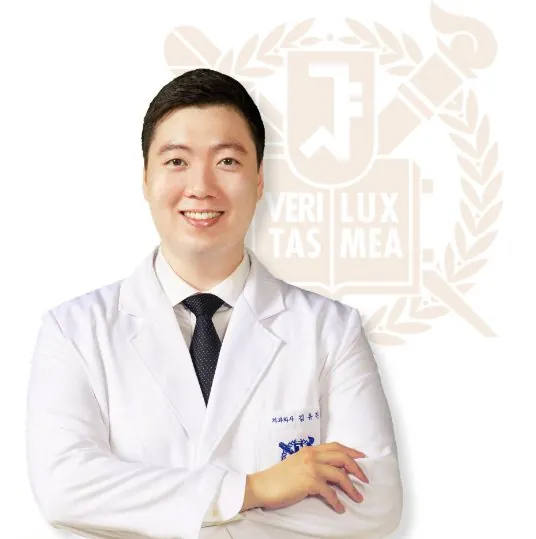
Dr. Yu Jin Kim
Dentist
- Board-certified specialist, Advanced General Dentistry (Ministry of Health and Welfare)
- Johns Hopkins University, USA
- Master’s degree, SNU Graduate School of Dentistry
- Former staff, Osaka University Dental Hospital, Japan

Dr. Min Ji Choi
Dentist
- Board-certified specialist, Conservative Dentistry
- Board-certified specialist, Advanced General Dentistry
- Internship and residency, Jeonbuk National University Dental Hospital
- Master’s degree in Conservative Dentistry, Jeonbuk National University

Dr. Jin Young Choi
Dentist
- Board-certified specialist, Advanced General Dentistry
- Clinical training, Faculty of Dentistry, University of British Columbia, Canada
- Master’s degree, Kyungpook National University Graduate School of Dentistry
- BA in English Language and Literature, Korea University

Dr. Hyeonjoon Park
Clinic Director
- Co-founder and joint clinic director
- DDS, Seoul National University School of Dentistry
- Master’s degree, SNU Graduate School of Dentistry
- Former staff, Dept. of General Dentistry, SNU Dental Hospital
- Affiliate Associate Fellow, American Academy of Implant Dentistry (AAID)
- Certified Invisalign Provider; leads orthodontic treatment
- Course completion, UCLA, USA
- Member, UPenn Endodontics Study Club, USA
- Member, International Congress of Oral Implantologists (ICOI)
- Member, Seoul Prime Orthodontic Study Club
Video: our dentists explain
In Korean. On YouTube, turn on subtitles and choose Settings → Subtitles → Auto-translate → English.
What this video covers
The dentists explain that orthodontic treatment for people in their 50s and 60s is often about function and easier cleaning rather than appearance, for example when front teeth have started to spread or flare, or when teeth tip into the gap left by a missing tooth. They describe how bone loss from gum disease can let teeth drift (pathologic tooth migration), and stress that orthodontics moves teeth rather than tightening loose ones, so the cause of looseness and the condition of the gums and bone must be assessed first and gum treatment completed before teeth are moved. They also explain that a missing tooth can cause neighboring teeth to tip and opposing teeth to over-erupt, sometimes leaving too little room for an implant, which orthodontics can help reopen or close, and that moving teeth does not by itself bring receded gums back. Clear aligners are commonly used at this age because they can be removed for normal brushing, and the dentists emphasize that gum, tooth, and bone condition matters more than age.
- Gum disease and bone loss can cause teeth to spread or flare later in life
- Gum inflammation should be treated before moving teeth; orthodontics does not tighten loose teeth
- Missing teeth can let neighbors shift and reduce space for an implant later
Gum Treatment: frequently asked questions
Can gum disease be cured?
Early gum inflammation can often be reversed. More advanced disease can usually be controlled but needs ongoing maintenance. Results depend on your case.
How much does gum treatment cost?
Gum treatment prices are not published, so they are quoted after examination. Additional (non-covered) scaling is published at ₩50,000; insurance-covered scaling follows national insurance rules.
Why do my gums bleed?
Bleeding is most often a sign of inflamed gums from plaque. Keep cleaning gently and have it checked, since it can also have other causes.
Will gum disease make my teeth fall out?
Untreated advanced gum disease can loosen teeth. Early treatment and maintenance reduce that risk.
Is treatment uncomfortable?
Your dentist can use local anesthesia where needed. Gums may feel sore for a few days afterwards.
Is scaling the same as gum treatment?
No. Scaling removes plaque and tartar and suits early problems. Deeper disease may need cleaning below the gum line or surgery.
Does gum disease affect implants?
Yes. Healthy gums matter for implants, so gum problems are usually treated first.
Can I be seen in English?
Yes. The clinic states that English-language consultation is available.
Have Your Gums Checked
Call +82-31-757-1525 or send a message. We will examine your gums and explain next steps in English.
Visit us: Taepyeong Station Exit 5, Seongnam
2–3F, 1225 Seongnam-daero, Sujeong-gu, Seongnam-si, Gyeonggi-do (Taepyeong Station Exit 5)
| Monday – Wednesday | 09:30 – 20:30 |
|---|---|
| Thursday | 09:30 – 19:00 |
| Friday | 09:30 – 18:30 |
| Saturday | 09:30 – 13:00 |
| Sunday | Closed |
| Public holidays | Open |
| Lunch break | None — continuous hours |
Parking garage in the building; parking benefits for patients receiving treatment.