
The Seoul
Dental Clinic더서울치과English-Speaking Dentist in Korea for Expats & International Patients
- SNU (Seoul National University)-trained directorsBoth founding directors graduated from Seoul National University School of Dentistry, hold master’s degrees from its graduate school and trained at Seoul National University Dental Hospital.
- 3 Ministry-certified specialistsThree dentists are board-certified by Korea’s Ministry of Health and Welfare in Advanced General Dentistry or Conservative Dentistry.
- Certified Invisalign ProviderBoth directors are Certified Invisalign Providers; orthodontic treatment is led by Dr. Hyeonjoon Park.
- Government-registered international patient facilityRegistered with the Korean government to care for international patients, with consultations and treatment plans in English.
Treatments for International Patients
What brings you in today? Pick the closest card to read the full guide, price list and frequently asked questions.
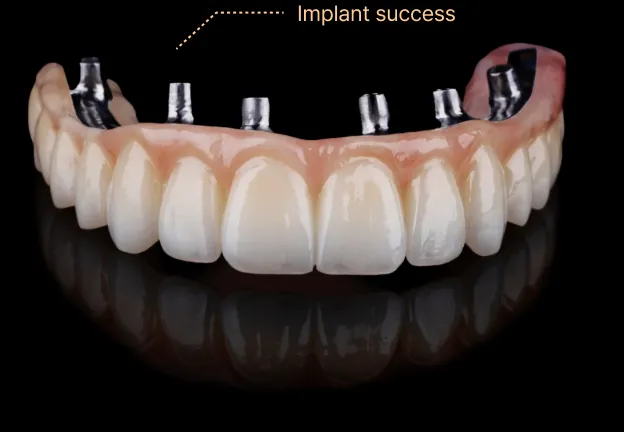
Dental implants
- Single-tooth, full-arch and guided implants
- Straumann, Osstem, DIO and MegaGen systems
- Planned on 3D CT and digital scans
- Bone graft and sinus lift when needed
- From ₩350,000 (MegaGen implant with PFM crown)
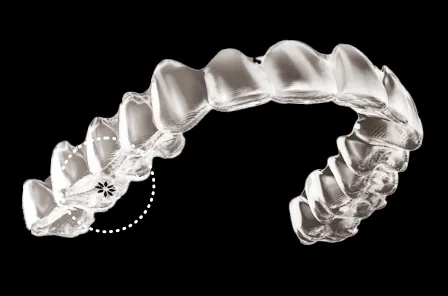
Invisalign & clear aligners
- Invisalign for adults and teens
- Invisalign First for growing children
- Planned tooth movement reviewed on screen before you start
- Published range ₩2.5M–₩7M
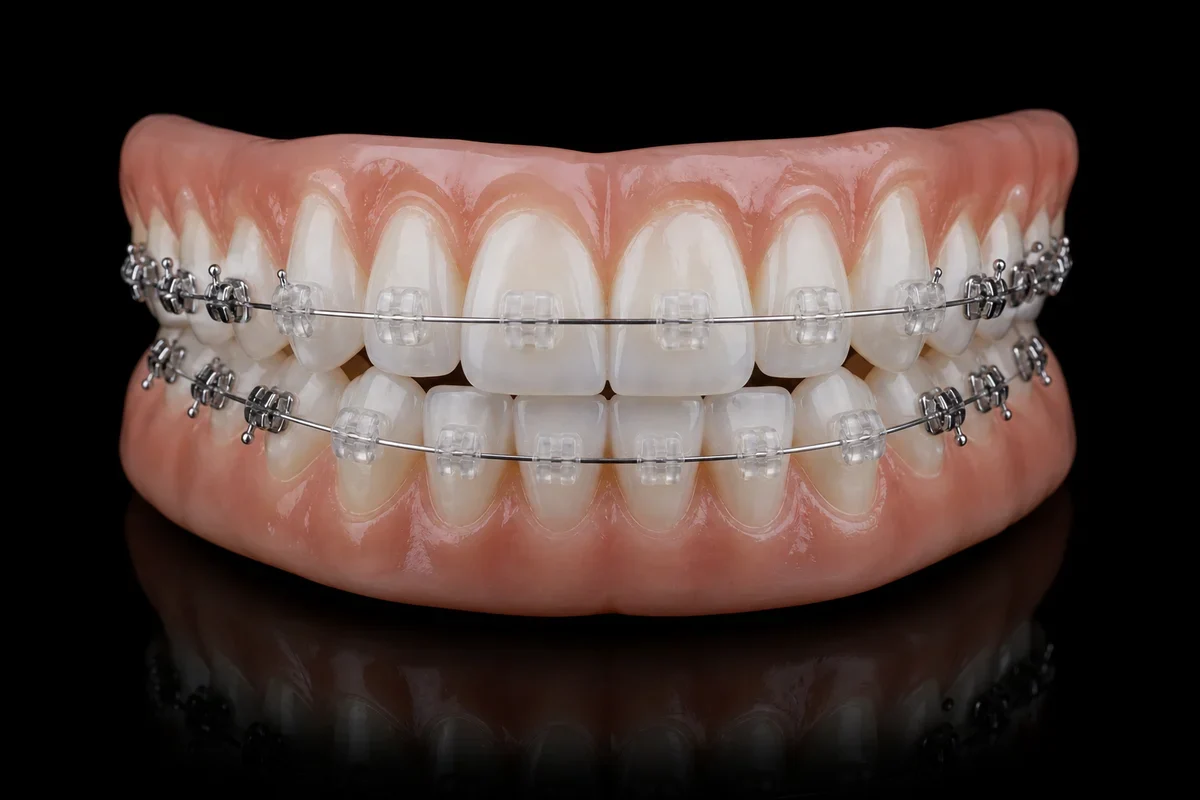
Braces & orthodontics
- Metal, ceramic and self-ligating braces
- Partial braces for front-tooth problems
- Orthodontics for adults
- Written estimate after examination and records
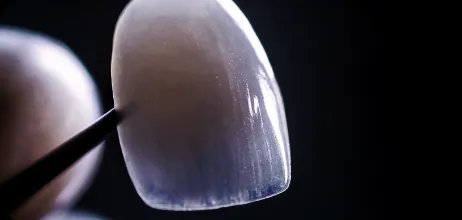
Cosmetic dentistry
- Laminate veneers
- Professional teeth whitening
- Bonding for chips and gaps
- Gummy-smile assessment and smile makeovers
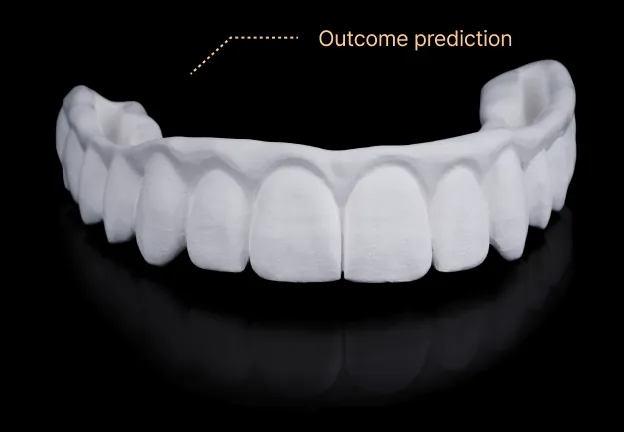
Crowns & prosthetics
- Zirconia, PFM and gold crowns
- Inlays and onlays for larger cavities
- Dentures, including implant-supported options
- Repairs and relines for existing dentures
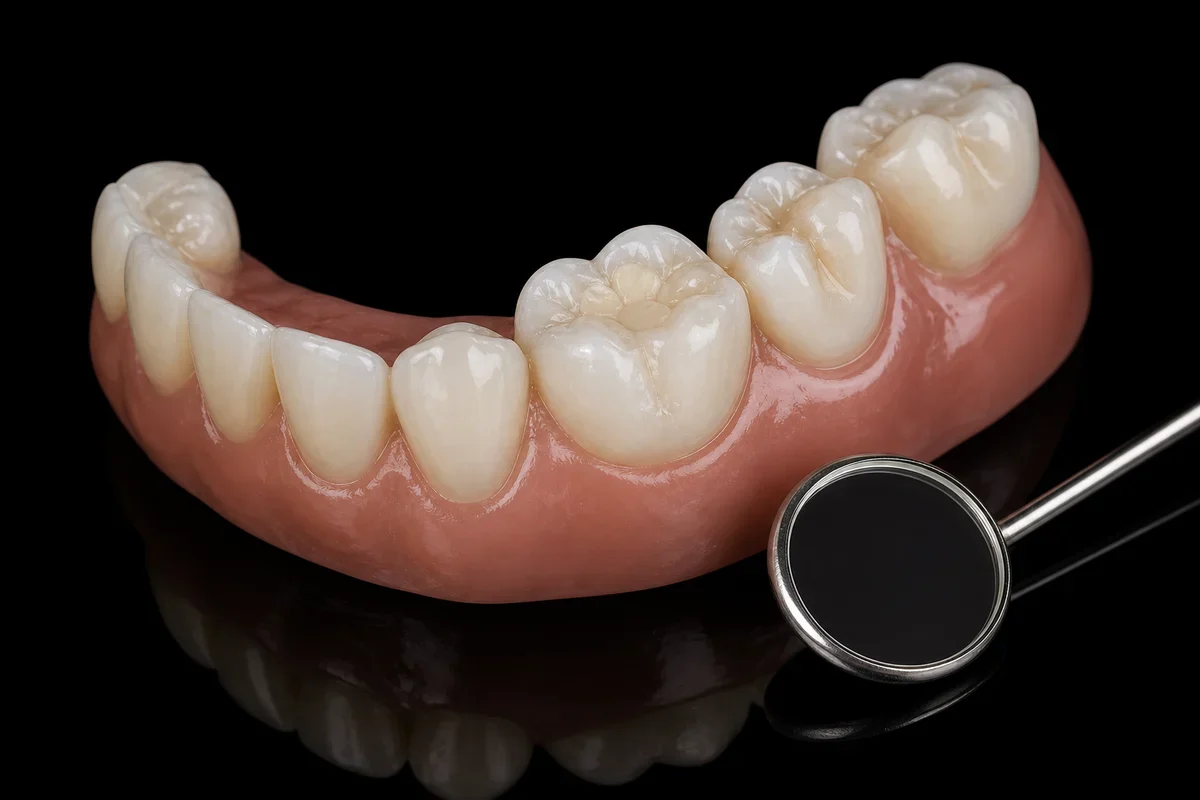
General dentistry
- Check-ups and scaling
- Fillings and root canal treatment
- Gum care and wisdom-tooth removal
- Night guards and emergency visits
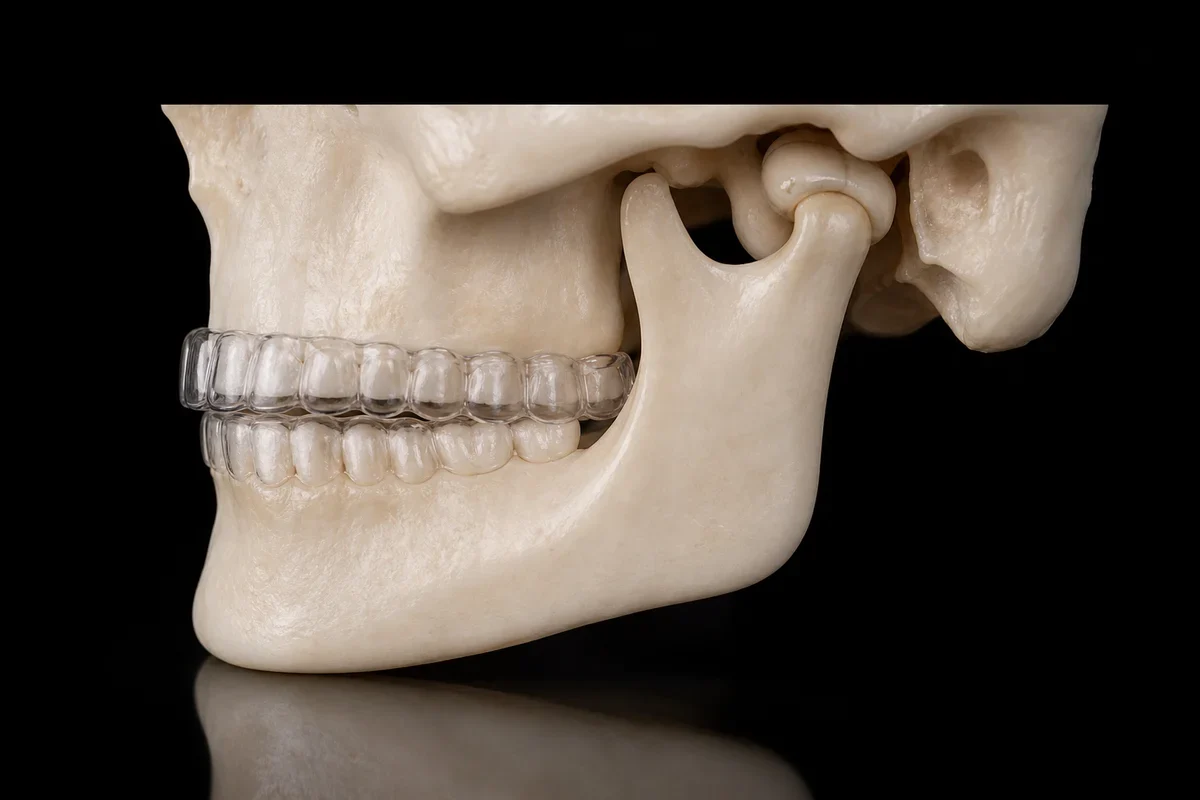
TMJ & jaw care
- Assessment of jaw pain, clicking and locking
- Custom occlusal splints
- Jaw Botox for clenching and muscle tension
- Care for teeth grinding (bruxism)
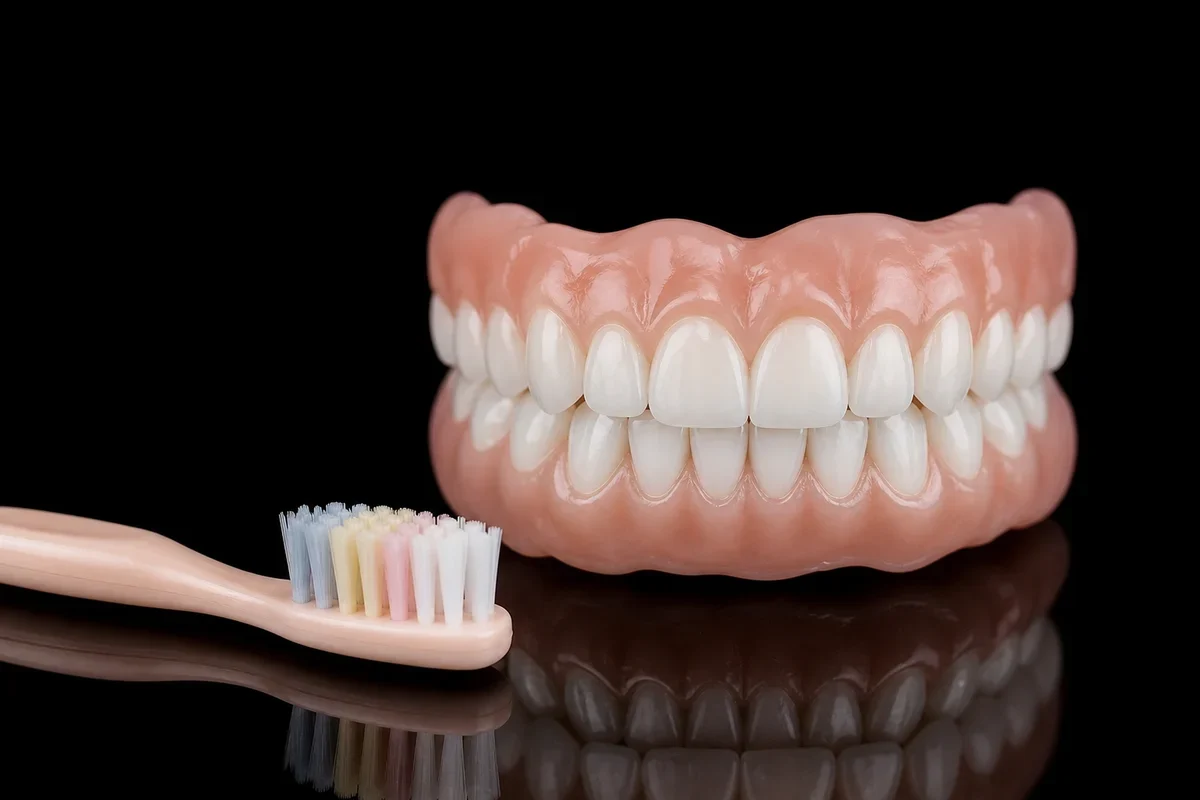
Children & comfort care
- Children’s check-ups, fluoride and sealants
- Baby-tooth fillings and space maintainers
- Conscious sedation for anxious patients
- Calm, step-by-step explanations in English
Transparent Prices Before You Book
A few figures from the clinic’s non-covered fee schedule. Implant, abutment and crown are listed as separate items; the full table is on the pricing page. Consultation before treatment is free.
Root canal, extraction, wisdom-tooth removal, gum treatment, CT scans and night guards depend on the tooth or the mouth, so they are quoted after examination rather than listed. See the full price list
Clinical cases from our dentists
Six cases from the clinic’s records, each showing the same patient before and after treatment, with what was found and what was done. Published with the patient’s consent. Photos and X-rays are from the clinic’s records. Treatment plans and results differ for every patient; only an examination can show what is possible for you.
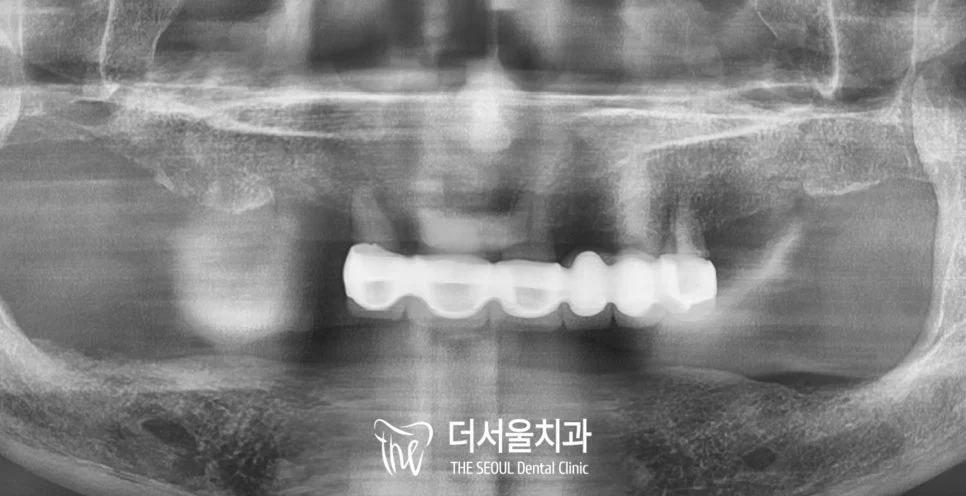
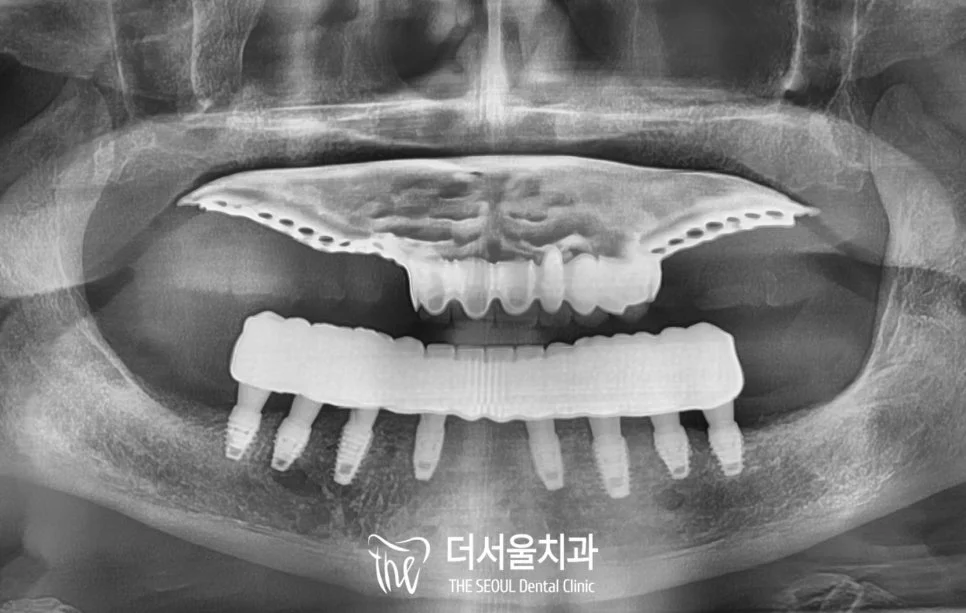
Full-arch implants after years of a loose lower denture
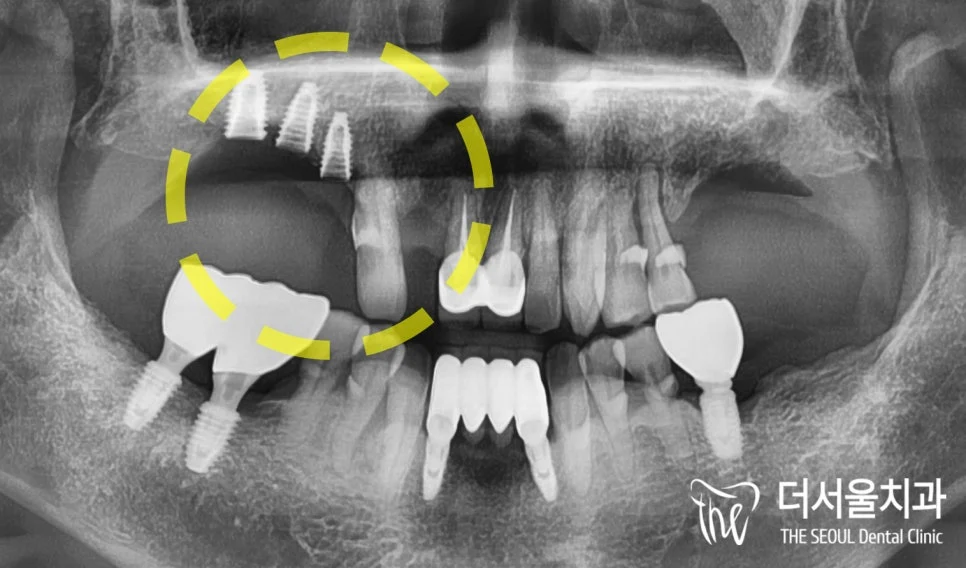
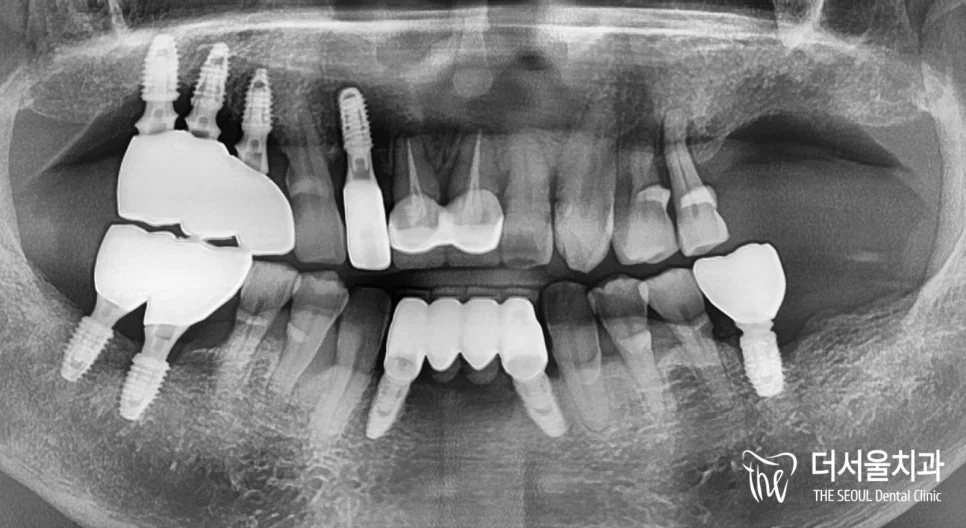
Redoing failed molar implant crowns and replacing a missing front tooth
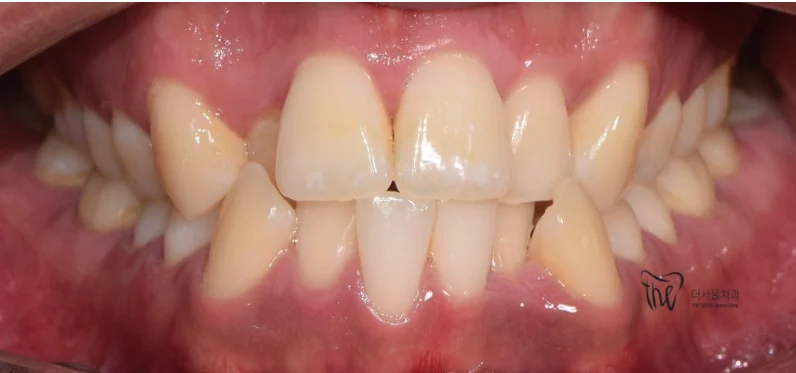
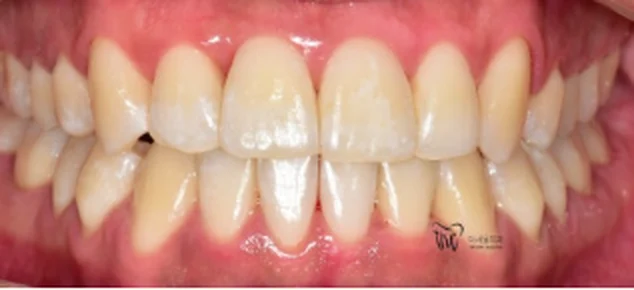
Crowded, protruding front teeth treated with Invisalign without extractions
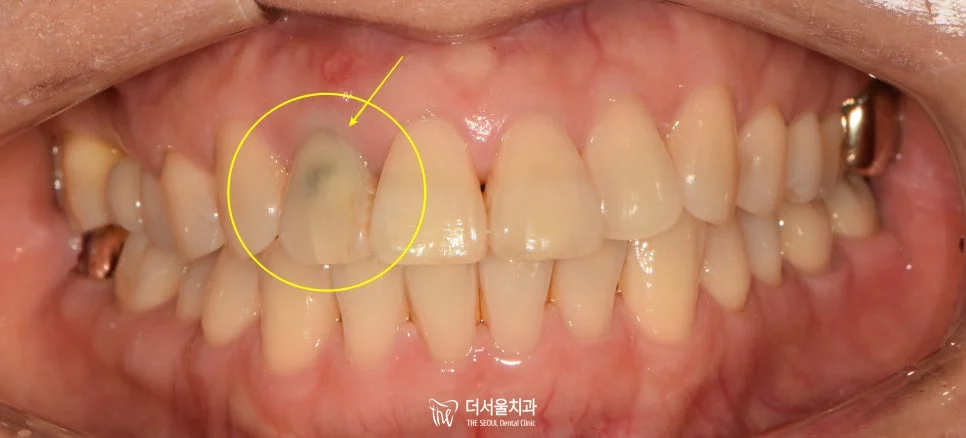
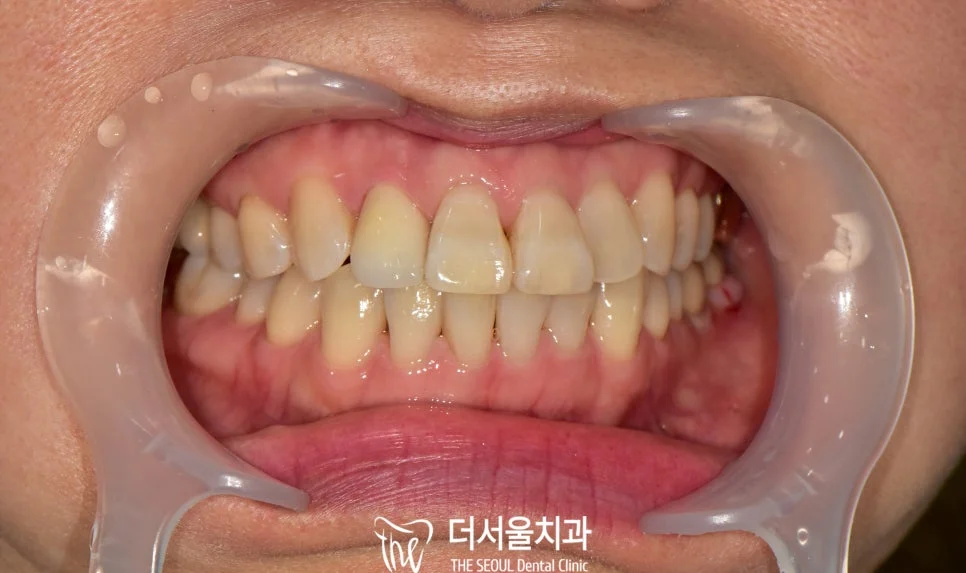
A darkened front tooth: root canal retreatment, internal whitening and a ceramic crown
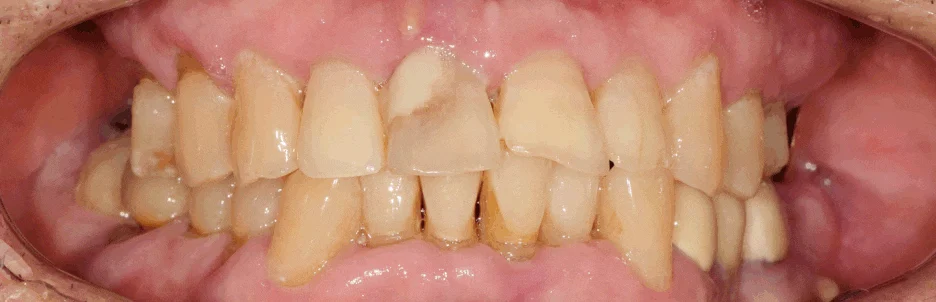
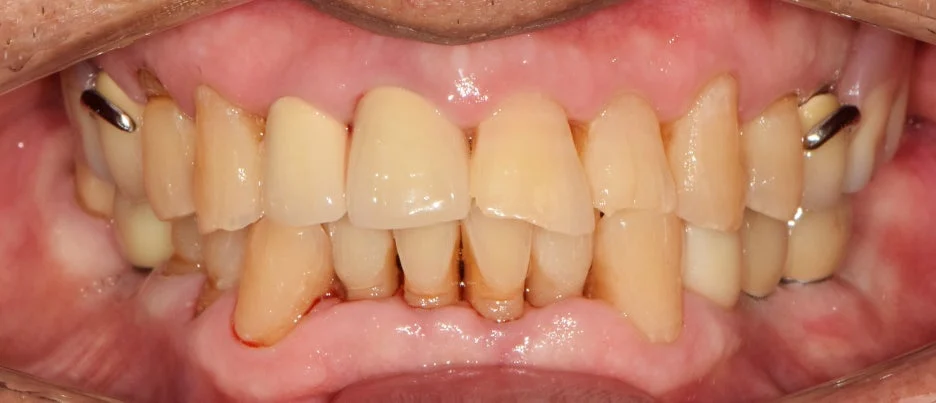
Deep decay under an old filling on a front tooth
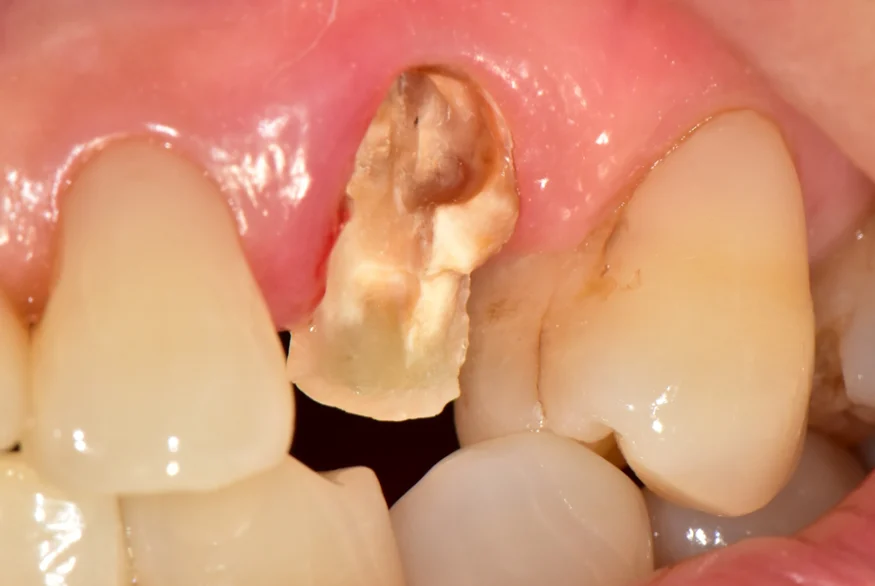
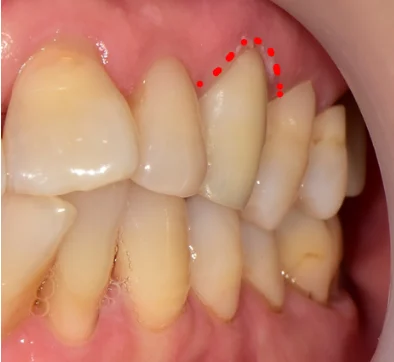
Why a crown matters after root canal treatment: saving a fractured canine
Meet the dentists
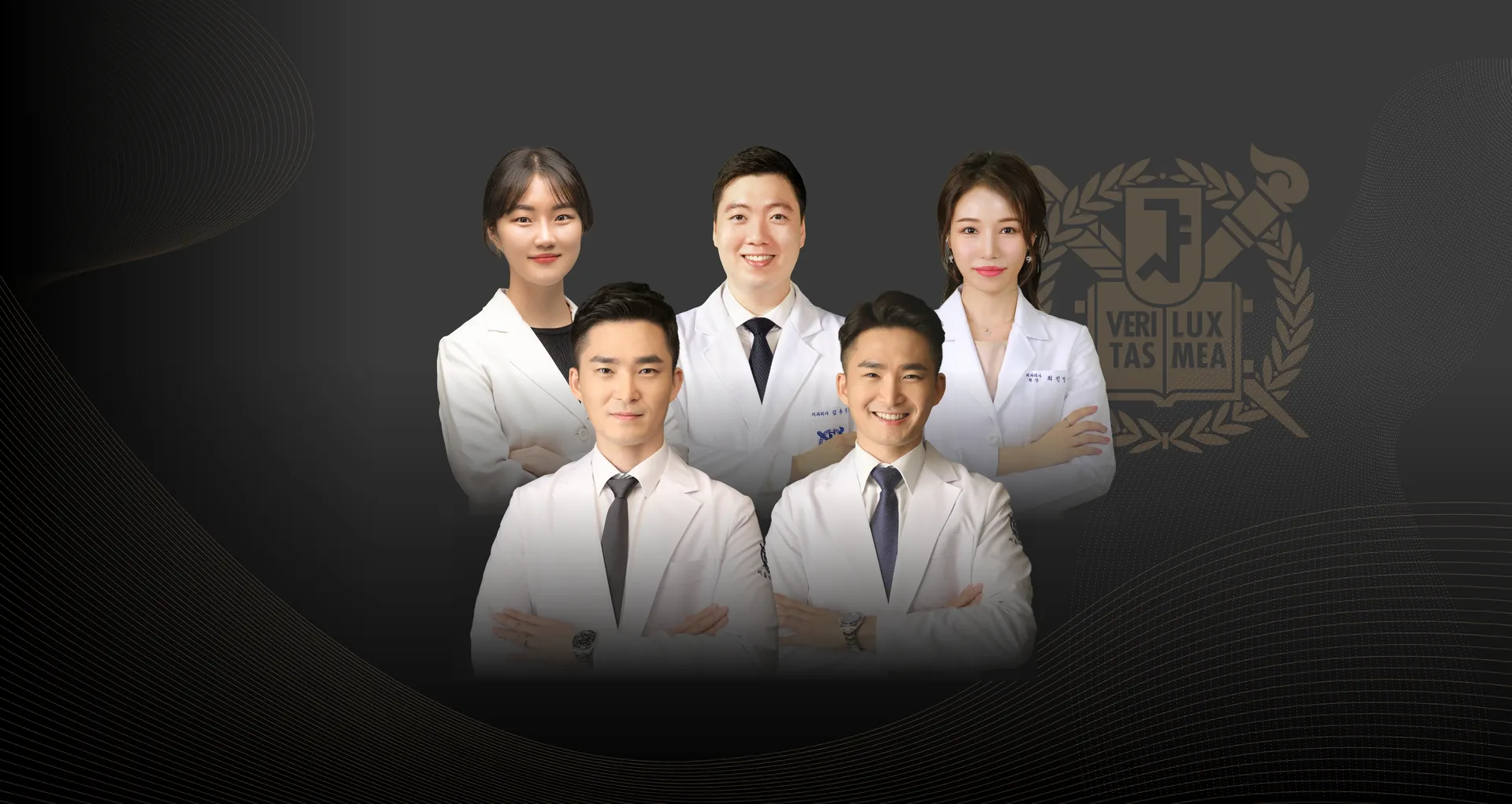
The clinic was founded by two brothers trained at Seoul National University who direct it together. Three further dentists hold Ministry of Health and Welfare specialist certifications. Full credentials →
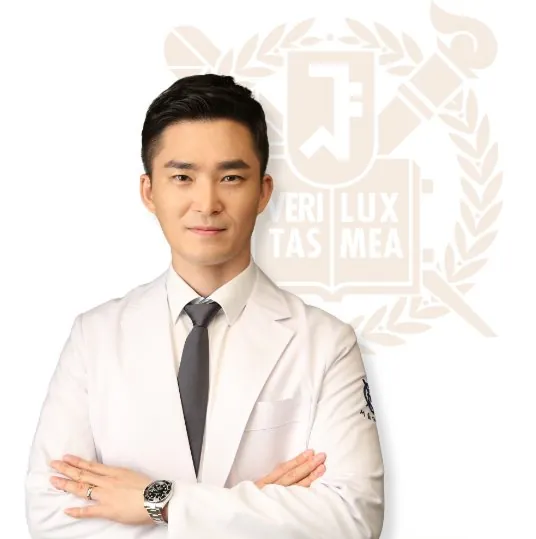
Dr. Hyun Sung Park
Clinic Director
- Co-founder and joint clinic director
- DDS, Seoul National University School of Dentistry
- Master’s degree, SNU Graduate School of Dentistry
- Former staff, Dept. of General Dentistry, SNU Dental Hospital
- Microendodontics Programme, SNU
- Course completion, UCLA, USA
- Member, UPenn Endodontics Study Club, USA
- Certified Invisalign Provider
- Osstem Implant AIC Programme
- Member, International Congress of Oral Implantologists (ICOI)
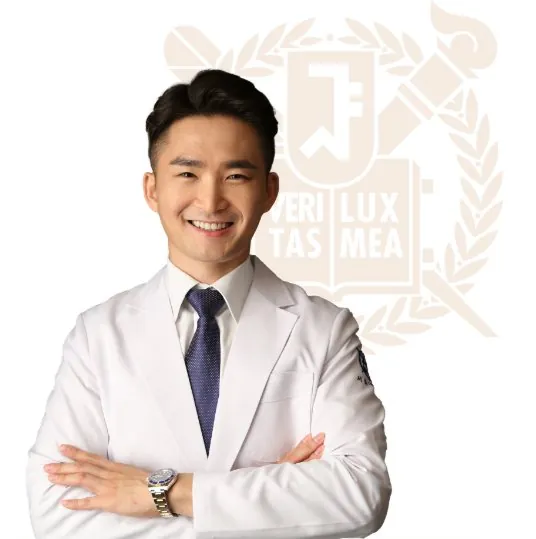
Dr. Hyeonjoon Park
Clinic Director
- Co-founder and joint clinic director
- DDS, Seoul National University School of Dentistry
- Master’s degree, SNU Graduate School of Dentistry
- Former staff, Dept. of General Dentistry, SNU Dental Hospital
- Affiliate Associate Fellow, American Academy of Implant Dentistry (AAID)
- Certified Invisalign Provider; leads orthodontic treatment
- Course completion, UCLA, USA
- Member, UPenn Endodontics Study Club, USA
- Member, International Congress of Oral Implantologists (ICOI)
- Member, Seoul Prime Orthodontic Study Club
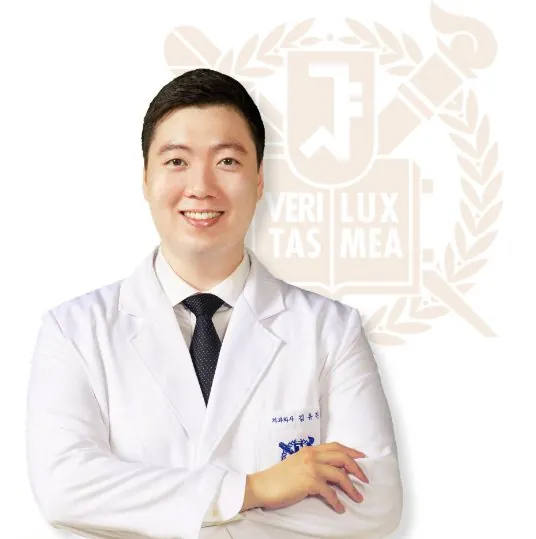
Dr. Yu Jin Kim
Dentist
- Board-certified specialist, Advanced General Dentistry (Ministry of Health and Welfare)
- Johns Hopkins University, USA
- Master’s degree, SNU Graduate School of Dentistry
- Former staff, Osaka University Dental Hospital, Japan

Dr. Min Ji Choi
Dentist
- Board-certified specialist, Conservative Dentistry
- Board-certified specialist, Advanced General Dentistry
- Internship and residency, Jeonbuk National University Dental Hospital
- Master’s degree in Conservative Dentistry, Jeonbuk National University

Dr. Jin Young Choi
Dentist
- Board-certified specialist, Advanced General Dentistry
- Clinical training, Faculty of Dentistry, University of British Columbia, Canada
- Master’s degree, Kyungpook National University Graduate School of Dentistry
- BA in English Language and Literature, Korea University
Why Patients Choose The Seoul Dental Clinic
There is no single reason, and we avoid claims we cannot show you. These are the practical things patients tell us matter.
English from first message to aftercare
Consultation, treatment plans and documents in English, so nothing important is lost in translation.
Prices you can read first
Non-covered prices are published. Items that depend on the tooth or the gum are quoted after examination, in writing.
Planned on screen
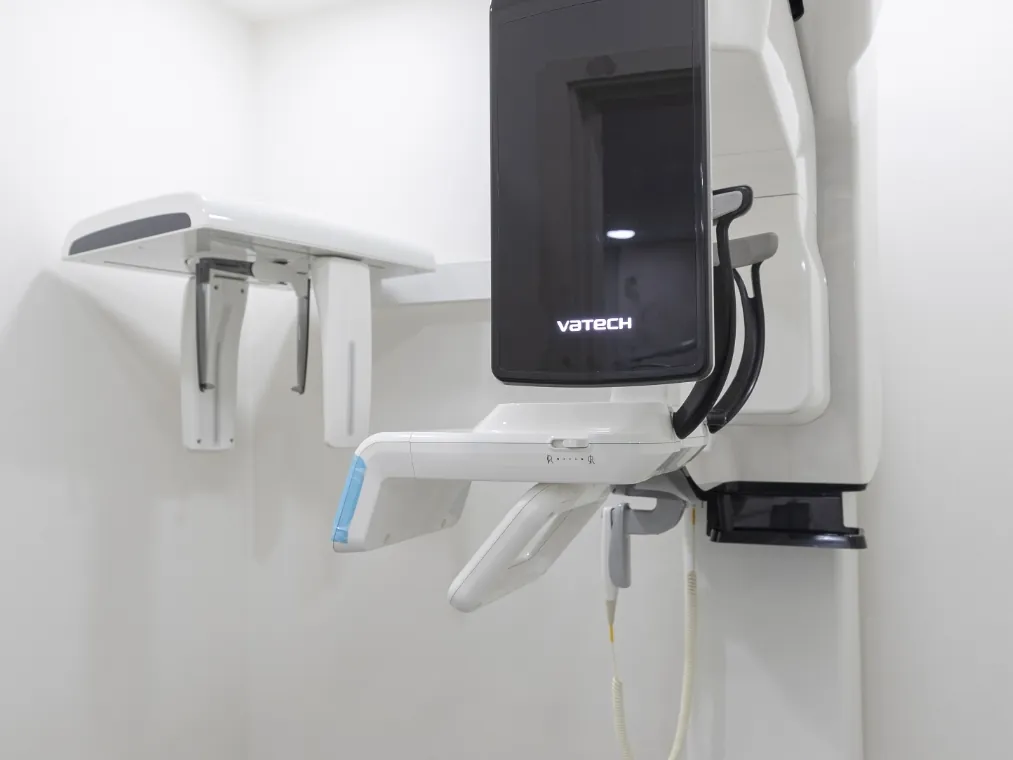
Scan and CT-based planning, with guided or navigation-assisted implant surgery where the case calls for it.
Comfort options
Conscious sedation is available for anxious patients and for longer procedures such as wisdom-tooth removal.
Paperwork for overseas claims
Treatment summaries and receipts prepared for insurers abroad. Tell us your insurer at booking.
Continuing care
Aftercare and continuing treatment started at another clinic are part of the service list; bring your records.
Hours that fit work
Open until 20:30 Monday to Wednesday, no lunch break, Saturday mornings and public holidays. Closed Sundays.
Parking in the building
A parking garage in the building, with parking benefits for patients receiving treatment.
How a first visit works
Message us
Tell us what you need, in English. Include your travel dates if you are visiting, and any X-rays you already have.
Examination and scan
The dentist examines your teeth and takes X-rays or a CT scan where needed, and explains what is found.
Written plan and price
Treatment steps, options and prices are given in writing before you decide. You can ask for a second opinion at any point.
Treatment and aftercare
Treatment is staged to fit your schedule, with aftercare instructions and documents for your insurer.
Our dentists explain
Short talks from the clinic’s directors, Dr. Hyeonjoon Park and Dr. Hyun Sung Park, on questions patients ask most. In Korean. On YouTube, turn on subtitles and choose Settings → Subtitles → Auto-translate → English.
What this video covers
Dr. Hyeonjoon Park and Dr. Hyun Sung Park discuss what patients often do not hear before implant treatment. They explain that when several implants sit side by side, the crowns are sometimes joined (splinted) to share chewing forces, so regular floss may not pass between them and this alone does not mean the treatment went wrong. They note that implants restore chewing function but are not identical to natural teeth, so food trapping or a different chewing sensation can occur. Finally, they stress that care starts after placement: an implant's lifespan depends on hygiene and regular check-ups, and recurring discomfort, pain, swelling or looseness should be checked at the clinic.
- Joined (splinted) implant crowns spread sideways forces but need different cleaning methods than regular floss
- Implants restore chewing function but are not the same as natural teeth; food trapping can occur
- Lifespan depends on home care and check-ups, generally about every six months, more often if gums are weak
What this video covers
The two dentists explain why a full crown requires trimming the tooth all the way around, including healthy structure, which brings the preparation closer to the nerve and can raise the chance of later root canal treatment. They describe how improved bonding adhesives now allow partial restorations such as inlays, onlays and overlays that cover only the damaged area. They add that a root-canal-treated tooth does not always need a crown if enough tooth remains, and that with digital CAD/CAM milling an overlay can sometimes be made and bonded on the same day. Crowns are still needed when a tooth is cracked, when decay is extensive, or in some patients with very strong bite forces or heavy grinding.
- A crown removes tooth structure all around; an overlay or onlay covers only the damaged part
- Root-canal-treated teeth can sometimes be sealed and reinforced with an overlay instead of a crown
- Cracked teeth, extensive decay or very strong bite forces usually call for a crown
What this video covers
The dentists explain that food suddenly starting to catch between teeth usually signals a change: loosening teeth from gum disease, a chipped or decayed contact point, or receding gums that open triangular gaps near the gumline. They describe why food can begin catching next to an implant over time, since natural teeth tend to drift forward while an implant stays fixed, and how a crown attached with a screw-access opening can be removed and reshaped to close the gap. Their suggested approach is prompt cleaning with interdental brushes, floss or a water flosser, dental treatment for broken or decayed areas, and ongoing gum care when periodontal disease is the cause. They advise against wooden or starch toothpicks, which can injure the gums, wear the teeth and widen the gaps.
- New food trapping often points to loose teeth, a broken contact, decay or gum recession
- Natural teeth drift over time while implants stay put, which can open a gap next to an implant
- Use interdental brushes, floss or a water flosser instead of wooden toothpicks
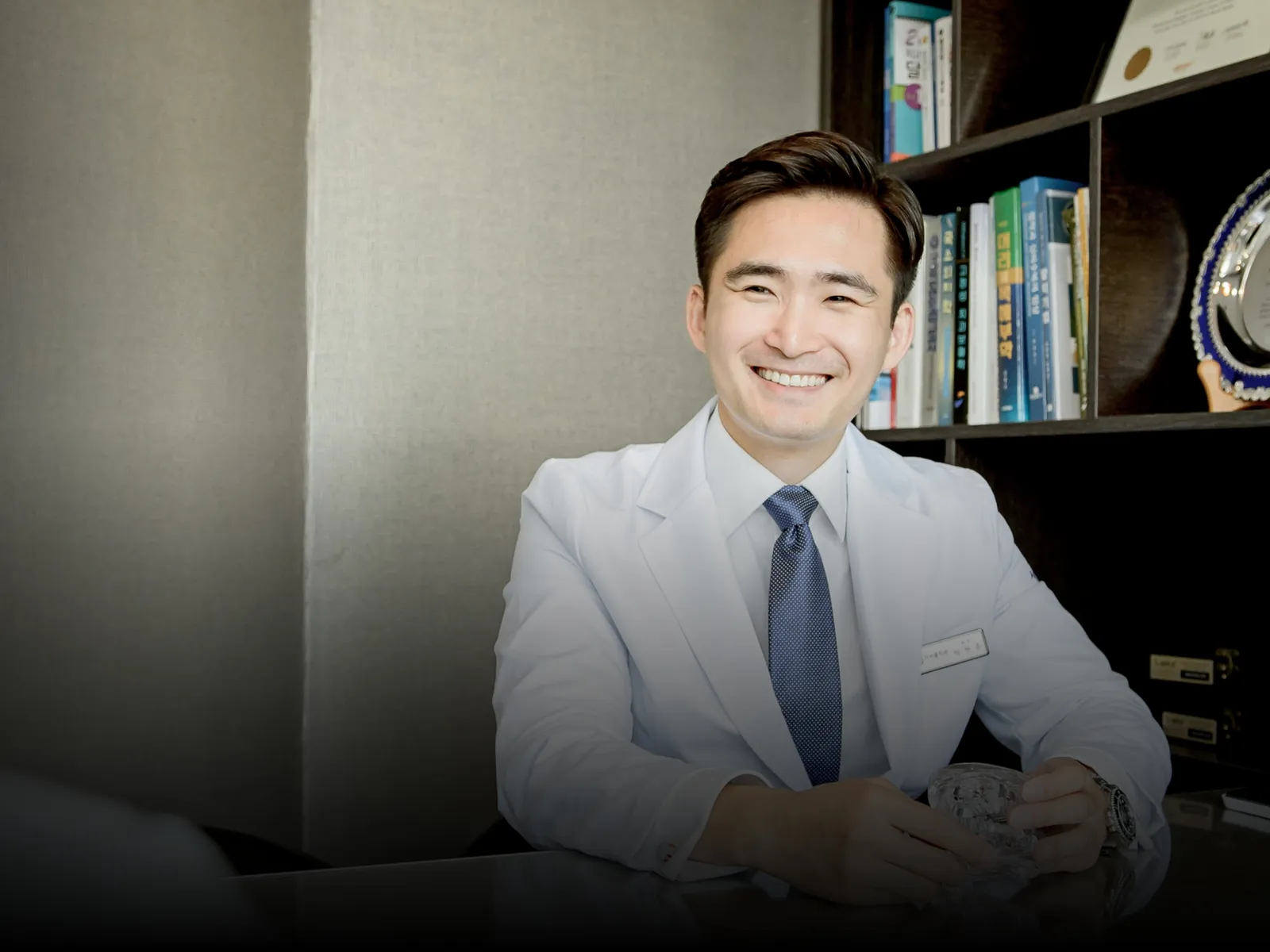
Built for patients from abroad
Whether you live in Seongnam or are travelling to Korea for treatment, the process is the same: message first, examination next, written plan, then treatment. We help you plan stages around your travel dates and explain what can safely be done in a short stay and what needs more time.
A look inside the clinic
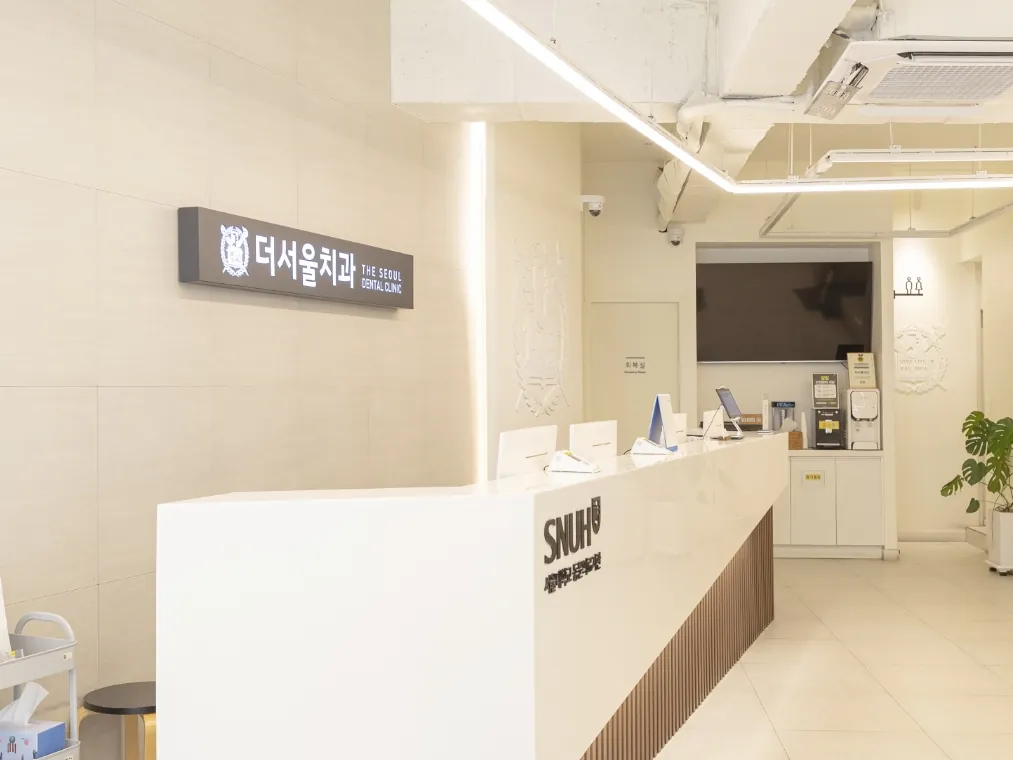
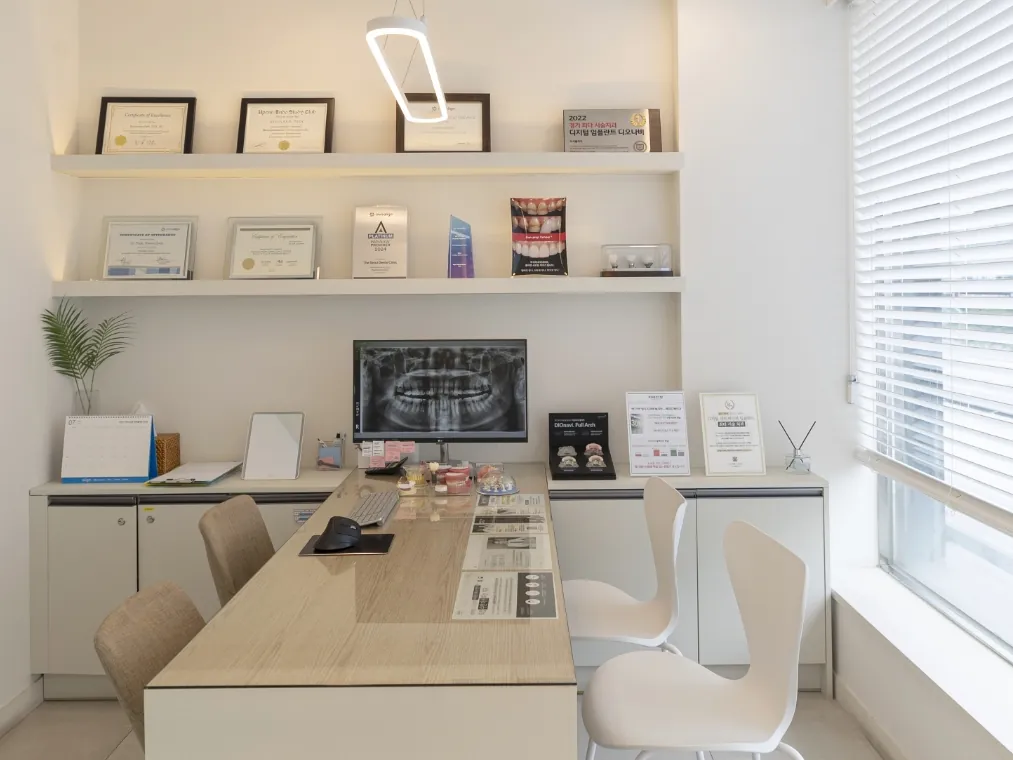
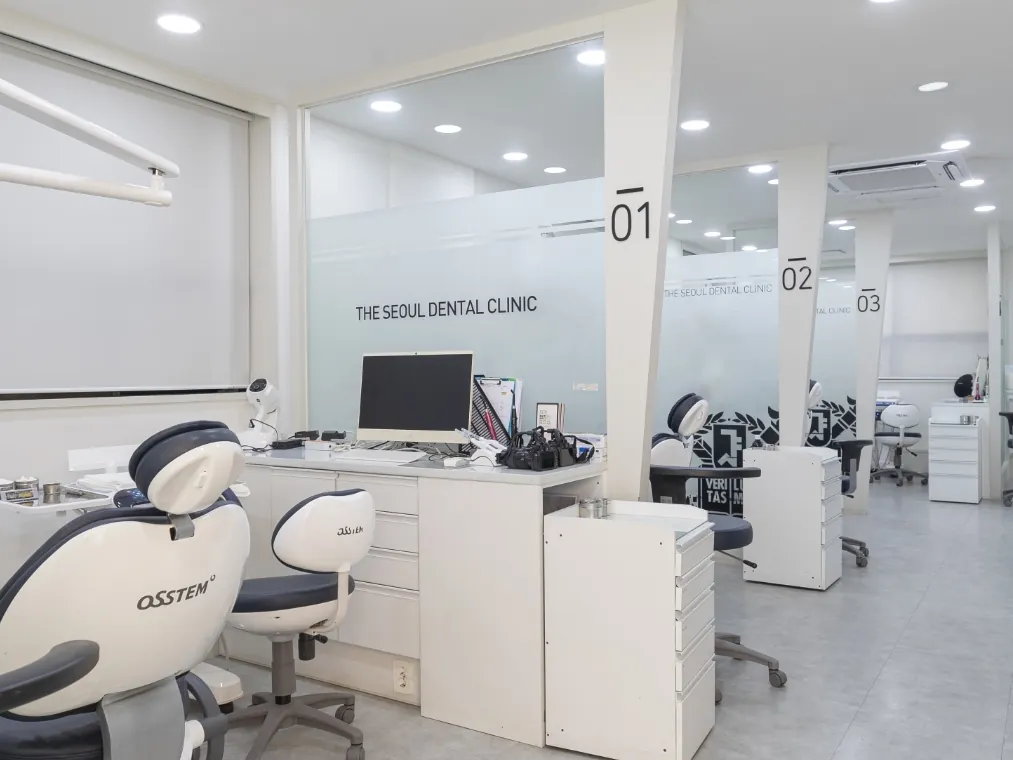
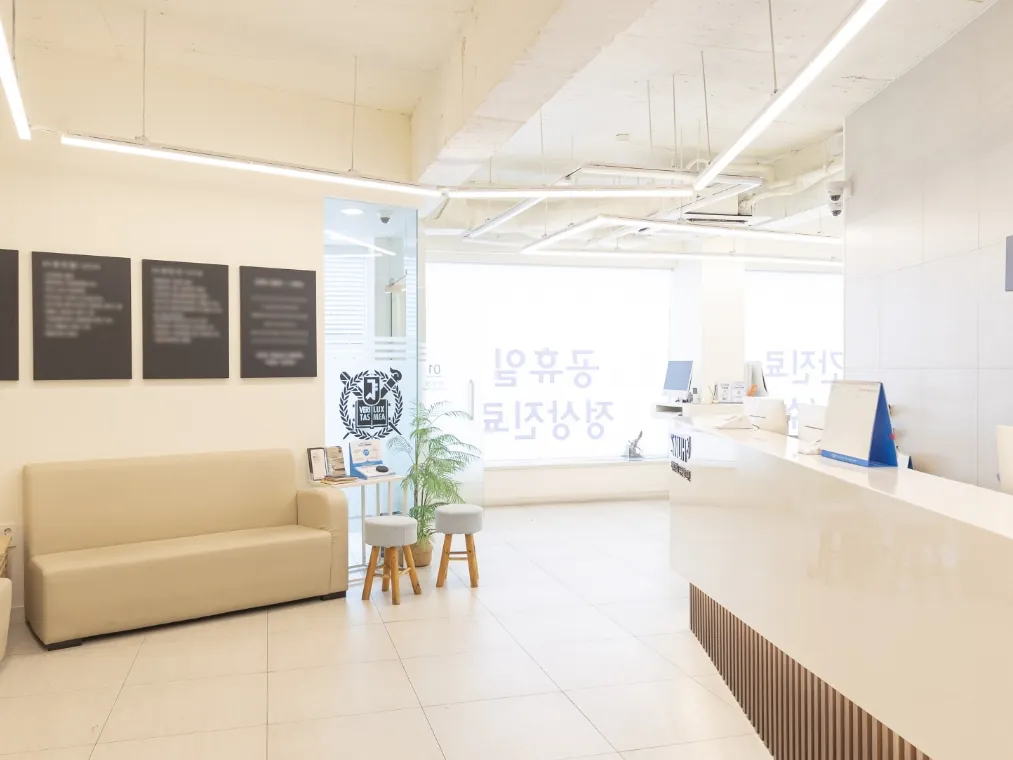
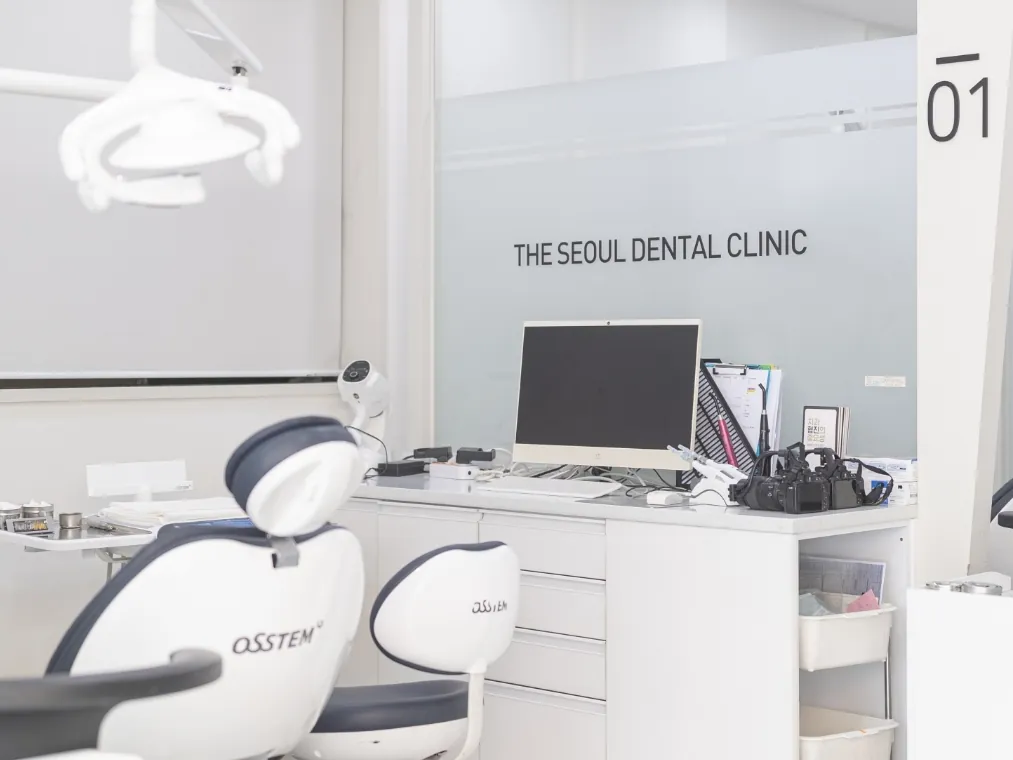
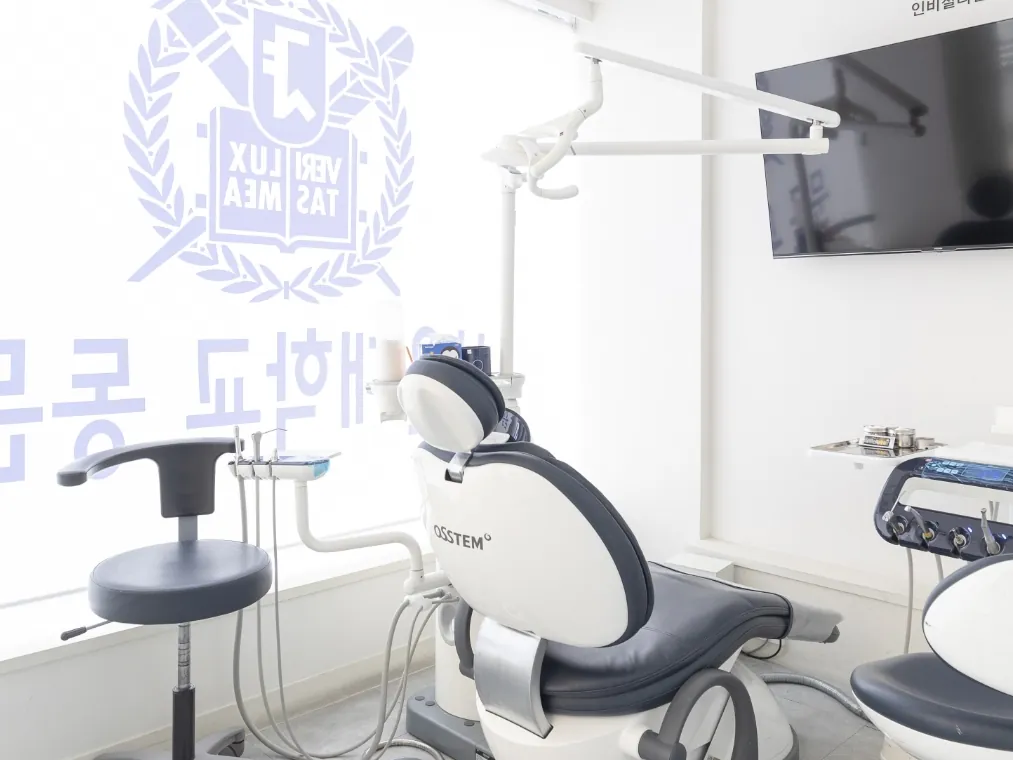
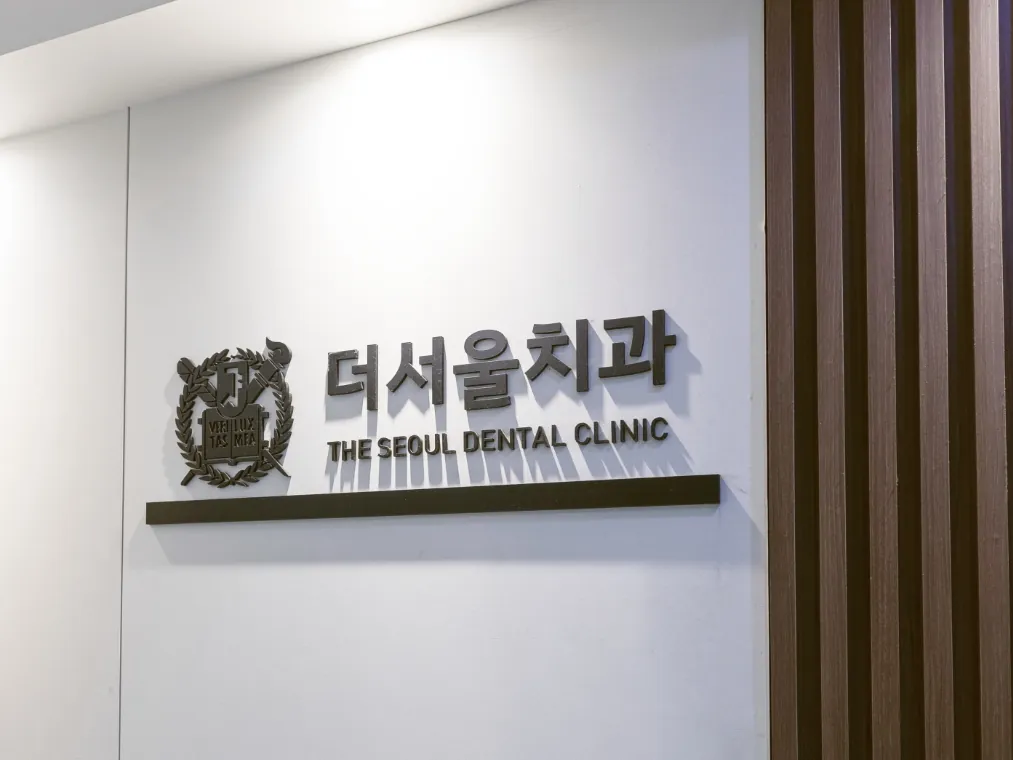
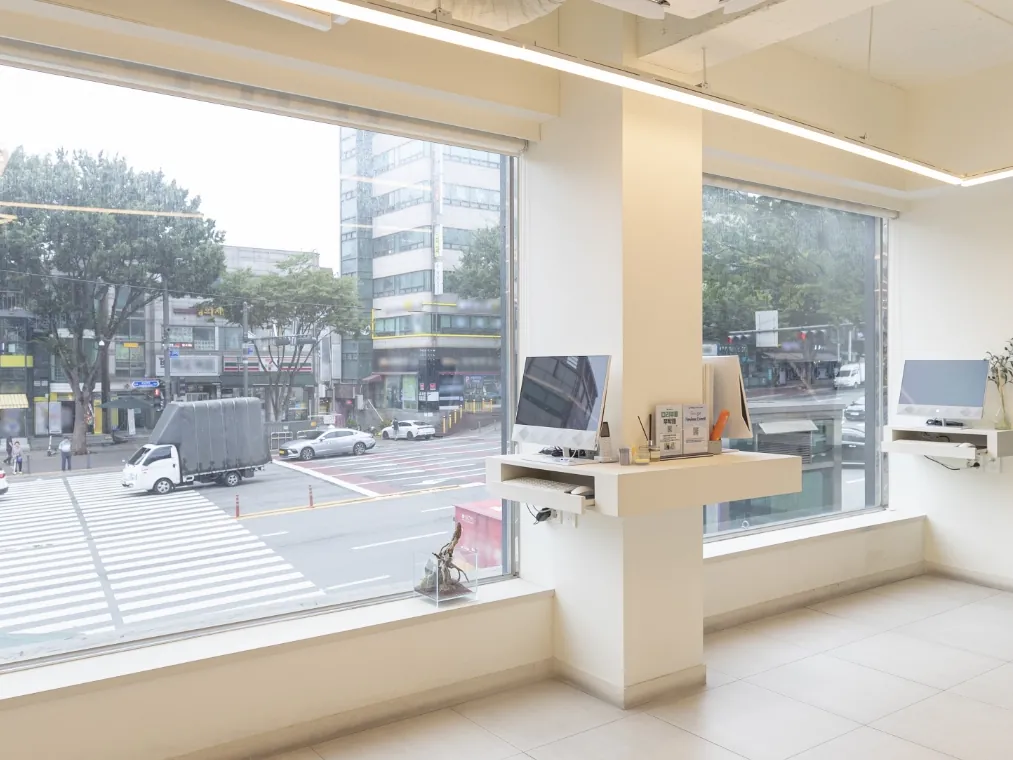
A 20-second walk through the clinic, then photos of it as it is: reception, treatment rooms, the consultation room and the CT corner. Consultation rooms are set up so that you can see your own scans and plan on screen while the dentist explains them in English.
How to Get to Us from Seoul
The clinic is at Taepyeong Station Exit 5, Sujin-dong, Seongnam. From Seoul, use a map app with “Taepyeong Station Exit 5” as your destination; it will show current subway and bus options for your own start point and time of day.
Coming from Bundang or Moran? The Suin-Bundang Line serves Bokjeong, Gachon Univ., Taepyeong and Moran, and Line 8 serves Moran and the stations toward Sinheung and Sujin. Our directions page explains the exit and the final approach, and our Suin-Bundang Line guide covers the route from Bundang.
Serving Taepyeong, Moran, Sujin, Sinheung and Bundang
The clinic is in Sujin-dong, Sujeong-gu. Patients come from the stations and landmarks around it, including the Suin-Bundang Line stops of Bokjeong, Gachon Univ., Taepyeong and Moran, and the Line 8 stops from Namwirye to Sinheung and Sujin. Pick the one closest to you for a route guide and the treatments people from that area ask about.
Residents of Hanam, Gwangju, Yongin and Seoul also visit; see our guides for Hanam, Gwangju and Yongin, Seoul day visits and arriving from Incheon Airport. We do not quote travel times because they vary with traffic and the day; use a map app for your own start point.
The Seoul Dental Clinic is a dental practice by Taepyeong Station Exit 5 in Sujin-dong, Seongnam. It treats residents of Seongnam, Bundang and nearby districts as well as visitors, offers implants, orthodontics, cosmetic and general dentistry, children’s care and conscious sedation, and explains every plan and price in English before treatment starts.
If you have searched for a dentist in Seongnam or Bundang and found only Korean-language websites, this site is written for you. Each treatment page explains what the procedure is, who it suits, what it costs from the clinic’s published list, and what to expect before, during and after. The Knowledge Center answers the practical questions that foreign patients ask most: how Korean dental insurance works, how to read a price list, what to bring, and how to continue aftercare when you travel.
Dental guides for Seongnam, in English
Honest answers on cost, insurance, comparisons, symptoms and aftercare. A few places to start:
Frequently asked questions
Is there an English-speaking dentist near Taepyeong Station in Seongnam?
Yes. The Seoul Dental Clinic is at Taepyeong Station Exit 5 in Sujin-dong, Sujeong-gu, Seongnam, and offers English-language consultations. You can describe symptoms, ask about options and receive prices and treatment plans in English.
Can I see prices before I book?
Yes. The clinic’s non-covered price list is published on the pricing page, from MegaGen implants at ₩350,000 to Invisalign at ₩2.5M–₩7M. Treatments that depend on your mouth, such as root canals, extractions or gum treatment, are quoted after an examination.
Can you help with documents for an overseas insurance claim?
The clinic provides treatment documents that patients can submit to insurers abroad. Tell us at booking which insurer you use and what they ask for, so the documents can be prepared during treatment rather than afterwards.
I live in Bundang or Moran. Is the clinic practical for me?
The clinic is in Sujin-dong, Sujeong-gu, by Taepyeong Station, in the same part of Seongnam as Moran, Sujin and Sinheung. Bundang residents can check the route in a map app; the directions page and our area pages for Moran, Bokjeong and Bundang describe each approach.
Do you treat children and anxious patients?
The clinic lists pediatric dentistry (fluoride, baby-tooth fillings, stainless crowns, space maintainers) and conscious sedation from ₩300,000. Ask which option fits your child or your situation at the consultation.
What are the opening hours?
Monday to Wednesday 09:30–20:30, Thursday 09:30–19:00, Friday 09:30–18:30 and Saturday 09:30–13:00. There is no lunch break. The clinic is closed on Sundays and open on public holidays.
Is there parking?
Yes. There is a parking garage in the building, and patients receiving treatment get parking benefits. Ask at reception when you arrive.
Do I need to book in advance?
Booking ahead is recommended so that an English-speaking team member can prepare for your visit and set aside enough time for examination and scans. Use the message box on this page, email theseouldc@naver.com, message the KakaoTalk channel or call +82-31-757-1525.
Is dental treatment covered by Korean national health insurance?
Some basic items follow national insurance rules and many cosmetic, implant and orthodontic treatments are paid privately. Ask the clinic what applies to your situation; our guide to Korean health insurance for foreigners explains the general picture.
Can I get a second opinion or continue treatment started elsewhere?
Yes. Bring X-rays and your treatment records, or ask your previous clinic to send them. The clinic lists implant aftercare and continuing treatment among its services, and a written plan with prices is given before work starts.
What should I bring to my first visit?
Bring your passport or ARC, any recent X-rays or records, a list of medications and allergies, and your insurer’s details if you plan to claim abroad. Our first-visit checklist covers the rest.
How long does treatment take if I am only in Korea for a short time?
It depends on the treatment. Check-ups, cleaning, whitening and some fillings can fit one visit, while implants and aligners need several stages. Tell us your travel dates and we will say honestly what fits and what does not.
Book a Consultation
Choose the closest message, edit it, and send. We reply with what to bring and the next available times.
Ask about a dental consultation
Tap what fits — your message is prepared for you. Nothing is sent until you press send.
Send opens your email app addressed to theseouldc@naver.com. Prefer chat? KakaoTalk channel · Instagram DM · or call +82-31-757-1525.
Message copied. Please call +82-31-757-1525 or email theseouldc@naver.com.
Visit us: Taepyeong Station Exit 5, Seongnam
2–3F, 1225 Seongnam-daero, Sujeong-gu, Seongnam-si, Gyeonggi-do (Taepyeong Station Exit 5)
| Monday – Wednesday | 09:30 – 20:30 |
|---|---|
| Thursday | 09:30 – 19:00 |
| Friday | 09:30 – 18:30 |
| Saturday | 09:30 – 13:00 |
| Sunday | Closed |
| Public holidays | Open |
| Lunch break | None — continuous hours |
Parking garage in the building; parking benefits for patients receiving treatment.