
Clear Aligners or Braces: A Dentist's Straight Answer
Published by The Seoul Dental Clinic · Meet the dentists
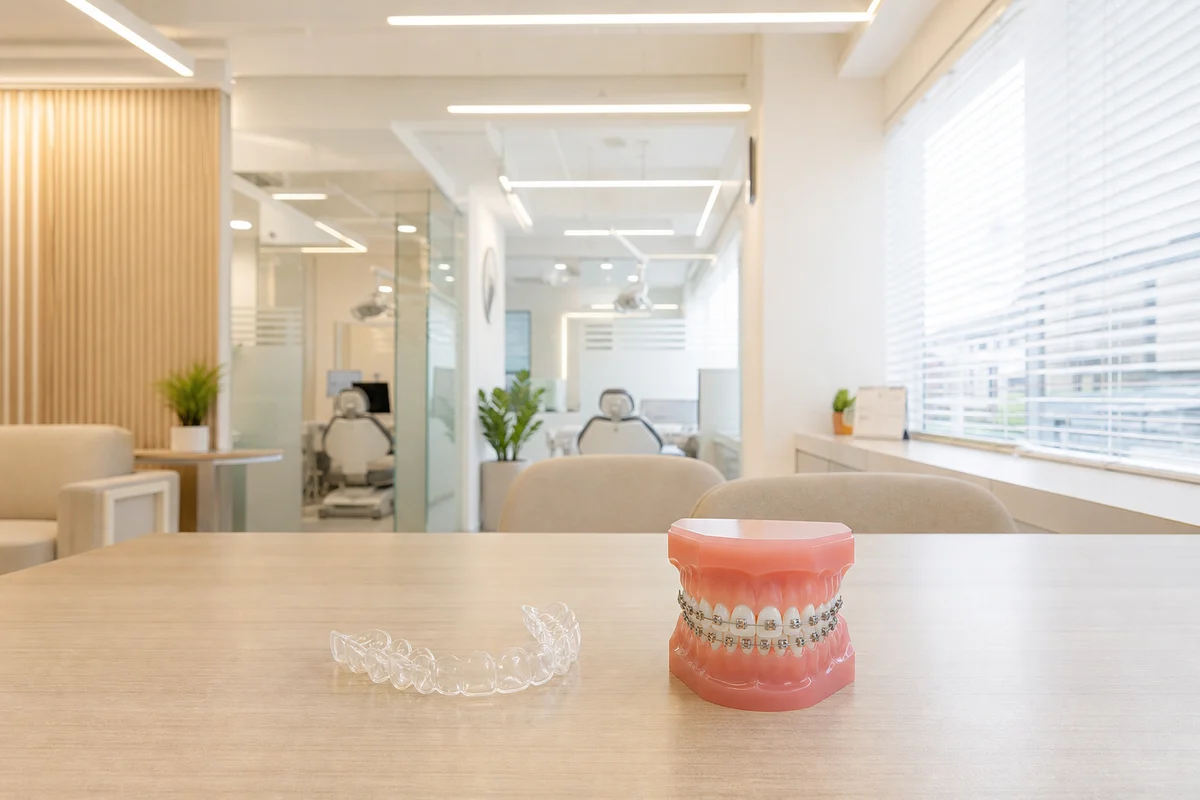
Both straighten teeth, and the right one depends on your bite, your habits and your schedule. Clear aligners suit many mild-to-moderate cases and people who want a discreet look; braces stay on the teeth the whole time, which helps when cooperation or complex movement is the concern. Your dentist decides after examining you.
The short answer
There is no universal winner. Clear aligners are removable trays that you swap through a planned series. Braces are brackets and wires fixed to the teeth. Each can move teeth well when it is matched to the case.
What usually decides it is not fashion but three practical things: how complicated the movement is, how reliably you will wear trays, and how much flexibility you need around work and travel.
Side-by-side comparison
Prices are from the clinic's published non-covered list. VAT may apply, and the exact figure is confirmed at consultation.
| Clear aligners (Invisalign) | Metal or ceramic braces | |
|---|---|---|
| Visibility | Clear trays, hard to notice up close | Visible brackets; ceramic is tooth-coloured |
| Removable | Yes, for meals and cleaning | No, fixed until removal |
| Eating | Take trays out, then brush before putting back | Avoid hard and sticky foods |
| Cleaning | Brush and clean the trays | Brush around brackets, extra tools help |
| Depends on you | Wear time each day | Less; wires work all day |
| Published price | ₩2.5M to ₩7M | Metal ₩2.8M, combination ₩3.1M, ceramic ₩3.2M; Clippy-C self-ligating ₩3.6M |
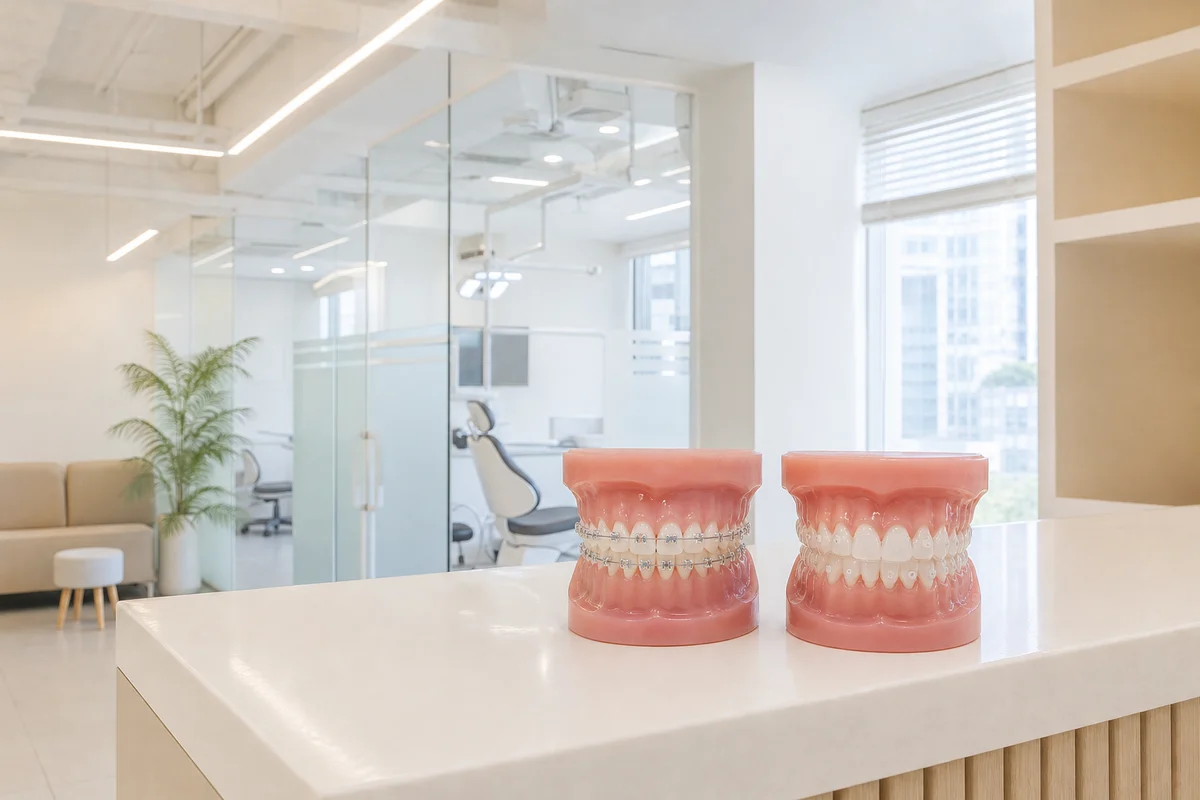
When aligners tend to fit well
Aligners are often considered for mild to moderate crowding, gaps, and adults who want a low-profile option for work or photos. Because trays come out, brushing and flossing stay close to normal, which many adults find easier on the gums.
They also suit people who are disciplined about wearing trays for most of the day. If you tend to forget or lose things, tell your dentist honestly; it changes the advice.
When braces tend to fit well
Fixed braces are often preferred when movement is complex, when a tooth needs more controlled rotation or vertical change, or when the patient may not wear removable trays reliably. Teenagers and young adults are common examples, though age alone does not decide it.
Ceramic braces blend with the teeth more than metal ones, while Clippy-C self-ligating brackets use a built-in clip instead of small elastic ties. Ask what each means for your case.
Cost in plain terms
Published aligner pricing spans a wide band because cases vary in length and complexity. Fixed braces are listed in a narrower band, and self-ligating brackets sit higher. A lower number is not automatically better value: what matters is that the appliance fits your case and that follow-up visits are realistic for you.
Ask what the quote includes: scans or records, the appliance, adjustment visits, and retainers. Then compare like with like.
Living or travelling abroad during treatment
Many international patients ask whether they can start here and continue elsewhere. Aligner trays arrive in sets, so some people plan check-ups around trips; braces need regular adjustment visits in person.
Do not assume a pause is harmless. Tell the clinic your travel pattern before you choose, so the plan can be built around real visit dates.
After treatment: retainers
Whichever you choose, teeth can drift once the appliance is gone. Retainers are part of the plan, not an extra to skip. Published fees are ₩100K to ₩200K for a fixed retainer and ₩150K to ₩200K for a removable one.
- Ask what kind of retainer is recommended for you
- Ask how long it should be worn and when to review it
- Bring it to check-ups so wear can be checked
Frequently asked questions
Is Invisalign cheaper than braces?
Not necessarily. The published Invisalign range is wide, ₩2.5M to ₩7M, while fixed braces are listed at ₩2.8M (metal) to ₩3.2M (ceramic). Where you land depends on the complexity of your case.
Are aligners painful?
Most people feel pressure or tightness when starting a new set, and the same applies to braces after adjustment. How much varies from person to person, so ask your dentist what to expect.
Can everyone use aligners?
No. Some bites need fixed appliances or a different plan. A clinical exam and records are needed before anyone can say which suits you.
Do I need a consultation first?
Yes. Orthodontic cost and method are quoted after examination; an English consultation can be arranged, and you can confirm current arrangements with the clinic.
English-speaking dentists in Seongnam
The clinic was founded by two brothers trained at Seoul National University who direct it together. Three further dentists hold Ministry of Health and Welfare specialist certifications. Full credentials →
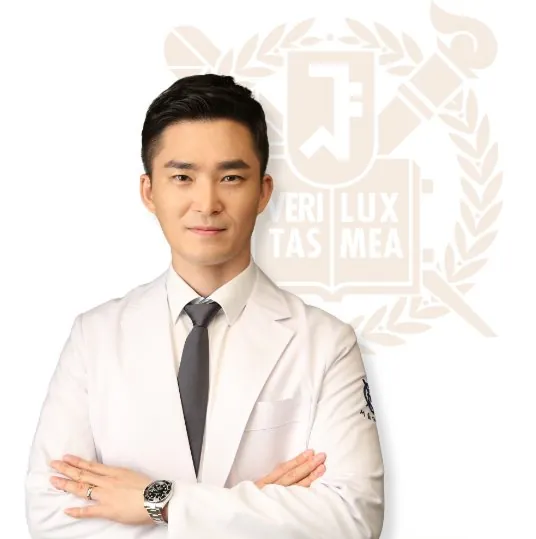
Dr. Hyun Sung Park
Clinic Director
- Co-founder and joint clinic director
- DDS, Seoul National University School of Dentistry
- Master’s degree, SNU Graduate School of Dentistry
- Former staff, Dept. of General Dentistry, SNU Dental Hospital
- Microendodontics Programme, SNU
- Course completion, UCLA, USA
- Member, UPenn Endodontics Study Club, USA
- Certified Invisalign Provider
- Osstem Implant AIC Programme
- Member, International Congress of Oral Implantologists (ICOI)

Dr. Hyeonjoon Park
Clinic Director
- Co-founder and joint clinic director
- DDS, Seoul National University School of Dentistry
- Master’s degree, SNU Graduate School of Dentistry
- Former staff, Dept. of General Dentistry, SNU Dental Hospital
- Affiliate Associate Fellow, American Academy of Implant Dentistry (AAID)
- Certified Invisalign Provider; leads orthodontic treatment
- Course completion, UCLA, USA
- Member, UPenn Endodontics Study Club, USA
- Member, International Congress of Oral Implantologists (ICOI)
- Member, Seoul Prime Orthodontic Study Club
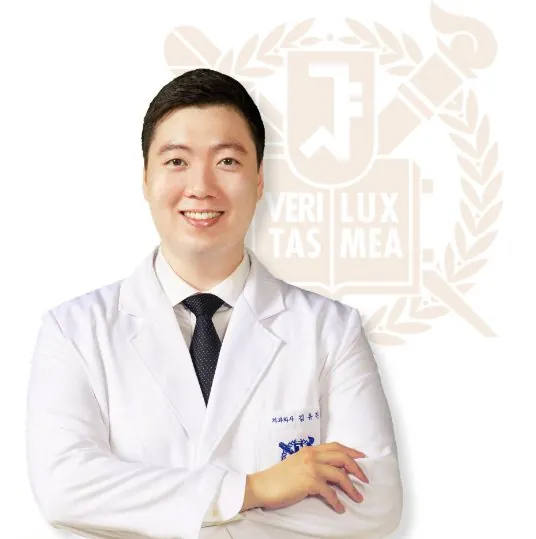
Dr. Yu Jin Kim
Dentist
- Board-certified specialist, Advanced General Dentistry (Ministry of Health and Welfare)
- Johns Hopkins University, USA
- Master’s degree, SNU Graduate School of Dentistry
- Former staff, Osaka University Dental Hospital, Japan

Dr. Min Ji Choi
Dentist
- Board-certified specialist, Conservative Dentistry
- Board-certified specialist, Advanced General Dentistry
- Internship and residency, Jeonbuk National University Dental Hospital
- Master’s degree in Conservative Dentistry, Jeonbuk National University

Dr. Jin Young Choi
Dentist
- Board-certified specialist, Advanced General Dentistry
- Clinical training, Faculty of Dentistry, University of British Columbia, Canada
- Master’s degree, Kyungpook National University Graduate School of Dentistry
- BA in English Language and Literature, Korea University
Related treatments and guides
Talk through your bite with a dentist
Bring photos of your smile and any previous orthodontic records. The team at Sujin-dong, by Taepyeong Station Exit 5, can discuss which approach fits you in English.