Crossbite Correction near Taepyeong Station, Seongnam
A crossbite means some upper teeth bite inside the lower teeth when the jaws close.
Ask about Crossbite Correction
Tap what fits — your message is prepared for you. Nothing is sent until you press send.
Send opens your email app addressed to theseouldc@naver.com. Prefer chat? KakaoTalk channel · Instagram DM · or call +82-31-757-1525.
Message copied. Please call +82-31-757-1525 or email theseouldc@naver.com.
A crossbite means some upper teeth bite inside the lower teeth when the jaws close. Some crossbites can be treated with clear aligners, and others need braces or a different approach. Your dentist works out which type you have at an examination before recommending anything, and published fees start at ₩2.5M for Invisalign and ₩2.8M for metal braces.
What a Crossbite Is
In a typical bite, the upper teeth sit slightly outside the lower teeth, like the lid of a box. In a crossbite, one or more upper teeth sit inside the lower teeth instead. It can affect a single tooth, a group of teeth or a whole side of the mouth.
Some people never notice a crossbite. Others see uneven wear on certain teeth, feel the jaw slide to one side when closing or have gum recession around a tooth that takes extra force. A crossbite can also make the face or smile look slightly uneven in some cases.
Crossbites can come from the position of teeth, the width of the jaws or the way the jaw closes. This is why two people with the same label can need quite different treatment.
Only an examination, usually with imaging, can tell which pattern you have. Self-diagnosis from a mirror is a poor guide.
- Upper teeth that sit behind or inside lower teeth
- A jaw that shifts to one side when closing
- Uneven tooth wear
- Gum recession on a tooth that bears extra force
Types of Crossbite
Dentists often separate crossbites by where the problem lies. The cards below show the general categories, and your dentist decides which, if any, describes you.
The type matters because it affects how treatment is planned and whether aligners alone are likely to be enough.
Single-tooth crossbite
One or a few teeth sit the wrong way round. Often the simplest to address, though still dependent on your case.
Posterior crossbite
The back teeth on one or both sides bite inside the lower teeth. It may involve jaw width.
Anterior crossbite
Some upper front teeth sit behind the lower front teeth. Tooth position and jaw relationship are both considered.
Skeletal crossbite
The upper and lower jaws are mismatched in width or position. May call for braces, an appliance or, rarely, surgery.
Crossbite Care for Taepyeong, Moran, Sujin and Bundang Patients
The clinic is by Taepyeong Station, Exit 5, in Sujin-dong, Sujeong-gu, Seongnam. If you live or work in Taepyeong, Moran, Sujin, Sinheung, Gachon or the Wirye New Town area, the regular check-ups that orthodontic treatment needs are close to home.
Aligner and braces treatment is a long-running process with scheduled reviews. A clinic within your usual routes makes it easier to keep those appointments, which matters for the result.
Moran and Sujin are on the Line 8 side of the local map, and Moran and Bokjeong also appear on the Suin-Bundang Line, so many Bundang-side patients can plan a route by subway. We do not quote travel times; check your own route in a map app before booking.
English consultation is available, and you are welcome to bring questions or earlier orthodontic records. Opening hours are Mon–Wed 09:30–20:30, Thu 09:30–19:00, Fri 09:30–18:30 and Sat 09:30–13:00, with no lunch break; the clinic is closed on Sundays and open on public holidays.
What Aligners Can and Cannot Do
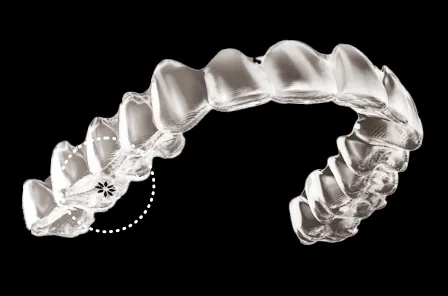
Clear aligners move teeth in small steps using a series of trays. For crossbites that come mainly from tooth position, aligners may be able to tilt or shift teeth into a better relationship, sometimes with small attachments or elastics.
Aligners are less able to change the width or position of the jaws themselves. If a crossbite is largely skeletal, tooth movement alone may not give a stable result, and your dentist will tell you so.
Success also depends on wearing the trays as directed and keeping review appointments. Teeth do not stay put automatically, so a retainer is normally part of the plan afterwards.
No dentist can promise a result before examination. A realistic plan comes from your records, and you can ask to see the planned movement before you begin.
- May suit crossbites that come from tooth position
- Less suited to crossbites caused by jaw width
- Needs consistent wear and review
- Usually followed by a retainer
When Braces or Surgery Are Discussed
Fixed braces apply constant, controlled force and can handle more complex movements. For some crossbites, braces are the more predictable option, and your dentist may suggest them if aligners are unlikely to do the job.
In some cases an appliance that widens the upper jaw is used, particularly in growing patients. Whether this is suitable depends on age and development, and is decided after examination.
Where the jaws themselves are significantly mismatched, orthodontic treatment may be combined with jaw surgery. This is uncommon and needs specialist assessment. Your dentist will explain if it is relevant and where to go next.
Ask for the reasoning behind any recommendation. A good plan states why one approach suits you and what the alternatives would involve.
What It Costs
The range for Invisalign is wide because cases differ in complexity and duration. Your final figure is confirmed after examination.
Ask whether the quote includes retainers, review visits and any attachments or elastics, as these affect the real total.
| Option | Published price (KRW) |
|---|---|
| Invisalign | ₩2.5M to ₩7M |
| Metal braces | ₩2.8M |
| Combination braces (ceramic upper / metal lower) | ₩3.1M |
| Ceramic braces | ₩3.2M |
| Clippy-C self-ligating braces | ₩3.6M |
| Fixed retainer | ₩100,000 to ₩200,000 |
| Removable retainer | ₩150,000 to ₩200,000 |
Prices are the published non-covered price list in Korean won. VAT may apply, and your final figure is confirmed at consultation.
Aligners or Braces: Points to Weigh
This table compares general characteristics. Your dentist will say which fits your crossbite.
| Point | Clear aligners | Braces |
|---|---|---|
| Visibility | Clear trays | Brackets visible, ceramic less so |
| Removable | Yes, for eating and cleaning | No, fixed to teeth |
| Complex movements | Limited in some cases | Generally more control |
| Depends on you | Wear time is essential | Less reliant on daily compliance |
| Published range | ₩2.5M to ₩7M | ₩2.8M to ₩3.6M |
What to Expect at Your Visits
Crossbite treatment is a process, not a single appointment. Here is the usual shape of it.
Retainer wear after treatment is part of keeping the result.
Examination and records
Your dentist checks your bite, jaw movement and teeth, and takes the records needed for planning.
Diagnosis and options
You learn which type of crossbite you have and whether aligners, braces or another route fits.
Treatment
Aligner trays are worn in sequence, or braces are fitted, with regular review visits.
Retention
A retainer helps hold the new position. Ask how long to wear it.
English-speaking dentists in Seongnam
The clinic was founded by two brothers trained at Seoul National University who direct it together. Three further dentists hold Ministry of Health and Welfare specialist certifications. Full credentials →

Dr. Hyeonjoon Park
Clinic Director
- Co-founder and joint clinic director
- DDS, Seoul National University School of Dentistry
- Master’s degree, SNU Graduate School of Dentistry
- Former staff, Dept. of General Dentistry, SNU Dental Hospital
- Affiliate Associate Fellow, American Academy of Implant Dentistry (AAID)
- Certified Invisalign Provider; leads orthodontic treatment
- Course completion, UCLA, USA
- Member, UPenn Endodontics Study Club, USA
- Member, International Congress of Oral Implantologists (ICOI)
- Member, Seoul Prime Orthodontic Study Club

Dr. Hyun Sung Park
Clinic Director
- Co-founder and joint clinic director
- DDS, Seoul National University School of Dentistry
- Master’s degree, SNU Graduate School of Dentistry
- Former staff, Dept. of General Dentistry, SNU Dental Hospital
- Microendodontics Programme, SNU
- Course completion, UCLA, USA
- Member, UPenn Endodontics Study Club, USA
- Certified Invisalign Provider
- Osstem Implant AIC Programme
- Member, International Congress of Oral Implantologists (ICOI)

Dr. Yu Jin Kim
Dentist
- Board-certified specialist, Advanced General Dentistry (Ministry of Health and Welfare)
- Johns Hopkins University, USA
- Master’s degree, SNU Graduate School of Dentistry
- Former staff, Osaka University Dental Hospital, Japan

Dr. Min Ji Choi
Dentist
- Board-certified specialist, Conservative Dentistry
- Board-certified specialist, Advanced General Dentistry
- Internship and residency, Jeonbuk National University Dental Hospital
- Master’s degree in Conservative Dentistry, Jeonbuk National University

Dr. Jin Young Choi
Dentist
- Board-certified specialist, Advanced General Dentistry
- Clinical training, Faculty of Dentistry, University of British Columbia, Canada
- Master’s degree, Kyungpook National University Graduate School of Dentistry
- BA in English Language and Literature, Korea University
Crossbite Correction: frequently asked questions
What type of crossbite do I have?
Only an examination can tell. Dentists distinguish single-tooth, back-teeth, front-teeth and jaw-related patterns.
Can aligners fix a crossbite?
Some crossbites that come from tooth position can be treated with aligners. Others, especially those related to jaw width, may need braces or another approach.
When are braces needed?
Braces are discussed when aligners are unlikely to give the movement or control the case needs. Your dentist explains the reasoning.
Is surgery ever needed?
Rarely, and only when the jaws are significantly mismatched. It requires specialist assessment.
How much does treatment cost?
Published fees are ₩2.5M to ₩7M for Invisalign, metal braces at ₩2.8M, combination braces (ceramic upper, metal lower) at ₩3.1M, ceramic braces at ₩3.2M and Clippy-C self-ligating braces at ₩3.6M. Final fees are confirmed at consultation.
Do I need a retainer afterwards?
Usually yes. Fixed retainers are listed at ₩100,000 to ₩200,000 and removable retainers at ₩150,000 to ₩200,000.
How long does treatment take?
It depends on the type of crossbite and the method. Your dentist gives an estimate after examining you.
Can a crossbite damage my teeth?
It can cause uneven wear and extra strain on some teeth or gums in some people. Whether yours does is a question for examination.
Can I get a consultation in English?
Yes. English-language consultation is available.
Ask whether aligners suit your case
Tell us what bothers you about your teeth and we will explain the options in English.
Visit us: Taepyeong Station Exit 5, Seongnam
2–3F, 1225 Seongnam-daero, Sujeong-gu, Seongnam-si, Gyeonggi-do (Taepyeong Station Exit 5)
| Monday – Wednesday | 09:30 – 20:30 |
|---|---|
| Thursday | 09:30 – 19:00 |
| Friday | 09:30 – 18:30 |
| Saturday | 09:30 – 13:00 |
| Sunday | Closed |
| Public holidays | Open |
| Lunch break | None — continuous hours |
Parking garage in the building; parking benefits for patients receiving treatment.