Dental crowns · Taepyeong, Seongnam

Dental Crowns: Zirconia, PFM, Metal near Taepyeong Station, Seongnam

A crown is a cap that covers and protects a damaged tooth.

₩450KZirconia crown (back tooth)
₩400KPFM crown
₩300KMetal crown
₩100KCore build-up / post
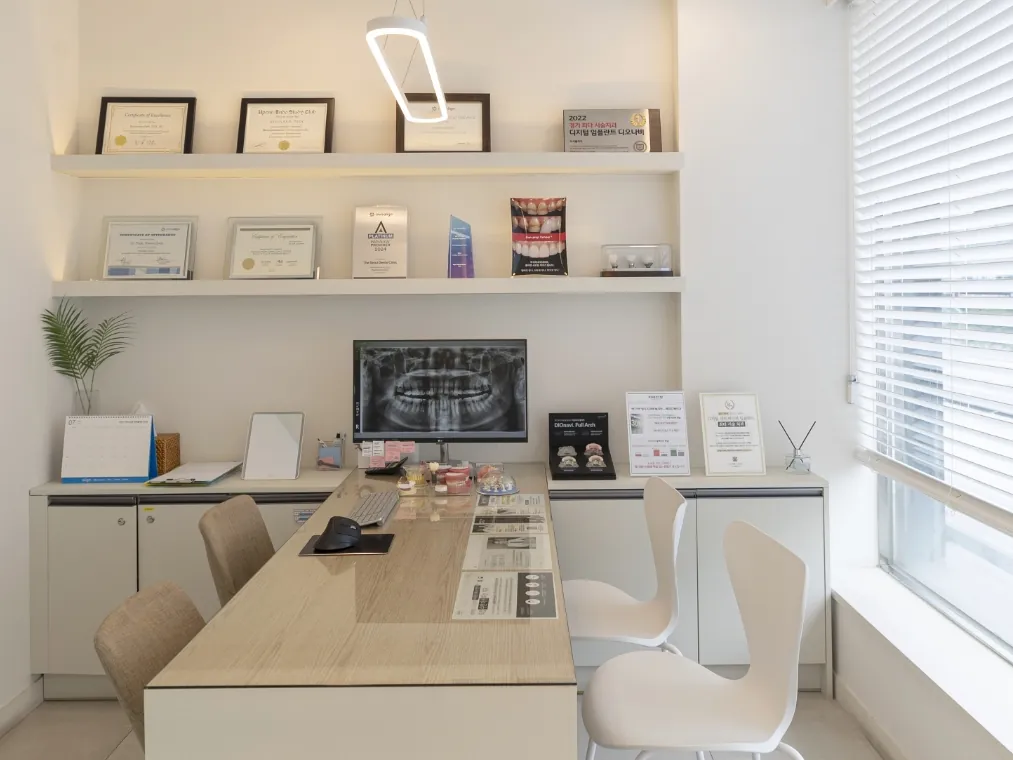
Consultation room where treatment plans are explained

Ask about Dental Crowns

Tap what fits — your message is prepared for you. Nothing is sent until you press send.

Send opens your email app addressed to theseouldc@naver.com. Prefer chat? KakaoTalk channel · Instagram DM · or call +82-31-757-1525.

The short answer

A crown is a cap that covers and protects a damaged tooth. The clinic's published fees are ₩450,000 for a zirconia crown on a back tooth and ₩550,000 on a front tooth, ₩400,000 for PFM and ₩300,000 for metal. A core build-up or post is ₩100,000 when the tooth needs rebuilding first, and your dentist confirms the plan after examination.

When You Need a Crown

A crown is usually suggested when a tooth has lost too much structure to be repaired with a filling. That can follow a large cavity, a crack, a broken cusp, a worn-down tooth or root canal treatment.

The crown works like a sleeve. Your dentist reshapes the tooth, takes a record of it and fits a custom-made cap that restores shape, chewing surface and protection. A crown can also cap a dental implant, which is covered on the implant pages.

Not every damaged tooth needs a crown. Smaller problems may suit a resin filling (₩70K to ₩250K) or an inlay or onlay (₩200K to ₩330K). Your dentist decides after examination and X-rays, and may explain the trade-offs between the options.

  • A large filling that keeps breaking
  • A cracked or chipped tooth
  • A tooth after root canal treatment
  • A worn or weakened tooth that needs protection
  • A visible tooth with a shape or color problem
Dental Crowns: how the treatment is planned

Dental Crowns for Taepyeong, Moran, Sujin and Bundang Residents

The clinic is by Taepyeong Station, Exit 5, in Sujin-dong, Sujeong-gu, Seongnam. People living or working in Taepyeong, Moran, Sujin, Sinheung, Gachon and Wirye New Town can have crown visits near home rather than planning a trip across Seoul.

A crown involves at least two stages, one to prepare the tooth and one to fit the final crown, so a nearby clinic helps with scheduling. Bring your work calendar and ask what spacing between visits is realistic.

Moran and Sujin are on the Line 8 side of the local map, and Moran and Bokjeong also appear on the Suin-Bundang Line, so many Bundang-side residents can plan a route by subway. We do not quote travel times; check your own route in a map app before booking.

English consultation is available, and you can ask for the material, price and number of visits to be written down. Opening hours are Mon–Wed 09:30–20:30, Thu 09:30–19:00, Fri 09:30–18:30 and Sat 09:30–13:00, with no lunch break; the clinic is closed on Sundays and open on public holidays.

Crown Materials Compared

Material choice depends on where the tooth sits, how you bite, how much of the tooth remains and what you want it to look like. Back teeth take the most chewing force, while front teeth are seen every time you smile.

Metal crowns are metallic in color and usually suit teeth that are hidden. PFM crowns have a porcelain surface over a metal base and sit in the middle of the price range. Zirconia crowns are tooth-colored and are the most expensive of the three on the list.

Ask your dentist why a particular material is suggested for your tooth, and whether there is a more economical option that still suits your bite. If you grind your teeth, mention it, since that affects the choice.

MaterialLookNotes
ZirconiaTooth-colouredStrong ceramic; priced by tooth position (back or front)
PFM (porcelain fused to metal)Porcelain over metal coreEstablished option with a natural-looking surface
MetalMetallicLowest published price; often used where appearance matters less

Prices are as published; confirm at consultation. VAT may apply.

Crown Prices

Fees are per crown. If a tooth needs a core build-up or post first, that is added. If it also needs root canal treatment, that is quoted after examination because it is not on the published list.

A bridge replacing a missing tooth uses crowns on neighboring teeth, so the cost multiplies with the number of units. Your dentist can compare a bridge, a denture and an implant for your situation.

Always ask for a written estimate covering preparation, any build-up, the crown itself and any follow-up adjustment.

Crown typePublished fee
Zirconia — back tooth₩450,000
Zirconia — front tooth₩550,000
PFM₩400,000
Metal₩300,000
Core build-up / post₩100,000

Prices are as published; confirm at consultation. VAT may apply.

Core Build-up and Post

A crown needs something solid to hold on to. If a tooth has lost most of its structure, typically after decay or root canal treatment, your dentist may first rebuild the center of the tooth with a core build-up, listed at ₩100,000.

A post is a small support placed inside the root canal space to anchor the build-up. It is used only when the tooth needs it, and your dentist decides this from X-rays and examination.

This step can feel like an extra expense, but it affects how well the crown stays in place. Ask your dentist to show you on the X-ray why the build-up is suggested.

A tooth with root canal treatment can be more brittle, which is one reason a crown is often discussed afterwards. This is general information and not a statement about your own tooth.

  • Ask whether a build-up is necessary or optional
  • Ask whether a post is part of the plan
  • Ask if the tooth has enough healthy structure left

Crown Procedure and Visits

Most crowns follow the same pattern. The details depend on the tooth, the material and your case, and your dentist will explain what applies to you.

A temporary crown may be placed between visits to protect the prepared tooth. Avoid very sticky or hard food on that side until the final crown is fitted.

Examination

Your dentist checks the tooth and takes X-rays, then explains the material, cost and number of visits.

Preparation

The tooth is shaped under local anesthesia, a build-up is added if needed and a record of the tooth is taken.

Temporary protection

A temporary cover protects the tooth while your crown is made.

Fitting

The final crown is tried, adjusted for bite and fitted. You receive aftercare advice.

Questions to Ask at Your Consultation

Crowns are a common treatment, but the choices around them are personal. A few questions keep the conversation concrete.

If you are comparing quotes, make sure each one states the material, whether a build-up is included and whether temporary crowns are part of the fee.

  • Which material do you suggest for this tooth, and why?
  • Is a core build-up or post needed?
  • Will the tooth need root canal treatment first?
  • How many visits will I need?
  • What aftercare should I follow?
Clinical case

Cases from the clinic

Cosmetic

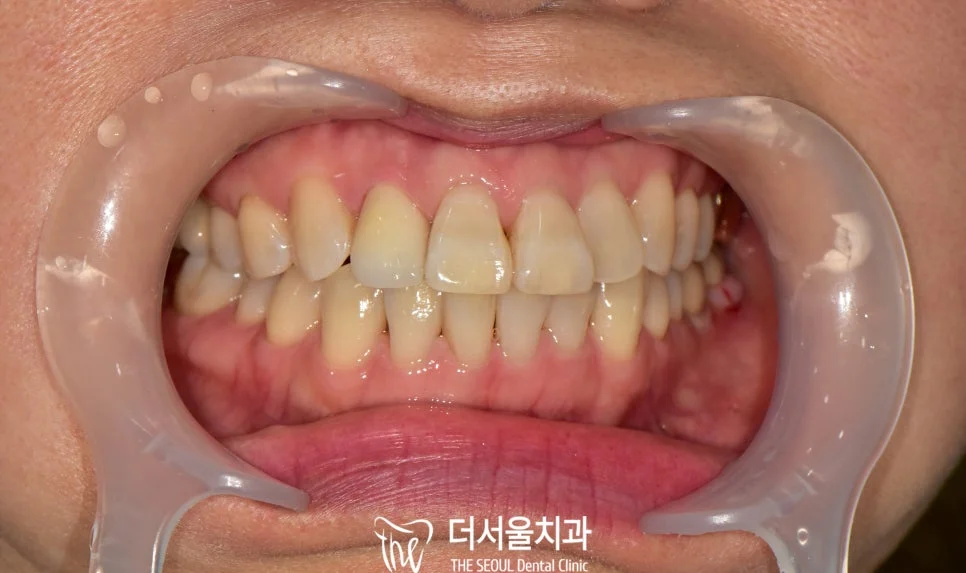
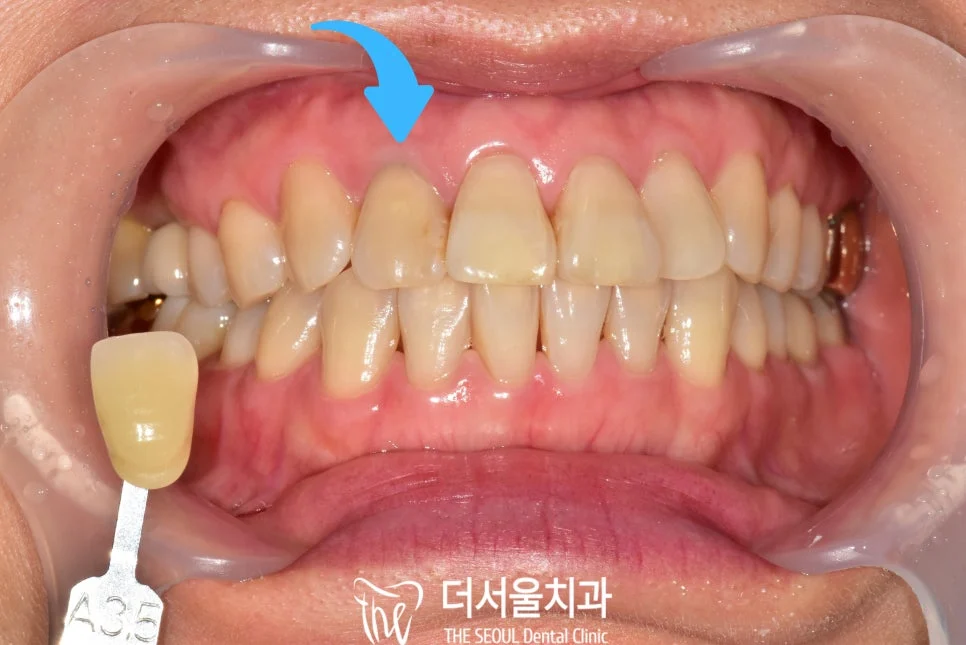
A darkened front tooth: root canal retreatment, internal whitening and a ceramic crown

Treated by Dr. Hyun Sung Park

BeforeBefore: A darkened front tooth: root canal retreatment, internal whitening and a ceramic crown
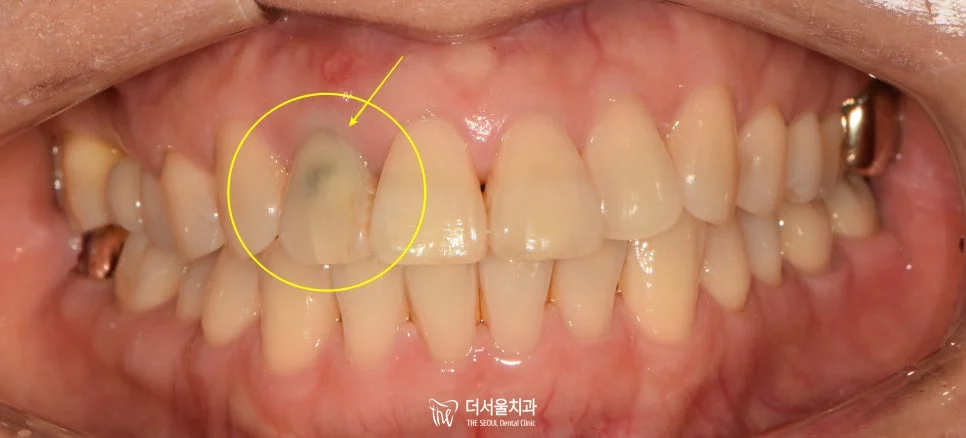
AfterAfter: A darkened front tooth: root canal retreatment, internal whitening and a ceramic crown
Front view before and after treatment

Why the patient came in

The patient came in because one upper front tooth had turned dark. The tooth had a root canal treatment from before, and the X-ray showed inflammation at the root tip.

What was done

  1. The root canal treatment was redone. On opening the tooth, dark contaminated material was found inside the canal.
  2. Part of the root filling was removed and a barrier of glass ionomer or resin was placed to keep the whitening agent inside the crown of the tooth.
  3. A whitening agent was sealed inside the tooth and the colour was checked every 4 to 7 days.
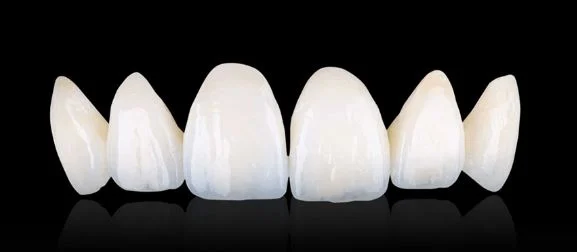
  4. After whitening, the shade was matched and an all-ceramic crown was made so that no dark colour shows through.
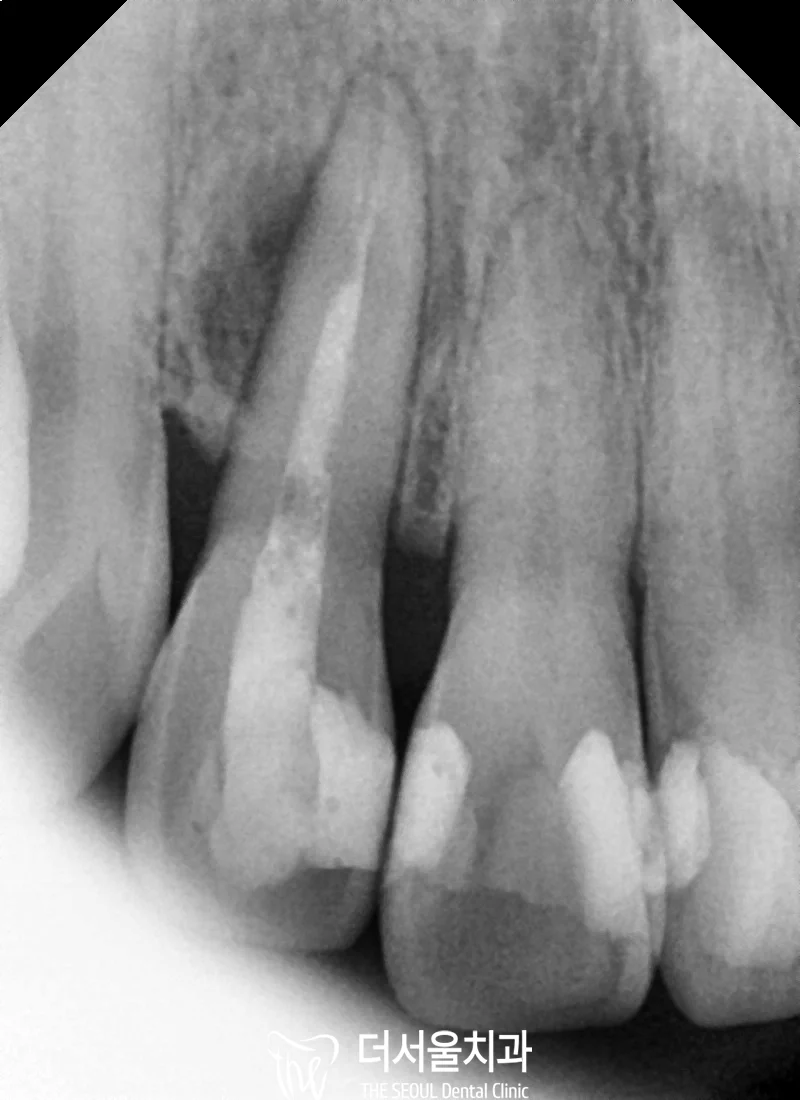
X-ray before retreatment
Shade check after internal whitening
Ceramic crowns made to match the neighbouring teeth

Published with the patient’s consent. Photos and X-rays are from the clinic’s records. Treatment plans and results differ for every patient; only an examination can show what is possible for you. A tooth whitened from inside can darken again over time. Retreatment and crown preparation can cause temporary sensitivity or discomfort.
Root canal treatment

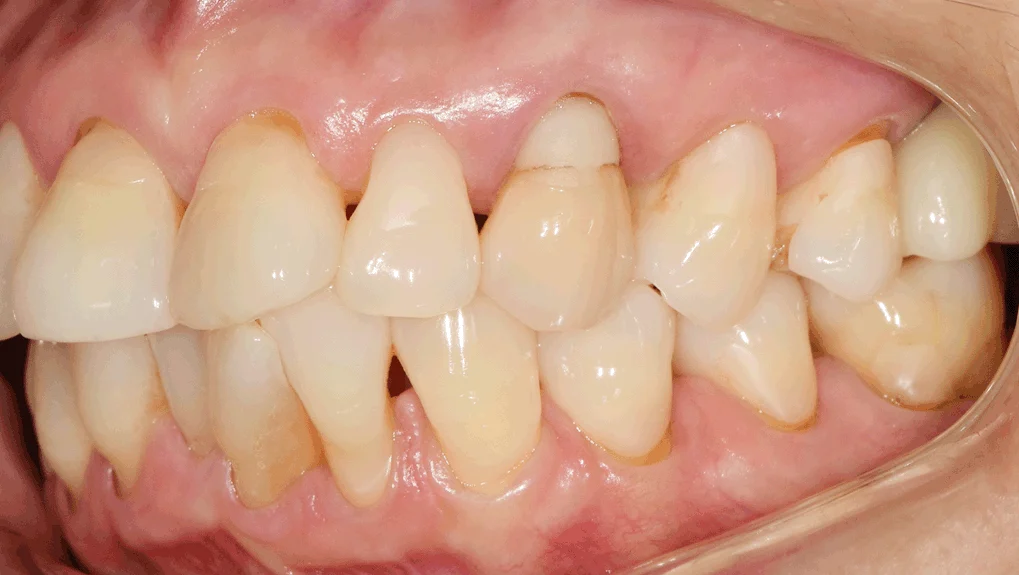
Why a crown matters after root canal treatment: saving a fractured canine

Treated by Dr. Hyeonjoon Park

BeforeBefore: Why a crown matters after root canal treatment: saving a fractured canine
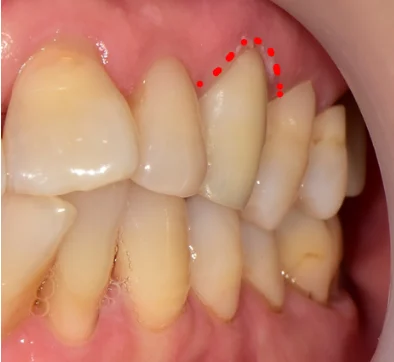
AfterAfter: Why a crown matters after root canal treatment: saving a fractured canine
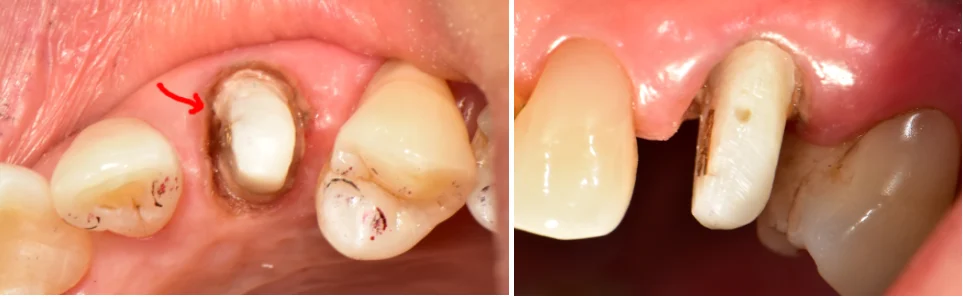
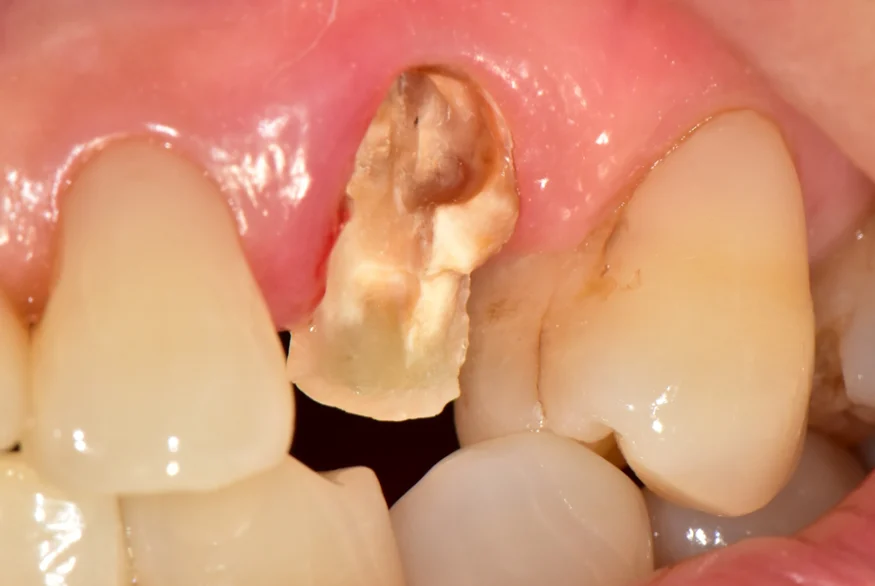
The fractured tooth and the final crown

Why the patient came in

An upper canine (#23) had a root canal treatment done at another clinic but no crown, plus a large glass-ionomer filling from earlier gum-line wear. A crown was recommended at a check-up, but the patient chose to wait. Later the cheek side of the tooth broke off, leaving the tooth hollow.

What was done

  1. The patient preferred to keep the tooth rather than have an implant.
  2. The root canal treatment was redone.
  3. Because very little tooth structure remained, a core build-up was made to give the crown enough support.
  4. A crown was then fitted.
Before the fracture: root-canal-treated canine without a crown
Core build-up before the crown

Published with the patient’s consent. Photos and X-rays are from the clinic’s records. Treatment plans and results differ for every patient; only an examination can show what is possible for you. A root-canal-treated tooth is more brittle, so a crown is usually advised. Retreatment can cause temporary tenderness.

See more before and after cases →

Your dentists

English-speaking dentists in Seongnam

The clinic was founded by two brothers trained at Seoul National University who direct it together. Three further dentists hold Ministry of Health and Welfare specialist certifications. Full credentials →

Dr. Hyun Sung Park, Clinic Director at The Seoul Dental Clinic

Dr. Hyun Sung Park

Clinic Director

  • Co-founder and joint clinic director
  • DDS, Seoul National University School of Dentistry
  • Master’s degree, SNU Graduate School of Dentistry
  • Former staff, Dept. of General Dentistry, SNU Dental Hospital
  • Microendodontics Programme, SNU
  • Course completion, UCLA, USA
  • Member, UPenn Endodontics Study Club, USA
  • Certified Invisalign Provider
  • Osstem Implant AIC Programme
  • Member, International Congress of Oral Implantologists (ICOI)
Dr. Min Ji Choi, Dentist at The Seoul Dental Clinic

Dr. Min Ji Choi

Dentist

  • Board-certified specialist, Conservative Dentistry
  • Board-certified specialist, Advanced General Dentistry
  • Internship and residency, Jeonbuk National University Dental Hospital
  • Master’s degree in Conservative Dentistry, Jeonbuk National University
Dr. Jin Young Choi, Dentist at The Seoul Dental Clinic

Dr. Jin Young Choi

Dentist

  • Board-certified specialist, Advanced General Dentistry
  • Clinical training, Faculty of Dentistry, University of British Columbia, Canada
  • Master’s degree, Kyungpook National University Graduate School of Dentistry
  • BA in English Language and Literature, Korea University
Dr. Hyeonjoon Park, Clinic Director at The Seoul Dental Clinic

Dr. Hyeonjoon Park

Clinic Director

  • Co-founder and joint clinic director
  • DDS, Seoul National University School of Dentistry
  • Master’s degree, SNU Graduate School of Dentistry
  • Former staff, Dept. of General Dentistry, SNU Dental Hospital
  • Affiliate Associate Fellow, American Academy of Implant Dentistry (AAID)
  • Certified Invisalign Provider; leads orthodontic treatment
  • Course completion, UCLA, USA
  • Member, UPenn Endodontics Study Club, USA
  • Member, International Congress of Oral Implantologists (ICOI)
  • Member, Seoul Prime Orthodontic Study Club
Dr. Yu Jin Kim, Dentist at The Seoul Dental Clinic

Dr. Yu Jin Kim

Dentist

  • Board-certified specialist, Advanced General Dentistry (Ministry of Health and Welfare)
  • Johns Hopkins University, USA
  • Master’s degree, SNU Graduate School of Dentistry
  • Former staff, Osaka University Dental Hospital, Japan
Video

Video: our dentists explain

In Korean. On YouTube, turn on subtitles and choose Settings → Subtitles → Auto-translate → English.

Crown or Onlay? Treatment Options That Preserve More Tooth7:31 · The Seoul Dental Clinic on YouTube
What this video covers

The two dentists explain why a full crown requires trimming the tooth all the way around, including healthy structure, which brings the preparation closer to the nerve and can raise the chance of later root canal treatment. They describe how improved bonding adhesives now allow partial restorations such as inlays, onlays and overlays that cover only the damaged area. They add that a root-canal-treated tooth does not always need a crown if enough tooth remains, and that with digital CAD/CAM milling an overlay can sometimes be made and bonded on the same day. Crowns are still needed when a tooth is cracked, when decay is extensive, or in some patients with very strong bite forces or heavy grinding.

  • A crown removes tooth structure all around; an overlay or onlay covers only the damaged part
  • Root-canal-treated teeth can sometimes be sealed and reinforced with an overlay instead of a crown
  • Cracked teeth, extensive decay or very strong bite forces usually call for a crown

More videos on the clinic’s YouTube channel →

Dental Crowns: frequently asked questions

How much is a dental crown?

Published fees are ₩450,000 for a zirconia crown on a back tooth, ₩550,000 on a front tooth, ₩400,000 for PFM and ₩300,000 for metal. Confirm the final figure at consultation, as VAT may apply.

Which crown material is best?

There is no single best material. Zirconia is tooth-coloured, PFM is a long-established option and metal is the lowest published price. Your dentist advises based on the tooth, your bite and your priorities.

Do I need a crown after root canal treatment?

Often a crown is discussed, because a treated tooth can be weaker. Your dentist decides after examination and X-rays.

Why does a front-tooth zirconia crown cost more?

The published list prices zirconia crowns by position: ₩450,000 for a back tooth and ₩550,000 for a front tooth. Your dentist can explain the difference for your tooth.

How many visits does a crown need?

At least two stages are usual: preparation, then fitting. Your dentist confirms the number for your case.

Is a core build-up always needed?

No. It is added when too little tooth remains to hold the crown. It is listed at ₩100,000.

Can a crown be replaced later?

Crowns can wear or loosen over time, and a dentist can examine and advise on replacement. This is a general statement, not a warranty.

Will it hurt?

Local anesthesia is used during preparation. Some sensitivity afterwards can occur, and your dentist will explain what to expect.

Can I get an English explanation?

Yes. English-language consultation is available, and you can ask for a written plan.

Get a crown estimate

Tell us which tooth is affected and whether you have had root canal treatment. We will help you arrange an examination.

Visit

Visit us: Taepyeong Station Exit 5, Seongnam

2–3F, 1225 Seongnam-daero, Sujeong-gu, Seongnam-si, Gyeonggi-do (Taepyeong Station Exit 5)

Monday – Wednesday09:30 – 20:30
Thursday09:30 – 19:00
Friday09:30 – 18:30
Saturday09:30 – 13:00
SundayClosed
Public holidaysOpen
Lunch breakNone — continuous hours

Parking garage in the building; parking benefits for patients receiving treatment.

Directions from Taepyeong Station Exit 5 → · Naver Map

Entrance sign of The Seoul Dental Clinic