Crowns & prosthetics · Taepyeong, Seongnam

Crowns and Prosthetics near Taepyeong Station, Seongnam

Crowns, inlays, onlays and dentures all restore teeth that are damaged or missing.

₩300K–₩550KCrowns (metal to zirconia)
₩200K–₩330KInlays and onlays
₩150K–₩1.8MDentures
₩100KCore build-up / post
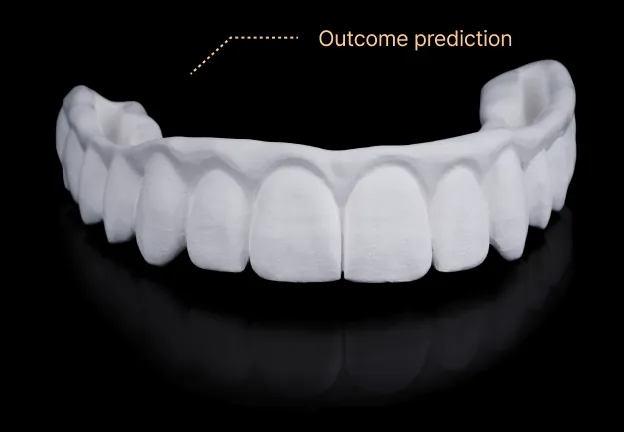
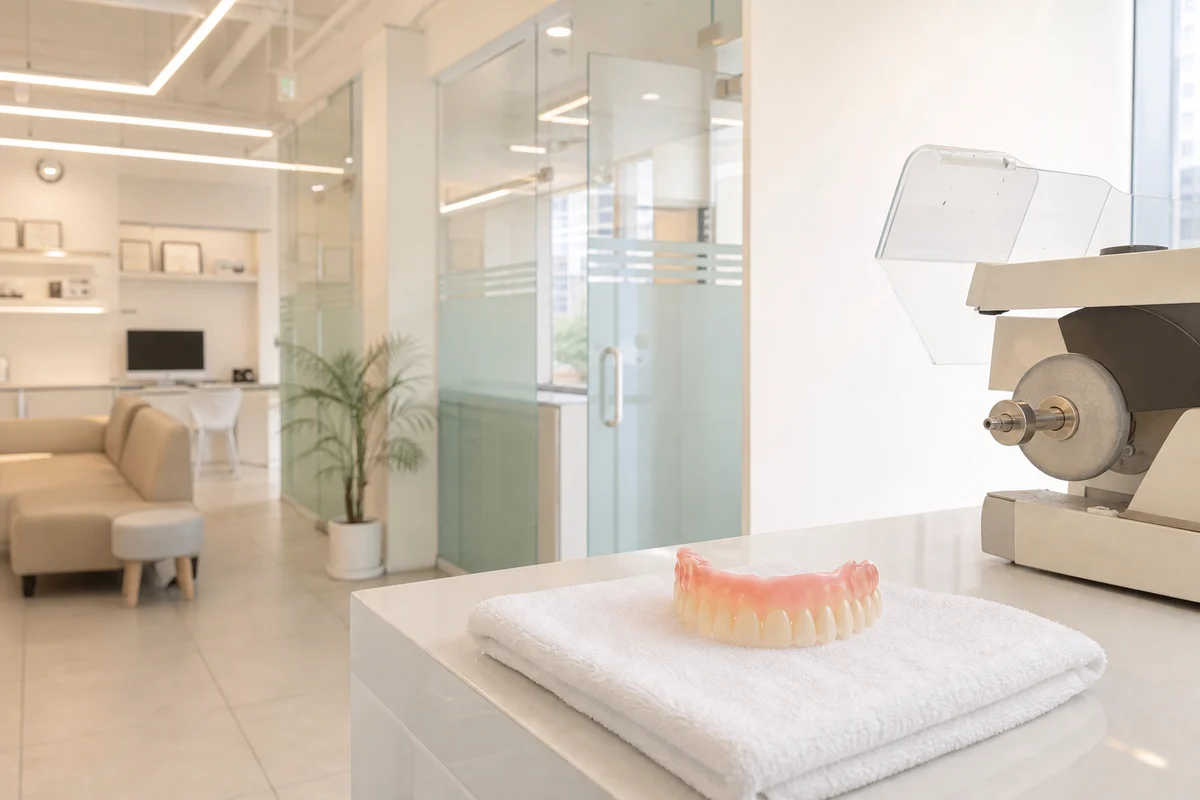
Diagnostic wax-up used to preview a full-arch result

Ask about Crowns & Prosthetics

Tap what fits — your message is prepared for you. Nothing is sent until you press send.

Send opens your email app addressed to theseouldc@naver.com. Prefer chat? KakaoTalk channel · Instagram DM · or call +82-31-757-1525.

The short answer

Crowns, inlays, onlays and dentures all restore teeth that are damaged or missing. The clinic publishes crown fees from ₩300,000 (metal) to ₩550,000 (zirconia, front tooth), inlays and onlays from ₩200,000, and denture work from ₩150,000 (reline) to ₩1,800,000 (complete denture, per arch). Your dentist recommends the option after examining your teeth, and the final plan and fee are confirmed at consultation.

What Prosthetic Dentistry Covers

Prosthetic dentistry means replacing or rebuilding part of a tooth, or replacing missing teeth, with a made-to-fit restoration. At the clinic this includes crowns, inlays and onlays, and removable dentures. Implants are a separate fixed option and have their own pages.

Which restoration suits you depends on how much natural tooth is left, where the tooth sits in your mouth, your bite, your gums and your budget. Your dentist will explain the choices in English and give you a written estimate before treatment.

For overseas patients, it is worth asking for the estimate in writing so you can show your home insurer or compare with a quote from abroad.

A good restoration does two jobs: it protects the tooth or replaces what is missing, and it fits your bite so it does not cause new problems. That is why impressions or scans, a trial fit and a bite check are part of most plans.

Crowns & Prosthetics: how the treatment is planned

Crowns, Inlays, Onlays and Dentures at a Glance

A crown covers the whole visible part of a tooth. Inlays and onlays are partial restorations for a tooth that has a large cavity but still has strong walls. Dentures replace teeth that are already missing, either all of them or several.

Each has its own page with materials, steps and prices. Start here to see which one matches your situation.

The boundary between options is not fixed. A tooth that looks like an onlay case on the surface may turn out to need a crown once decay is removed, and the dentist will tell you if the plan changes.

  • Crown: tooth is broken, heavily filled or root-treated
  • Inlay or onlay: a large cavity with enough healthy tooth left
  • Denture: several or all teeth are missing
  • Implant: a fixed option that replaces the tooth root
OptionBest described asTypical situationPublished fee
CrownCovers the whole visible toothBroken, heavily filled or root-treated tooth₩300,000 to ₩550,000
Inlay or onlayPartial restorationLarge cavity, strong walls remain₩200,000 to ₩330,000
Resin fillingDirect filling in one visitSmaller cavity₩70,000 to ₩250,000
DentureRemovable replacement teethSeveral or all teeth missing₩150,000 to ₩1,800,000

Published Prices

These are the non-covered fees as published by the clinic. VAT may apply, and the final fee depends on your plan.

A crown on a root-treated tooth often involves more than one line. As an illustration using published figures only, a back-tooth zirconia crown at ₩450,000 plus a core build-up at ₩100,000 would come to ₩550,000 before VAT, and root canal treatment is quoted separately after examination.

Dentures cover a wide range because the appliance varies from a small partial plate to a full set. Your dentist will explain what is driving the figure in your case.

TreatmentPublished fee
Zirconia crown — back tooth₩450,000
Zirconia crown — front tooth₩550,000
PFM crown₩400,000
Metal crown₩300,000
Core build-up / post₩100,000
Resin inlay / ceramic inlay / ceramic onlay₩200,000 / ₩300,000 / ₩330,000
Complete denture (per arch)₩1,800,000
Partial denture₩1,400,000
Immediate denture (per arch)₩300,000
Denture reline / repair₩150,000 / ₩200,000
Additional scaling (non-covered)₩50,000

Prices are as published; confirm at consultation.

Choosing Between Materials

Zirconia is a strong, tooth-coloured ceramic often chosen for visible teeth. PFM has a metal core with a porcelain surface. A metal crown is the lowest published price and is sometimes chosen for back teeth where appearance matters less.

There is no single answer. Chewing force, tooth position and personal preference all play a part, so the dentist will recommend a material for each tooth rather than one for all.

If you grind your teeth, tell the dentist. Grinding puts extra load on any restoration, and the plan, including a protective night guard, may need to account for it. A night guard fee is quoted after examination.

MaterialLookPublished feeOften considered for
ZirconiaTooth-colored ceramic₩450,000 back tooth / ₩550,000 front toothVisible teeth and strong chewing teeth
PFMPorcelain over metal core₩400,000Teeth where a metal base is acceptable
MetalMetallic₩300,000Back teeth where appearance matters less

When a Tooth Needs More Than a Crown

A tooth that has lost a lot of its structure, or has had a root canal, may need a core build-up or a post inside it so the crown has something solid to hold on to. This is published at ₩100,000.

If a tooth cannot be saved, the options are usually an implant, a bridge or a denture. The dentist will go through them with you.

If you are visiting Korea for a short time, ask in advance how many visits a restoration needs, so you can plan your stay.

Assess

Examination and X-rays show how much tooth remains and whether the root is healthy.

Rebuild

A core build-up or post (₩100,000) may be placed so the crown has a solid base.

Prepare and take records

The tooth is shaped and a scan or impression is taken; a temporary may be fitted.

Fit

The final crown is tried, adjusted for bite and cemented.

Serving Taepyeong, Moran, Sujin and Bundang

The clinic is by Taepyeong Station Exit 5 in Sujin-dong, Sujeong-gu. Taepyeong is on the Suin-Bundang Line, so Bundang residents can travel directly; people from Sujin, Sinheung and Wirye can take Line 8 and change at Moran, which is on both lines.

Restorations often need two visits, one to prepare the tooth and one to fit the final piece. Opening hours are Mon–Wed 09:30–20:30, Thu 09:30–19:00, Fri 09:30–18:30 and Sat 09:30–13:00, with no lunch break; the clinic is closed on Sundays and open on public holidays.

We do not state travel times or fares, so use a map app to check your own route.

English consultation is available, and the clinic states that it supports overseas-insurance paperwork. Ask for an itemized quote and receipt.

Questions to Ask at Your Consultation

Bring your dental records, X-rays from other clinics and a list of medicines. Photos of the tooth before it broke can help with shade matching, though they are not essential.

Choice

Which restoration

Why a crown rather than an inlay, onlay or denture for my tooth?

Material

Which material

What are the trade-offs between zirconia, PFM and metal for this position?

Schedule

How many visits

What is done at each visit, and is a temporary needed in between?

Fees

What it costs

Does the quote include the build-up, and is VAT added?

Clinical case

A case from the clinic

Root canal treatment

Why a crown matters after root canal treatment: saving a fractured canine

Treated by Dr. Hyeonjoon Park

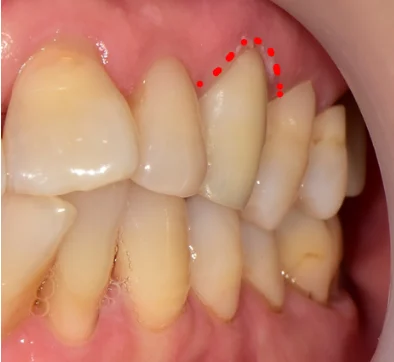
BeforeBefore: Why a crown matters after root canal treatment: saving a fractured canine
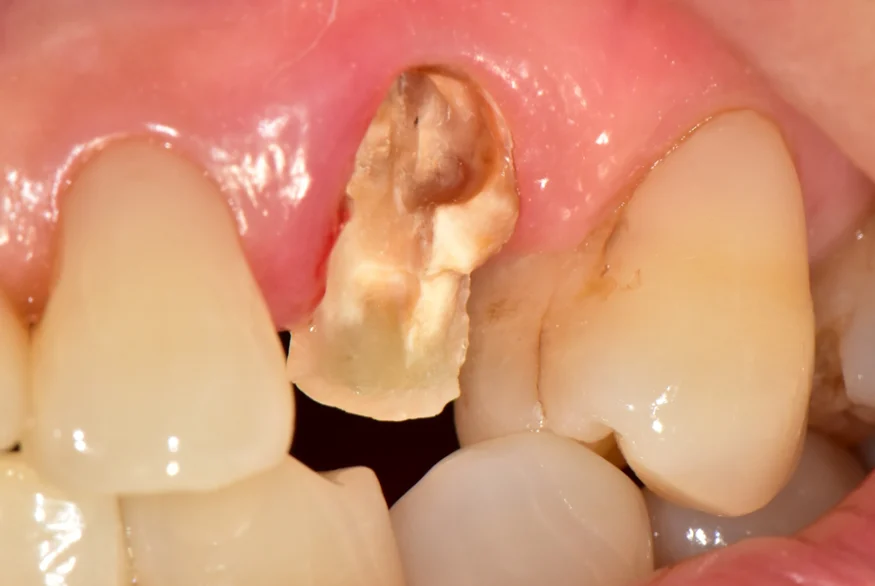
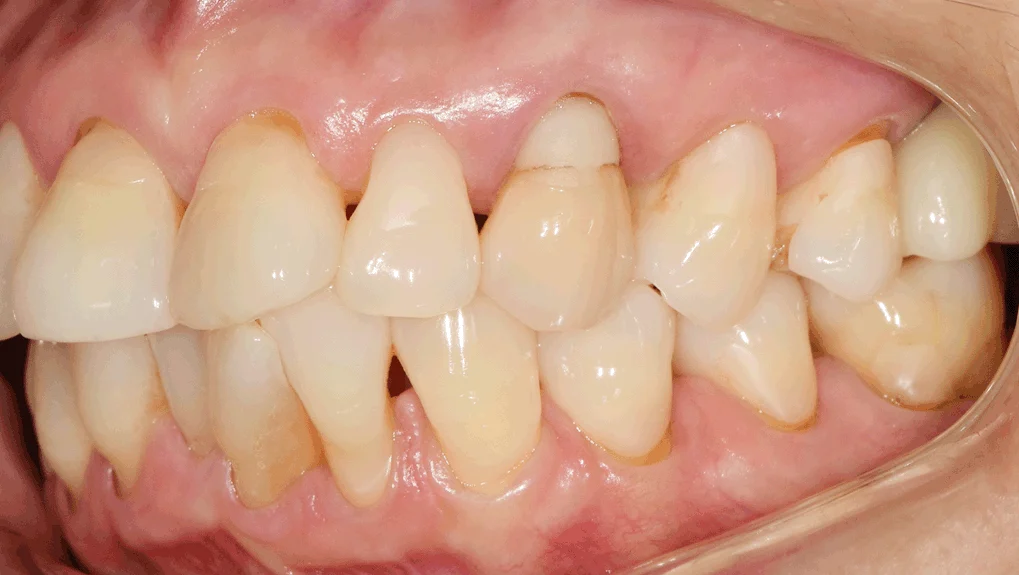
AfterAfter: Why a crown matters after root canal treatment: saving a fractured canine
The fractured tooth and the final crown

Why the patient came in

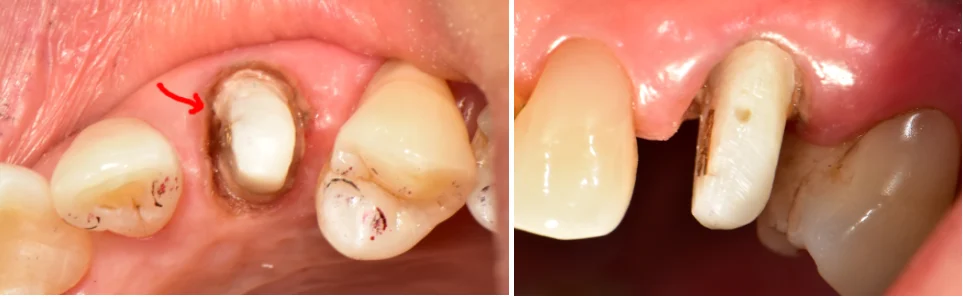
An upper canine (#23) had a root canal treatment done at another clinic but no crown, plus a large glass-ionomer filling from earlier gum-line wear. A crown was recommended at a check-up, but the patient chose to wait. Later the cheek side of the tooth broke off, leaving the tooth hollow.

What was done

  1. The patient preferred to keep the tooth rather than have an implant.
  2. The root canal treatment was redone.
  3. Because very little tooth structure remained, a core build-up was made to give the crown enough support.
  4. A crown was then fitted.
Before the fracture: root-canal-treated canine without a crown
Core build-up before the crown

Published with the patient’s consent. Photos and X-rays are from the clinic’s records. Treatment plans and results differ for every patient; only an examination can show what is possible for you. A root-canal-treated tooth is more brittle, so a crown is usually advised. Retreatment can cause temporary tenderness.


See more before and after cases →

Your dentists

English-speaking dentists in Seongnam

The clinic was founded by two brothers trained at Seoul National University who direct it together. Three further dentists hold Ministry of Health and Welfare specialist certifications. Full credentials →

Dr. Hyun Sung Park, Clinic Director at The Seoul Dental Clinic

Dr. Hyun Sung Park

Clinic Director

  • Co-founder and joint clinic director
  • DDS, Seoul National University School of Dentistry
  • Master’s degree, SNU Graduate School of Dentistry
  • Former staff, Dept. of General Dentistry, SNU Dental Hospital
  • Microendodontics Programme, SNU
  • Course completion, UCLA, USA
  • Member, UPenn Endodontics Study Club, USA
  • Certified Invisalign Provider
  • Osstem Implant AIC Programme
  • Member, International Congress of Oral Implantologists (ICOI)
Dr. Min Ji Choi, Dentist at The Seoul Dental Clinic

Dr. Min Ji Choi

Dentist

  • Board-certified specialist, Conservative Dentistry
  • Board-certified specialist, Advanced General Dentistry
  • Internship and residency, Jeonbuk National University Dental Hospital
  • Master’s degree in Conservative Dentistry, Jeonbuk National University
Dr. Jin Young Choi, Dentist at The Seoul Dental Clinic

Dr. Jin Young Choi

Dentist

  • Board-certified specialist, Advanced General Dentistry
  • Clinical training, Faculty of Dentistry, University of British Columbia, Canada
  • Master’s degree, Kyungpook National University Graduate School of Dentistry
  • BA in English Language and Literature, Korea University
Dr. Hyeonjoon Park, Clinic Director at The Seoul Dental Clinic

Dr. Hyeonjoon Park

Clinic Director

  • Co-founder and joint clinic director
  • DDS, Seoul National University School of Dentistry
  • Master’s degree, SNU Graduate School of Dentistry
  • Former staff, Dept. of General Dentistry, SNU Dental Hospital
  • Affiliate Associate Fellow, American Academy of Implant Dentistry (AAID)
  • Certified Invisalign Provider; leads orthodontic treatment
  • Course completion, UCLA, USA
  • Member, UPenn Endodontics Study Club, USA
  • Member, International Congress of Oral Implantologists (ICOI)
  • Member, Seoul Prime Orthodontic Study Club
Dr. Yu Jin Kim, Dentist at The Seoul Dental Clinic

Dr. Yu Jin Kim

Dentist

  • Board-certified specialist, Advanced General Dentistry (Ministry of Health and Welfare)
  • Johns Hopkins University, USA
  • Master’s degree, SNU Graduate School of Dentistry
  • Former staff, Osaka University Dental Hospital, Japan
Video

Video: our dentists explain

In Korean. On YouTube, turn on subtitles and choose Settings → Subtitles → Auto-translate → English.

Crown or Onlay? Treatment Options That Preserve More Tooth7:31 · The Seoul Dental Clinic on YouTube
What this video covers

The two dentists explain why a full crown requires trimming the tooth all the way around, including healthy structure, which brings the preparation closer to the nerve and can raise the chance of later root canal treatment. They describe how improved bonding adhesives now allow partial restorations such as inlays, onlays and overlays that cover only the damaged area. They add that a root-canal-treated tooth does not always need a crown if enough tooth remains, and that with digital CAD/CAM milling an overlay can sometimes be made and bonded on the same day. Crowns are still needed when a tooth is cracked, when decay is extensive, or in some patients with very strong bite forces or heavy grinding.

  • A crown removes tooth structure all around; an overlay or onlay covers only the damaged part
  • Root-canal-treated teeth can sometimes be sealed and reinforced with an overlay instead of a crown
  • Cracked teeth, extensive decay or very strong bite forces usually call for a crown

More videos on the clinic’s YouTube channel →

Crowns & Prosthetics: frequently asked questions

Which is cheaper, a crown or an inlay?

Published crown fees are ₩300,000 to ₩550,000 and inlays and onlays are ₩200,000 to ₩330,000. The right choice depends on how much tooth is left.

How many visits does a crown need?

Usually more than one, as the tooth is prepared first and the crown fitted later. Your dentist will confirm the schedule.

Can foreigners get a written price estimate?

Yes, ask for it at consultation. The clinic also states it supports overseas-insurance paperwork.

Should I get dentures or implants?

It depends on your gums, bone and budget. Both are explained on their own pages and the dentist can compare them for your case.

Are these prices covered by Korean insurance?

The list is for non-covered treatment. Ask the clinic what applies to your situation.

Do I need a build-up before a crown?

Sometimes, when a tooth has lost much of its structure or had root treatment. A core build-up or post is published at ₩100,000.

Is zirconia worth the extra cost?

It is a choice, not a rule. Zirconia is published at ₩450,000 for a back tooth and ₩550,000 for a front tooth, and metal at ₩300,000; the dentist advises by tooth position and bite.

Why does a front-tooth zirconia crown cost more?

The published list prices zirconia crowns by position: ₩450,000 for a back tooth and ₩550,000 for a front tooth. Ask your dentist how this applies to your tooth.

Plan your restoration

Tell us which tooth is the problem and what you have been told so far. We will help you book an examination near Taepyeong Station.

Visit

Visit us: Taepyeong Station Exit 5, Seongnam

2–3F, 1225 Seongnam-daero, Sujeong-gu, Seongnam-si, Gyeonggi-do (Taepyeong Station Exit 5)

Monday – Wednesday09:30 – 20:30
Thursday09:30 – 19:00
Friday09:30 – 18:30
Saturday09:30 – 13:00
SundayClosed
Public holidaysOpen
Lunch breakNone — continuous hours

Parking garage in the building; parking benefits for patients receiving treatment.

Directions from Taepyeong Station Exit 5 → · Naver Map

Entrance sign of The Seoul Dental Clinic