Orthodontic Retainers near Taepyeong Station, Seongnam
A retainer holds your teeth in their new position after braces or Invisalign, because teeth tend to drift back without one.
Ask about Retainers
Tap what fits — your message is prepared for you. Nothing is sent until you press send.
Send opens your email app addressed to theseouldc@naver.com. Prefer chat? KakaoTalk channel · Instagram DM · or call +82-31-757-1525.
Message copied. Please call +82-31-757-1525 or email theseouldc@naver.com.
A retainer holds your teeth in their new position after braces or Invisalign, because teeth tend to drift back without one. The clinic's published fees are ₩100,000–₩200,000 for a fixed retainer and ₩150,000–₩200,000 for a removable retainer, and bracket re-bonding is listed at ₩30,000. Orthodontic treatment at the clinic is handled by Dr. Hyeonjoon Park, a Certified Invisalign Provider.
Why Retainers Matter After Orthodontics
Braces and aligners move teeth through the bone. When treatment ends, the gum fibers and bone around each tooth still remember the old position for some time, and teeth can also shift gradually throughout life. A retainer is what keeps the result you worked for.
Retention is part of orthodontic treatment, not an optional extra. How long and how often you wear a retainer depends on how your teeth were moved, your bite, your age and your habits, so your orthodontist sets the plan for you.
At The Seoul Dental Clinic, orthodontic treatment, including braces, Invisalign and retention, is handled by Dr. Hyeonjoon Park, one of the two clinic directors and a Certified Invisalign Provider. If you finished treatment at another clinic, you can still be seen for a retainer check or a replacement.
Fixed and Removable Retainers
Many patients have one type, and some have both, for example a fixed wire on the lower front teeth and a removable retainer for the upper teeth. Your orthodontist explains which combination suits your case.
Fixed (bonded) retainer
A thin wire bonded to the back of the front teeth. It works all the time without you having to remember it, and it is not visible from the front. It does need careful cleaning around the wire and regular checks, because a bond can loosen without you noticing.
Removable retainer
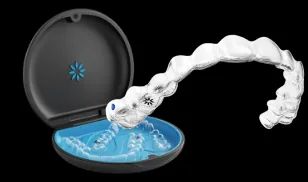
A custom appliance you take out to eat and clean, either a clear tray or a design with a wire across the front. It is easy to keep clean, but it only works while you wear it, so the routine depends on you.
Re-bonding
The clinic's schedule lists bracket re-bonding at ₩30,000. If part of a fixed retainer has come loose, the dentist checks whether it can be re-attached or whether a new retainer is needed, and confirms which fee applies before starting.
Prices as published on the clinic's non-covered fee schedule; ranges depend on type and number of arches. Confirm at consultation.
Comparing the Options
Both types are widely used. The table shows the general trade-offs.
| Fixed retainer | Removable retainer | |
|---|---|---|
| Published fee | ₩100,000 – ₩200,000 | ₩150,000 – ₩200,000 |
| Visibility | Hidden behind the teeth | Clear trays are discreet; wire designs show slightly |
| Depends on remembering to wear it | No | Yes |
| Cleaning | Floss threaders or interdental brushes around the wire | Brush the retainer and your teeth separately |
| Common problems | Loose bond, broken wire | Lost, cracked or warped retainer |
| Eating | No change | Take it out to eat |
How Long Do I Wear a Retainer?
As general guidance, many orthodontists ask patients to wear a removable retainer most of the day and night at first, then move to night-time wear once the teeth have settled. Many recommend some form of long-term night-time wear, because teeth can shift at any age. Your own schedule may be different; follow the plan your orthodontist gives you.
If you stop wearing a removable retainer for a while and it feels tight when you put it back, that is a sign the teeth have started to move. Do not force a retainer that no longer fits. Book a check instead.
Fixed retainers stay in place unless they are removed, but they still need checking at your regular dental visits so a loose bond or broken section is spotted early.
- Take a removable retainer out to eat, and keep it in its case.
- Clean it gently with a soft brush and cool or lukewarm water; hot water can warp it.
- Keep it away from pets and do not wrap it in a tissue on a meal tray.
- Bring your retainer to dental check-ups.
Lost or Broken Retainer: What to Do
A lost or broken retainer is common and should be dealt with quickly, before the teeth have time to move.
Contact the clinic
Tell us what happened, whether the retainer was fixed or removable, and when you last wore it. If you have a spare or an old retainer that still fits, wear it in the meantime.
Do not repair it yourself
Do not glue, bend or cut a retainer, and do not pull at a loose fixed wire. Keep any broken pieces.
Examination
The dentist checks whether the teeth have moved and whether the retainer can be re-bonded, repaired or needs replacing.
New retainer or re-bond
A new retainer is made from a fresh scan or impression, or a loose fixed retainer is re-attached. The fee is confirmed before work starts.
If the teeth have shifted
Minor movement may be held by a new retainer. If the teeth have moved more, the orthodontist explains options, which may include a short course of aligners or braces after an orthodontic diagnosis.
If Your Teeth Have Already Moved
Some patients come in years after braces, often after losing a retainer, with front teeth that have crowded again or a gap that has reopened. A retainer alone will not move teeth back, but the movement can often be corrected with orthodontic treatment.
The first step is an orthodontic diagnosis, published at ₩100,000. Depending on what has changed, the orthodontist may discuss Invisalign, published at ₩2,500,000–₩7,000,000 by case, or braces from ₩2,800,000 for metal braces. You receive a written quote, and a new retainer plan is part of finishing treatment.
Retainer Care Near Taepyeong, Sujin, Moran and Bundang
The clinic is at 2–3F, 1225 Seongnam-daero, Sujeong-gu, Seongnam, by Taepyeong Station Exit 5, and is reachable from Sinheung, Sujin, Moran, Gachon University, Wirye and Bundang. Evening hours on Monday to Wednesday (until 20:30) and Saturday mornings (09:30–13:00) can make retainer checks easier to fit around school or work. The clinic is closed on Sundays and open on public holidays.
If you are moving abroad soon after finishing treatment, ask about spare retainers and how to arrange check-ups where you will be living. English-language consultation is available.
English-speaking dentists in Seongnam
The clinic was founded by two brothers trained at Seoul National University who direct it together. Three further dentists hold Ministry of Health and Welfare specialist certifications. Full credentials →

Dr. Hyeonjoon Park
Clinic Director
- Co-founder and joint clinic director
- DDS, Seoul National University School of Dentistry
- Master’s degree, SNU Graduate School of Dentistry
- Former staff, Dept. of General Dentistry, SNU Dental Hospital
- Affiliate Associate Fellow, American Academy of Implant Dentistry (AAID)
- Certified Invisalign Provider; leads orthodontic treatment
- Course completion, UCLA, USA
- Member, UPenn Endodontics Study Club, USA
- Member, International Congress of Oral Implantologists (ICOI)
- Member, Seoul Prime Orthodontic Study Club

Dr. Hyun Sung Park
Clinic Director
- Co-founder and joint clinic director
- DDS, Seoul National University School of Dentistry
- Master’s degree, SNU Graduate School of Dentistry
- Former staff, Dept. of General Dentistry, SNU Dental Hospital
- Microendodontics Programme, SNU
- Course completion, UCLA, USA
- Member, UPenn Endodontics Study Club, USA
- Certified Invisalign Provider
- Osstem Implant AIC Programme
- Member, International Congress of Oral Implantologists (ICOI)

Dr. Yu Jin Kim
Dentist
- Board-certified specialist, Advanced General Dentistry (Ministry of Health and Welfare)
- Johns Hopkins University, USA
- Master’s degree, SNU Graduate School of Dentistry
- Former staff, Osaka University Dental Hospital, Japan

Dr. Min Ji Choi
Dentist
- Board-certified specialist, Conservative Dentistry
- Board-certified specialist, Advanced General Dentistry
- Internship and residency, Jeonbuk National University Dental Hospital
- Master’s degree in Conservative Dentistry, Jeonbuk National University

Dr. Jin Young Choi
Dentist
- Board-certified specialist, Advanced General Dentistry
- Clinical training, Faculty of Dentistry, University of British Columbia, Canada
- Master’s degree, Kyungpook National University Graduate School of Dentistry
- BA in English Language and Literature, Korea University
Video: our dentists explain
In Korean. On YouTube, turn on subtitles and choose Settings → Subtitles → Auto-translate → English.
What this video covers
The dentists explain that teeth are slightly loose right after orthodontic treatment and need time for the surrounding bone to settle, so a retainer works like a splint holding them in their new position. Because teeth can keep shifting throughout life, they suggest continuing to wear a retainer long term, at least at night, with the first three to six months being especially important, while noting that recommendations vary between dentists and individuals. They compare bonded (fixed) wire retainers on the back of the teeth with removable retainers, explaining that which one, or both, depends on the type and extent of treatment, and that bonded retainers call for regular checkups and cleanings because tartar tends to build up behind the lower front teeth. If an old retainer feels painful or no longer fits, they advise not forcing it in and seeing the orthodontist, who can assess whether the teeth have shifted and whether any further treatment is needed.
- Retainers hold teeth in place while the bone around them stabilizes after treatment
- Fixed and removable retainers are chosen based on each patient's treatment and needs
- If a retainer no longer fits or hurts, stop forcing it and have it checked
Retainers: frequently asked questions
How much does a retainer cost?
The published fees are ₩100,000–₩200,000 for a fixed retainer and ₩150,000–₩200,000 for a removable retainer. Your quote confirms the type and number of arches.
I finished braces at another clinic. Can I get a retainer here?
Yes. Your teeth are examined first, and a retainer is made to fit them as they are now.
My fixed retainer is loose. What should I do?
Avoid pulling at it and contact the clinic. The schedule lists bracket re-bonding at ₩30,000; the dentist checks whether re-bonding or a new retainer is needed and confirms the fee.
Do I have to wear a retainer forever?
Many orthodontists recommend long-term night-time wear because teeth can move at any age. Your orthodontist advises what applies to you.
My removable retainer feels tight. Is that a problem?
It usually means the teeth have started to move. Do not force it; book a check so the dentist can advise.
Who handles orthodontic treatment at the clinic?
Orthodontics, including retention, is handled by Dr. Hyeonjoon Park, a clinic director and Certified Invisalign Provider.
Can retainers fix teeth that have already moved?
A retainer holds teeth in place; it does not reliably move them back. Correcting movement usually needs aligners or braces, starting with an orthodontic diagnosis at ₩100,000.
Ask about a retainer
Tell us whether you need a new, replacement or repaired retainer, and when your orthodontic treatment ended. We will arrange a check and confirm the fee in writing.
Visit us: Taepyeong Station Exit 5, Seongnam
2–3F, 1225 Seongnam-daero, Sujeong-gu, Seongnam-si, Gyeonggi-do (Taepyeong Station Exit 5)
| Monday – Wednesday | 09:30 – 20:30 |
|---|---|
| Thursday | 09:30 – 19:00 |
| Friday | 09:30 – 18:30 |
| Saturday | 09:30 – 13:00 |
| Sunday | Closed |
| Public holidays | Open |
| Lunch break | None — continuous hours |
Parking garage in the building; parking benefits for patients receiving treatment.