Protrusion and open bite · Taepyeong, Seongnam

Protruding Teeth and Open Bite near Taepyeong Station, Seongnam

Protruding front teeth and open bite are two bite patterns that clear aligners can sometimes improve, and sometimes cannot.

₩2.5M+Invisalign range start
₩2.8MBraces from (metal)
₩100K+Retainers (fixed or removable)
Exit 5Taepyeong Station
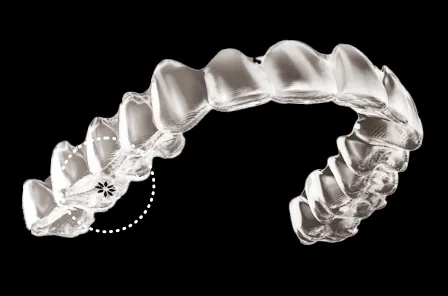
Clear aligner tray

Ask about Protruding Teeth & Open Bite

Tap what fits — your message is prepared for you. Nothing is sent until you press send.

Send opens your email app addressed to theseouldc@naver.com. Prefer chat? KakaoTalk channel · Instagram DM · or call +82-31-757-1525.

The short answer

Protruding front teeth and open bite are two bite patterns that clear aligners can sometimes improve, and sometimes cannot. Habits such as tongue thrusting can play a part, and skeletal causes may need braces or a wider plan. Invisalign is published at ₩2.5M to ₩7M and fixed braces at ₩2.8M to ₩3.6M. Your dentist checks the cause first, then explains what is realistic for your case.

What These Bite Patterns Are

Protruding teeth, sometimes called an overjet, mean the upper front teeth stick out in front of the lower teeth. An open bite means the front teeth do not meet when you close, leaving a gap you can see between upper and lower teeth.

Both can affect appearance, and an open bite can make biting through food with the front teeth harder. Neither always needs treatment, so an examination comes first.

Some people also notice that their lips do not close easily at rest, or that certain sounds such as s are affected. These can be linked to the bite, but they can have other causes, so mention them to your dentist rather than assuming.

Seeing the pattern in photos and on a scan helps you understand it. Ask your dentist to show you where the front teeth meet and where they do not, so you can judge how much it matters to you.

  • Protrusion: upper front teeth sit forward of the lower teeth.
  • Open bite: front teeth do not touch when the back teeth meet.
  • Both can occur together, and both vary from mild to marked.
Protruding Teeth & Open Bite: how the treatment is planned

What Causes Them

Causes include thumb sucking in childhood, a tongue that pushes forward when swallowing, mouth breathing and the way the jaws grew. In adults, the cause is often a mix.

If a habit is part of the cause, treating the teeth alone may not hold. Your dentist may suggest ways to address the habit alongside orthodontic treatment.

Jaw growth is the factor patients can least change. When the upper jaw sits forward or the lower jaw is set back, the front teeth may look protruding even though the teeth themselves are in a normal position relative to the jaw. This is a skeletal pattern, and it limits what aligners alone can do.

Care for Taepyeong, Moran, Sujin and Bundang Patients

The clinic is by Taepyeong Station Exit 5 in Sujin-dong, Seongnam, serving people from Taepyeong, Moran, Sujin, Sinheung, Wirye and Bundang.

This kind of treatment needs regular follow-up. Opening hours are Mon–Wed 09:30–20:30, Thu 09:30–19:00, Fri 09:30–18:30 and Sat 09:30–13:00, with no lunch break; the clinic is closed on Sundays and open on public holidays. Use a map app to plan your route; we do not state travel times.

English consultation is available, so you can describe your habits and concerns, ask questions and understand the limits of each option. If you may leave Korea during treatment, say so early so the plan can be realistic.

Treatment Options

The right tool depends on whether the problem is in the teeth, the habit or the jaw. Your dentist may suggest one option or a combination.

Mild to moderate cases

Clear aligners

Can retract front teeth or close some open bites in suitable cases.

More control

Braces

Metal, combination, ceramic or Clippy-C self-ligating braces offer stronger control for harder movements.

When jaw is involved

Combined plan

Skeletal open bites may call for a wider plan, which your dentist will explain, including when a specialist opinion is sensible.

Alongside treatment

Habit support

Tongue habits and mouth breathing can undo results, so they are discussed as part of the plan.

Aligners or Braces?

Neither is simply better. The question is which one gives enough control for your bite and which one you can live with for the length of treatment.

Clear alignersBraces
VisibilityLess visibleVisible; ceramic less so
WornRemovable, wear as instructedFixed to teeth
Control of harder movementsLimited in some casesStronger
CleaningRemove to cleanNeeds care around brackets
Published fee₩2.5M–₩7M₩2.8M–₩3.6M

Published non-covered fees; VAT may apply. Your dentist confirms what suits your case.

Limits and Alternatives

Aligners cannot change the underlying jaw structure. If your bite pattern comes from the jaw, aligners might improve the look of the teeth but not remove the cause.

Your dentist will tell you where the limits are for your case, and we do not guarantee outcomes. The result depends on your case and how closely you follow the plan.

Teeth can drift back after treatment, especially if a tongue habit remains. Retainers are essential, and the clinic lists fixed retainers at ₩100K to ₩200K and removable retainers at ₩150K to ₩200K.

  • Mild cases: aligners often considered
  • Moderate cases: aligners or braces, depending on control needed
  • Skeletal cases: a wider plan may be needed
  • Habit present: address it alongside the teeth

What It Costs

Your dentist confirms which row applies to your plan after examination. Total cost may also include retainers and check-ups.

OptionPublished price (KRW)
Invisalign₩2.5M to ₩7M
Metal braces₩2.8M
Combination braces (ceramic upper / metal lower)₩3.1M
Ceramic braces₩3.2M
Clippy-C self-ligating braces₩3.6M
Fixed retainer₩100,000 to ₩200,000
Removable retainer₩150,000 to ₩200,000

Prices are the published non-covered price list in Korean won. VAT may apply, and your final fee is confirmed at consultation.

Your Treatment Path

The path below is typical. Your plan is set after examination.

Examination

Your dentist checks teeth, bite and habits.

Plan

Options, limits and prices are explained.

Treatment

Aligners or braces move the teeth with regular check-ups.

Retainers

Retainers help hold the result, and habits are monitored.

Questions to Ask Your Dentist

Write down what bothers you and when it started. Mention thumb sucking, tongue habits, mouth breathing or jaw surgery history if relevant.

You can send questions in English before you visit.

  • Is my pattern in the teeth, the habit or the jaw?
  • Can aligners handle it, or would braces be better?
  • What are the limits of the result?
  • How long might treatment take, and how often are the visits?
  • What will help keep the result stable?
Clinical case

A case from the clinic

Orthodontics

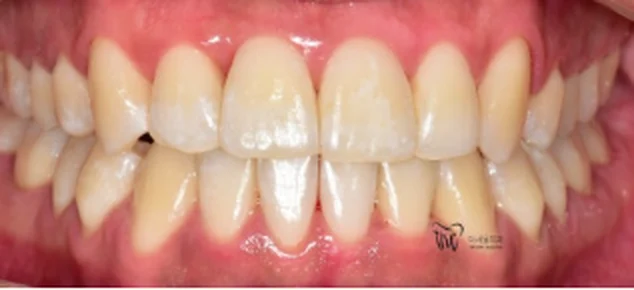
Crowded, protruding front teeth treated with Invisalign without extractions

Treated by Dr. Hyeonjoon Park

BeforeBefore: Crowded, protruding front teeth treated with Invisalign without extractions
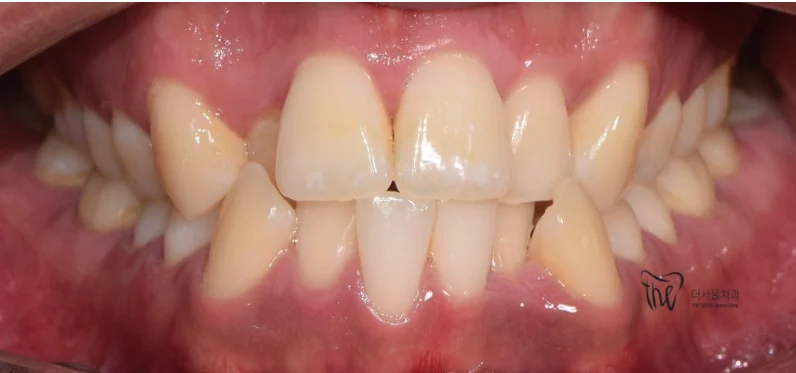
AfterAfter: Crowded, protruding front teeth treated with Invisalign without extractions
Front view before and after treatment
BeforeBefore: Crowded, protruding front teeth treated with Invisalign without extractions
AfterAfter: Crowded, protruding front teeth treated with Invisalign without extractions
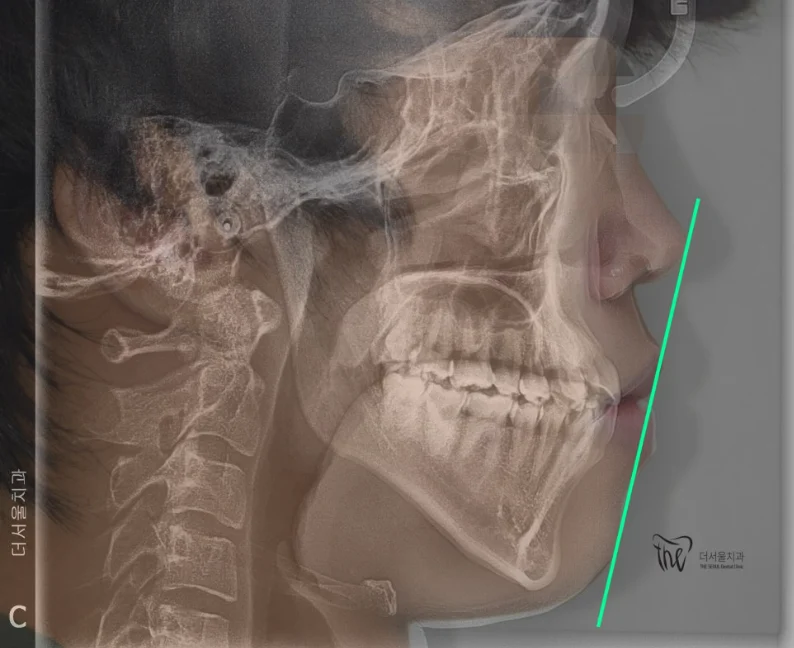
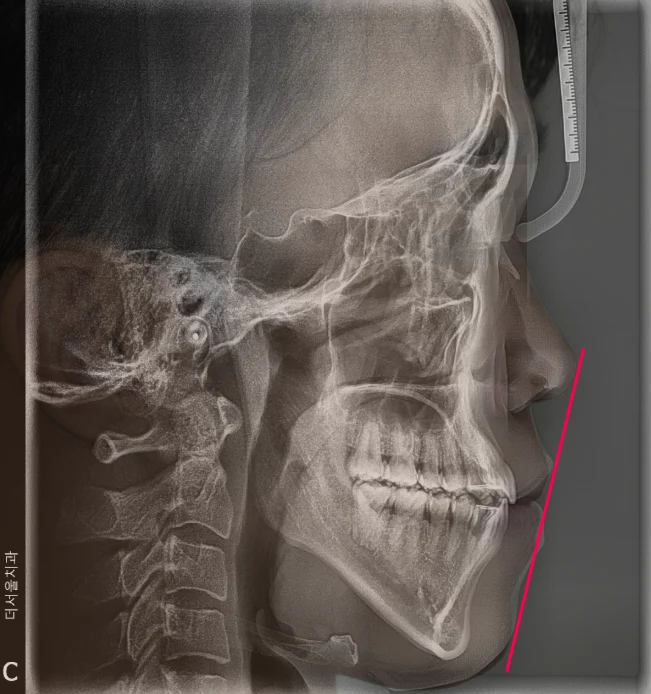
Lateral cephalometric X-rays before and after: lip position against the aesthetic line

Why the patient came in

The patient came in for a protruding mouth and crooked teeth. The front teeth were severely crowded and tilted inward, the dental arches were narrow, and the lips were strained when closed. Crowding like this also makes thorough brushing difficult.

What was done

  1. The patient chose Invisalign clear aligners.
  2. A ClinCheck simulation was used to plan the tooth movements and preview the expected result.
  3. The arches were widened to create space for the crowded teeth, so no teeth were extracted.
  4. At the end of treatment the teeth were evenly aligned and the lips sat behind the aesthetic line on the X-ray.
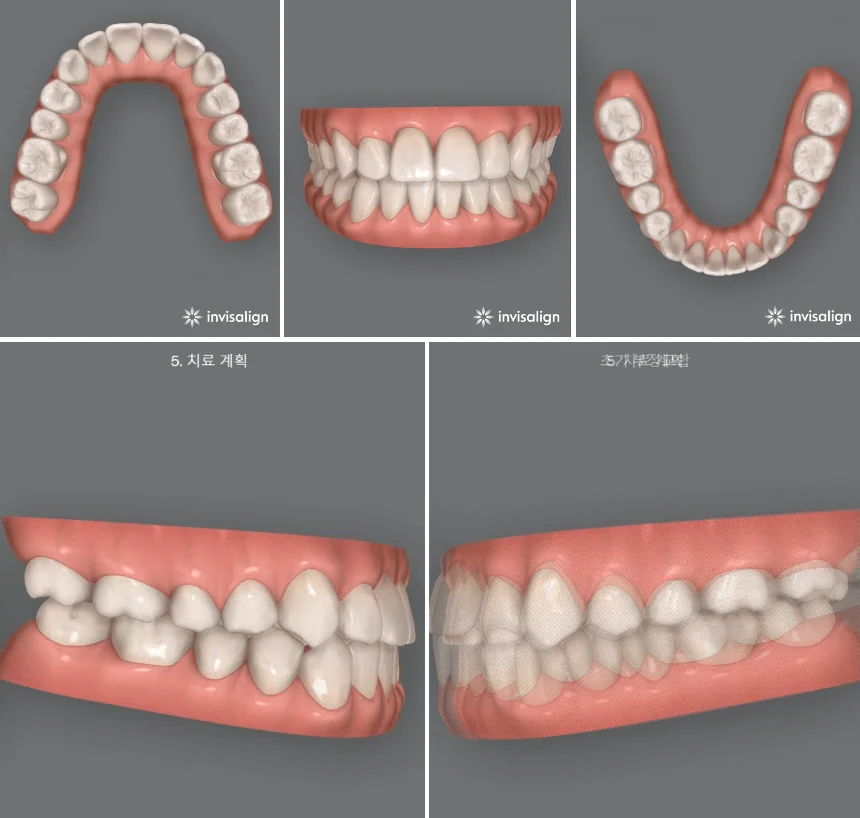
ClinCheck simulation of the planned result

Published with the patient’s consent. Photos and X-rays are from the clinic’s records. Treatment plans and results differ for every patient; only an examination can show what is possible for you. Orthodontic treatment can cause early discomfort, gum inflammation or root resorption. Retainers are needed afterwards to keep the result.


See more before and after cases →

Your dentists

English-speaking dentists in Seongnam

The clinic was founded by two brothers trained at Seoul National University who direct it together. Three further dentists hold Ministry of Health and Welfare specialist certifications. Full credentials →

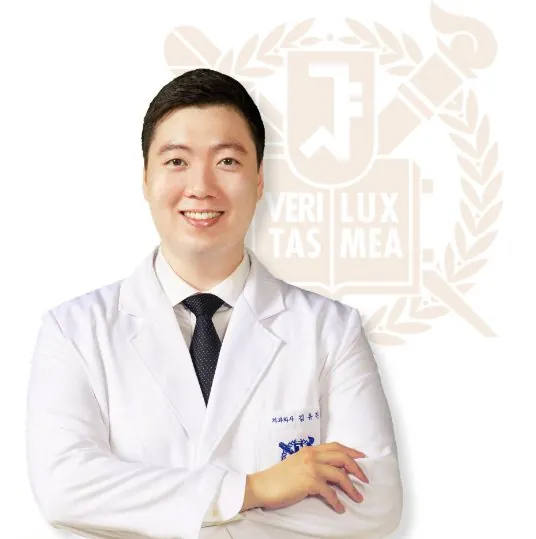
Dr. Hyeonjoon Park, Clinic Director at The Seoul Dental Clinic

Dr. Hyeonjoon Park

Clinic Director

  • Co-founder and joint clinic director
  • DDS, Seoul National University School of Dentistry
  • Master’s degree, SNU Graduate School of Dentistry
  • Former staff, Dept. of General Dentistry, SNU Dental Hospital
  • Affiliate Associate Fellow, American Academy of Implant Dentistry (AAID)
  • Certified Invisalign Provider; leads orthodontic treatment
  • Course completion, UCLA, USA
  • Member, UPenn Endodontics Study Club, USA
  • Member, International Congress of Oral Implantologists (ICOI)
  • Member, Seoul Prime Orthodontic Study Club
Dr. Hyun Sung Park, Clinic Director at The Seoul Dental Clinic

Dr. Hyun Sung Park

Clinic Director

  • Co-founder and joint clinic director
  • DDS, Seoul National University School of Dentistry
  • Master’s degree, SNU Graduate School of Dentistry
  • Former staff, Dept. of General Dentistry, SNU Dental Hospital
  • Microendodontics Programme, SNU
  • Course completion, UCLA, USA
  • Member, UPenn Endodontics Study Club, USA
  • Certified Invisalign Provider
  • Osstem Implant AIC Programme
  • Member, International Congress of Oral Implantologists (ICOI)
Dr. Yu Jin Kim, Dentist at The Seoul Dental Clinic

Dr. Yu Jin Kim

Dentist

  • Board-certified specialist, Advanced General Dentistry (Ministry of Health and Welfare)
  • Johns Hopkins University, USA
  • Master’s degree, SNU Graduate School of Dentistry
  • Former staff, Osaka University Dental Hospital, Japan
Dr. Min Ji Choi, Dentist at The Seoul Dental Clinic

Dr. Min Ji Choi

Dentist

  • Board-certified specialist, Conservative Dentistry
  • Board-certified specialist, Advanced General Dentistry
  • Internship and residency, Jeonbuk National University Dental Hospital
  • Master’s degree in Conservative Dentistry, Jeonbuk National University
Dr. Jin Young Choi, Dentist at The Seoul Dental Clinic

Dr. Jin Young Choi

Dentist

  • Board-certified specialist, Advanced General Dentistry
  • Clinical training, Faculty of Dentistry, University of British Columbia, Canada
  • Master’s degree, Kyungpook National University Graduate School of Dentistry
  • BA in English Language and Literature, Korea University

Protruding Teeth & Open Bite: frequently asked questions

Can Invisalign fix protruding teeth?

In suitable mild to moderate cases, aligners can pull the front teeth back. If the cause is the jaw, the effect is limited. Your dentist decides after examination.

Can an open bite close without braces?

Sometimes, with aligners in suitable cases, but not always. Skeletal open bites may need braces or a wider plan.

Does tongue thrust matter?

Yes. A tongue that pushes forward can keep an open bite open or push teeth out again. Habits are discussed alongside treatment.

How much does it cost?

Invisalign is published at ₩2.5M to ₩7M, metal braces at ₩2.8M, combination braces (ceramic upper, metal lower) at ₩3.1M, ceramic braces at ₩3.2M and Clippy-C self-ligating braces at ₩3.6M. Final fees are confirmed at consultation.

When are braces better than aligners?

When stronger control is needed for harder movements. Your dentist explains which suits your bite.

Will I need a retainer?

Yes. Retainers help hold the result. Fixed retainers are published at ₩100K to ₩200K and removable retainers at ₩150K to ₩200K.

Do protruding teeth always need treatment?

No. Some people are happy with their teeth. Treatment is a personal choice, and an examination shows what is possible.

Is English consultation available?

Yes. The clinic states that English-language consultation is available, and you can ask your questions before you visit.

Ask whether aligners suit your case

Tell us what bothers you about your teeth and we will explain the options in English.

Visit

Visit us: Taepyeong Station Exit 5, Seongnam

2–3F, 1225 Seongnam-daero, Sujeong-gu, Seongnam-si, Gyeonggi-do (Taepyeong Station Exit 5)

Monday – Wednesday09:30 – 20:30
Thursday09:30 – 19:00
Friday09:30 – 18:30
Saturday09:30 – 13:00
SundayClosed
Public holidaysOpen
Lunch breakNone — continuous hours

Parking garage in the building; parking benefits for patients receiving treatment.

Directions from Taepyeong Station Exit 5 → · Naver Map

Entrance sign of The Seoul Dental Clinic