
Invisalign · Taepyeong, Seongnam

Invisalign Clear Aligners for Adults near Taepyeong Station, Seongnam

Invisalign at The Seoul Dental Clinic is listed from ₩2.5M up to ₩7M, with the price following the complexity of your plan.

₩2.5MInvisalign range start
₩7MInvisalign range upper end
₩100K+Retainers, fixed or removable
Exit 5Taepyeong Station
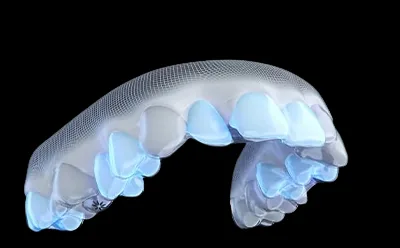
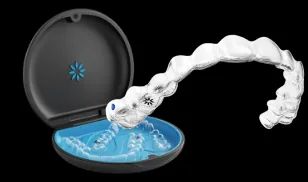
Clear aligner tray

Ask about Invisalign

Tap what fits — your message is prepared for you. Nothing is sent until you press send.

Send opens your email app addressed to theseouldc@naver.com. Prefer chat? KakaoTalk channel · Instagram DM · or call +82-31-757-1525.

The short answer

Invisalign at The Seoul Dental Clinic is listed from ₩2.5M up to ₩7M, with the price following the complexity of your plan. It uses a series of clear, removable aligners planned from a digital scan. Your dentist checks whether it suits your teeth before you decide, and tells you honestly if braces would be a better fit.

How Invisalign Works

Invisalign uses a series of clear plastic aligners. Each one moves the teeth a small step, and you switch to the next as directed. The plan is made from a digital scan of your teeth, with 3D analysis to map the movement.

You wear the aligners for the hours your dentist advises, and take them out to eat, drink anything other than water, and brush. Check-ups let your dentist see how the teeth are moving.

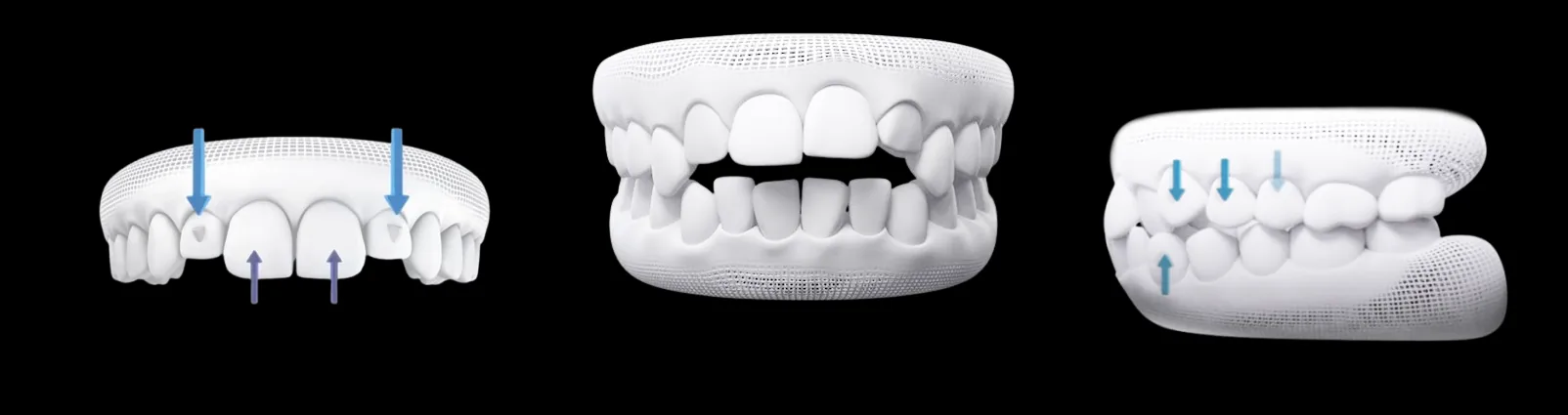
Some cases use small tooth-colored attachments bonded to certain teeth to give the aligners something to grip. Your dentist decides whether you need them. Some plans also include polishing a very small amount of enamel between teeth to create room.

Because the aligners come out, hygiene is easier than with fixed braces, but the responsibility to wear them lies with you. The result depends heavily on following the schedule, so be realistic about whether that fits your daily life.

  • A digital scan replaces messy impressions in most cases
  • Aligners are removable for eating and brushing
  • Small attachments may be used on some teeth
  • Regular check-ups track progress and adjust the plan

How Your Invisalign Plan Is Made: iTero Scan, ClinCheck and SmartTrack

Planning is the part of aligner treatment you cannot see, and it decides most of the result. At The Seoul Dental Clinic the plan is built in three steps, and you see it on screen before you agree to anything.

Step 1

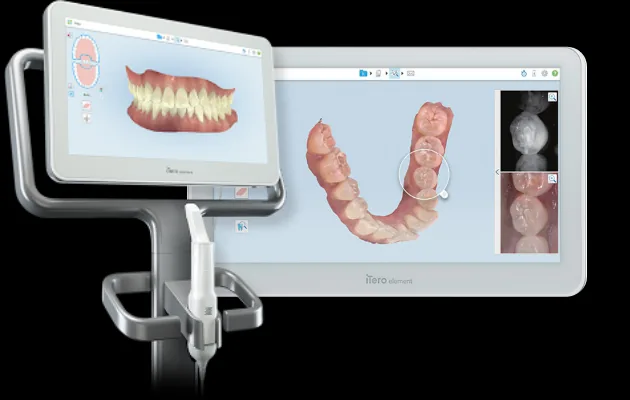
iTero 3D scan

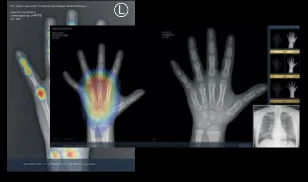
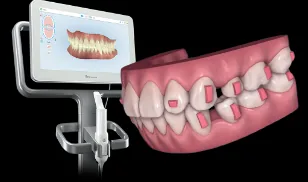
An iTero intraoral scanner records your teeth and bite in 3D without a putty impression. Together with X-rays and photos of your face, the scan shows how the teeth and jaws relate before any movement is planned.

Step 2

ClinCheck plan

ClinCheck is Invisalign's planning software. The dentist sets the movement of each tooth stage by stage, and the software shows the predicted end position. You can watch the planned movement and ask for changes before aligners are made.

Step 3

SmartTrack aligners

The aligners are made from SmartTrack, Invisalign's own aligner material, to the ClinCheck plan. Small tooth-coloured attachments may be bonded to some teeth to help the aligners grip where a movement needs more control.

iTero scanner screen showing a 3D scan of the teeth
An iTero scan shown on screen: the 3D model used to plan aligner treatment.

The Same Dentist from Start to Finish

Orthodontic treatment at the clinic is handled by Dr. Hyeonjoon Park, one of the two clinic directors and a Certified Invisalign Provider. The clinic’s policy is that your attending dentist does not change during orthodontic treatment, so the person who planned your aligners is the person who checks your progress, adjusts the plan and fits your retainer.

Because aligner treatment runs over months, this continuity matters in practice: progress checks compare your teeth with the plan the same dentist designed, and if a refinement is needed, it is planned by the dentist who knows why each movement was chosen.

Patients at the clinic range from young children starting Invisalign First to adults in their sixties and seventies. Age alone does not rule aligners in or out; the health of the gums and bone, the type of bite problem and how consistently you can wear the aligners matter more.

Dentist explaining a treatment plan to a patient
Reviewing a treatment plan with a patient at The Seoul Dental Clinic.

Invisalign for Taepyeong, Moran, Sujin and Bundang Residents

The clinic is by Taepyeong Station Exit 5 in Sujin-dong, Seongnam. It is convenient for people from Taepyeong, Moran, Sujin, Sinheung, Wirye and Bundang.

Aligner treatment involves several check-ups, so location matters. The clinic is open Mon–Wed until 20:30, Thu until 19:00, Fri until 18:30 and Sat until 13:00, closed Sundays. Use a map app for your route; we do not state travel times.

Moran and Sujin are on the Line 8 side of the local map, and Moran and Bokjeong also appear on the Suin-Bundang Line, which helps if you live or work on either side of the area.

If you expect to travel for work or leave Korea during treatment, raise it at the first consultation. Your dentist can tell you whether the plan can accommodate gaps between visits.

Is Invisalign Right for You?

Gum health and cavities should be dealt with before treatment starts. Your dentist will tell you honestly if aligners are not the right tool.

Think about your habits as well as your teeth. Aligners work best for people who can keep to the wearing schedule, remember to clean them, and carry a case for meals out.

Tell the dentist if you have crowns, bridges or implants, as these cannot be moved and can affect the plan. Grinding or clenching is also worth mentioning, since it can wear aligners and affect your teeth.

If you want treatment mainly for appearance, say so. If you have discomfort when chewing, say that too. The goals you describe shape the plan.

  • You want a removable, less visible option
  • Your teeth and gums are healthy enough to start
  • You can follow the wearing schedule
  • You accept that some cases need a different method
Many mild to moderate cases

Often suitable

Crowding, spacing and some bite problems can be treated, depending on the case.

Complex movements

Needs care

Some rotations and bite patterns are harder to achieve with aligners alone.

Braces

Another option

Metal, ceramic, combination or Clippy-C self-ligating braces may suit harder cases or people who prefer fixed treatment.

Invisalign Cost

The range reflects how complex the plan is. After examination, your dentist can tell you where your case is likely to sit. Ask what is included, such as how retainers are handled.

Compared with braces, Invisalign can cost less or more depending on your case, because its range overlaps and extends beyond the published braces figures. Price alone is a poor way to choose, so ask what each option would involve for your teeth.

Check whether the quote covers attachments, refinements if teeth need extra adjustment, and retainers. Ask for the answer in writing.

Many overseas insurers want itemized documents for orthodontic claims. The clinic states it supports overseas-insurance paperwork, so mention your insurer at the start.

OptionPublished price (KRW)
Invisalign₩2.5M to ₩7M
Metal / combination (ceramic upper, metal lower) / ceramic braces₩2.8M / ₩3.1M / ₩3.2M
Clippy-C self-ligating braces₩3.6M
Retainers (fixed / removable)₩100,000–₩200,000 / ₩150,000–₩200,000

Prices are the published non-covered price list in Korean won. Orthodontic diagnosis is listed at ₩100,000, and your final figure is confirmed at consultation.

Treatment Time

How long Invisalign takes depends on how far the teeth must move and how closely the aligners are worn. We do not quote a standard duration, because it would not be fair to promise a time before an examination.

Your dentist will give an estimate for your case and tell you what could make it longer, such as missed wear or changes to the plan.

Progress is checked at visits, and the plan may be adjusted if teeth are not moving as expected. This is normal and not a sign of failure. Honest communication about how often you wear the aligners helps the dentist plan the next step.

If you know you will be away for long periods, say so early. A plan can sometimes be arranged around your schedule, but that is for the dentist to confirm.

Retainers After Treatment

After the teeth are moved, retainers help keep them in place. Your dentist will explain the type and the wearing schedule. Fixed retainers are listed at ₩100,000 to ₩200,000 and removable retainers at ₩150,000 to ₩200,000.

Without retainers, teeth can drift, so include them in your plan from the beginning.

Retainers can be lost, bent or worn out, so ask how replacements are handled. Keep the case somewhere you will remember it, and never wrap a retainer in a tissue at a meal.

Even after a long course of aligners, a retainer is part of the treatment, not an optional extra.

Invisalign FAQ

These are the questions adults ask most often about Invisalign. If yours is not covered, ask at your consultation.

A typical path is an examination and discussion of goals, a digital scan and a proposed plan, a series of aligners worn as directed with check-ups along the way, and then retainers to hold the result. Your dentist will adjust this to your case.

Questions to Ask at Your Consultation

Bring your dental records, a list of medicines, and photos of how your teeth looked earlier if you have them.

Ask about suitability

Is my case a good fit for aligners, or would braces work better?

Ask about the price

Where in the range does my plan sit, and what does it include?

Ask about the process

How often are check-ups, and what happens if teeth move differently from the plan?

Ask about retainers

Which type, how long to wear them and what replacements cost.

Cases

Orthodontic cases from the clinic

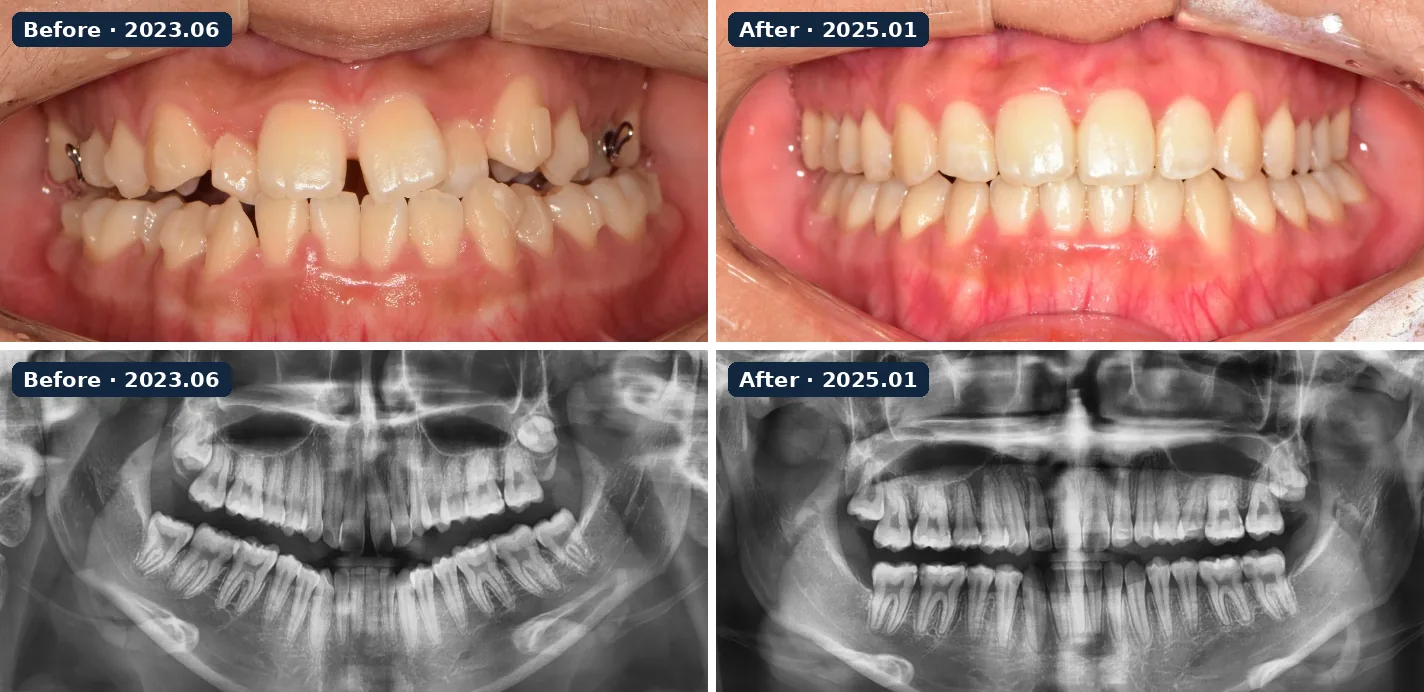
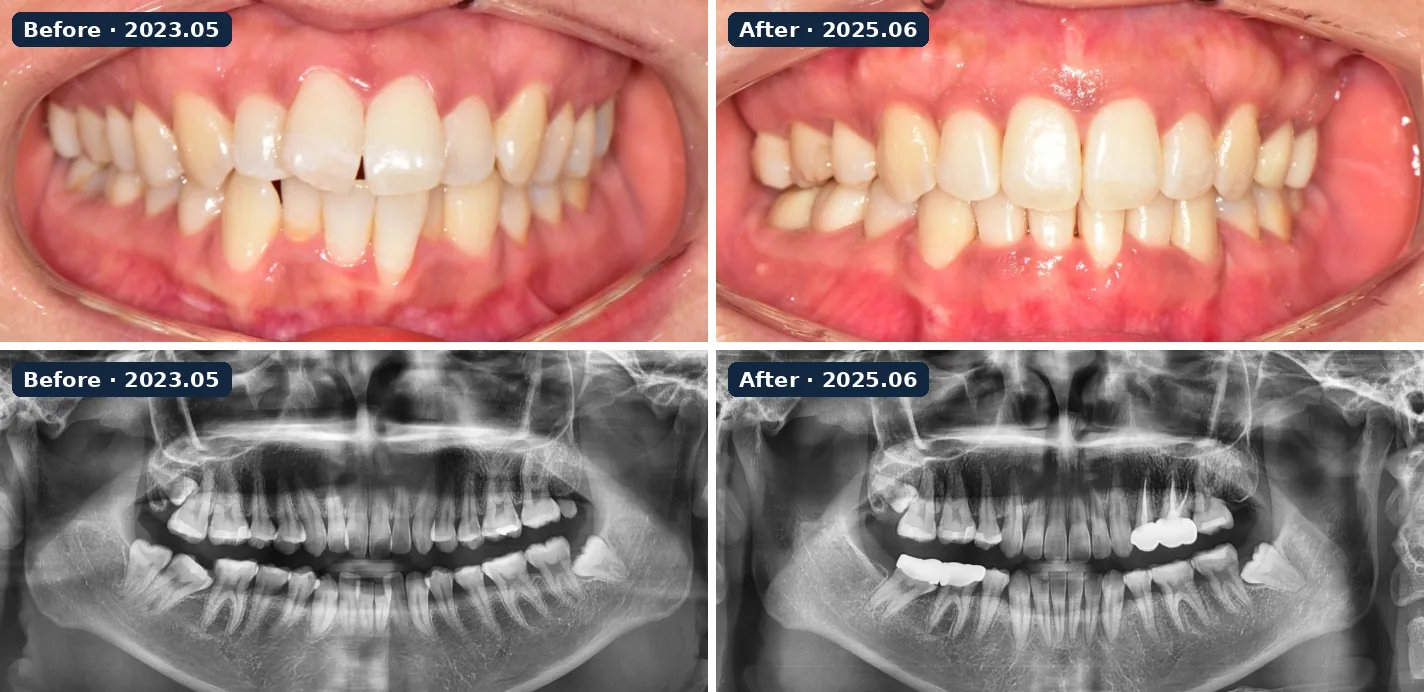
Published with the patients’ consent; before and after images were taken under the same conditions. Results differ for every patient. Orthodontic treatment can cause early discomfort, gum inflammation or other side effects, which your dentist explains and monitors.

Orthodontic case 1 before and after treatment (2023.06 to 2025.01), intraoral photos and panoramic X-rays
Orthodontic case 1 · 2023.06 → 2025.01 · intraoral photos and panoramic X-rays
Orthodontic case 3 before and after treatment (2023.05 to 2025.06), intraoral photos and panoramic X-rays
Orthodontic case 3 · 2023.05 → 2025.06 · intraoral photos and panoramic X-rays
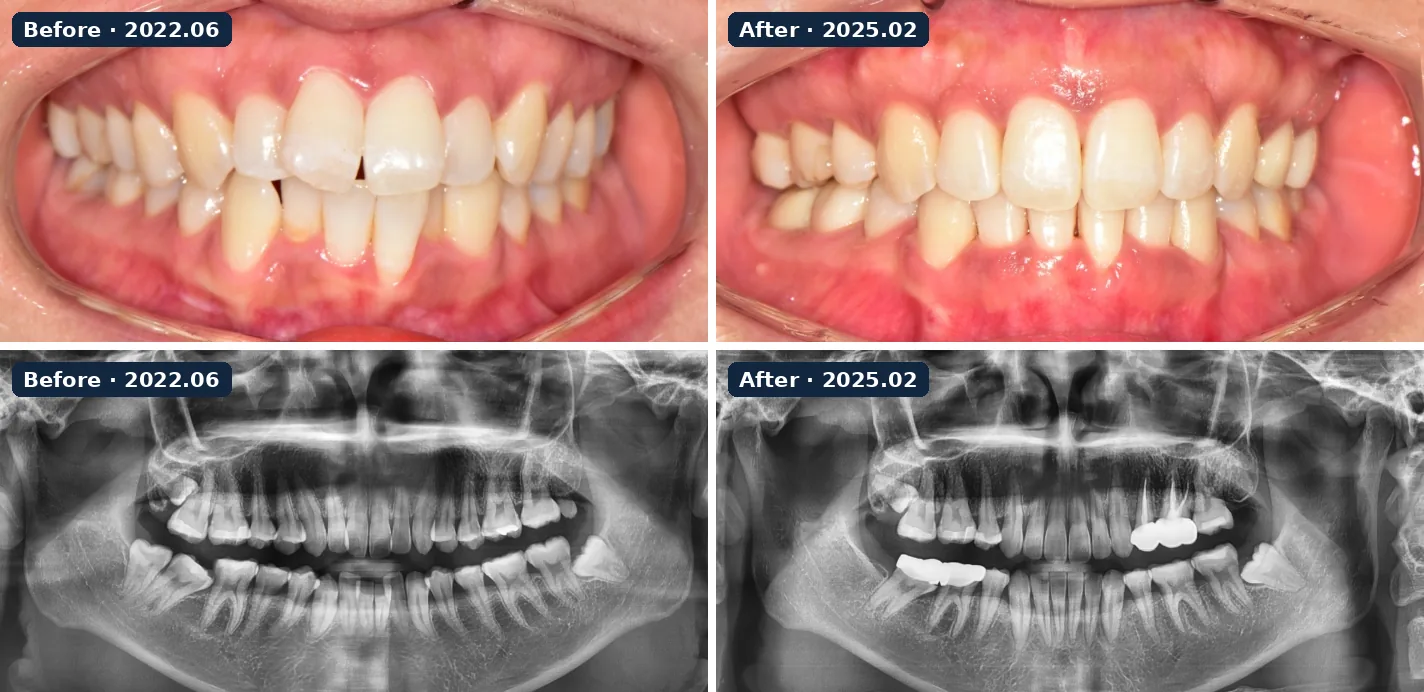
Orthodontic case 6 before and after treatment (2022.06 to 2025.02), intraoral photos and panoramic X-rays
Orthodontic case 6 · 2022.06 → 2025.02 · intraoral photos and panoramic X-rays

See all orthodontic cases →

Clinical case

A case from the clinic

Orthodontics

Crowded, protruding front teeth treated with Invisalign without extractions

Treated by Dr. Hyeonjoon Park

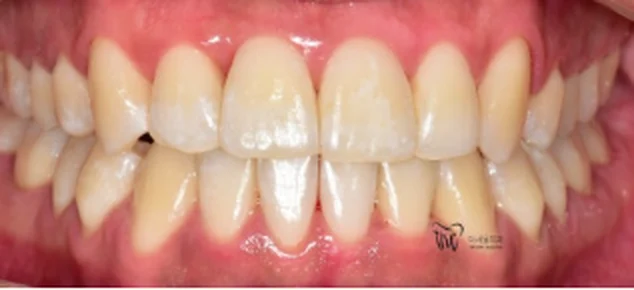
BeforeBefore: Crowded, protruding front teeth treated with Invisalign without extractions
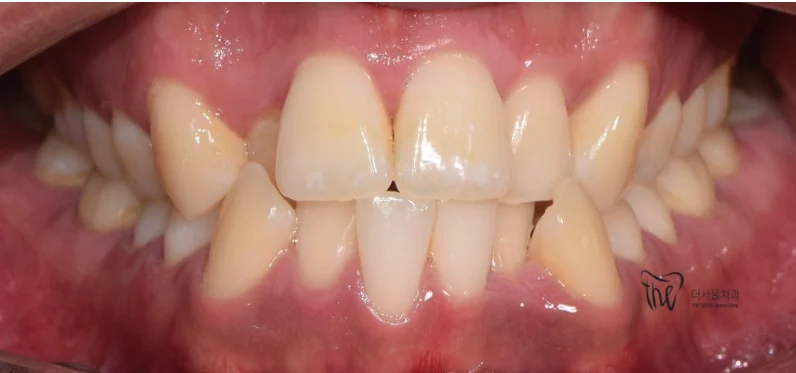
AfterAfter: Crowded, protruding front teeth treated with Invisalign without extractions
Front view before and after treatment
BeforeBefore: Crowded, protruding front teeth treated with Invisalign without extractions
AfterAfter: Crowded, protruding front teeth treated with Invisalign without extractions
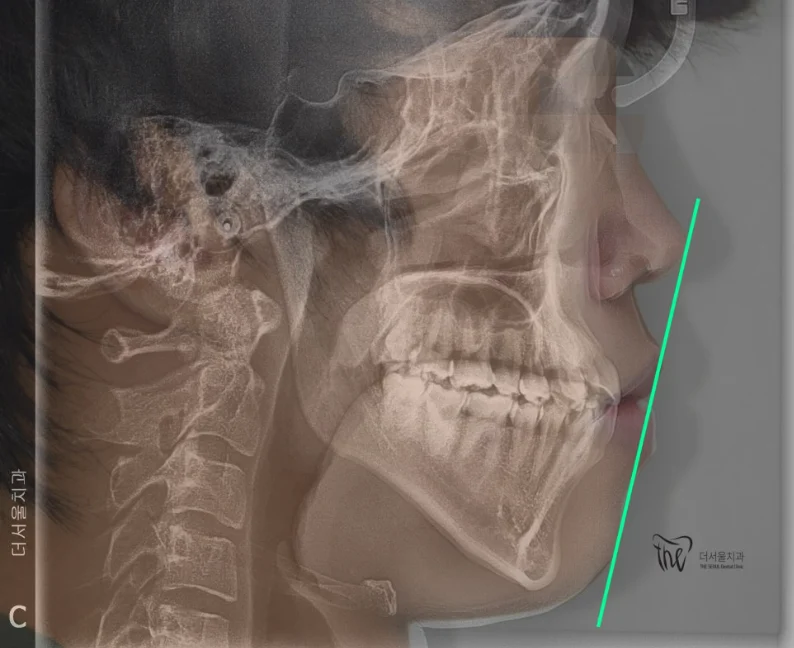
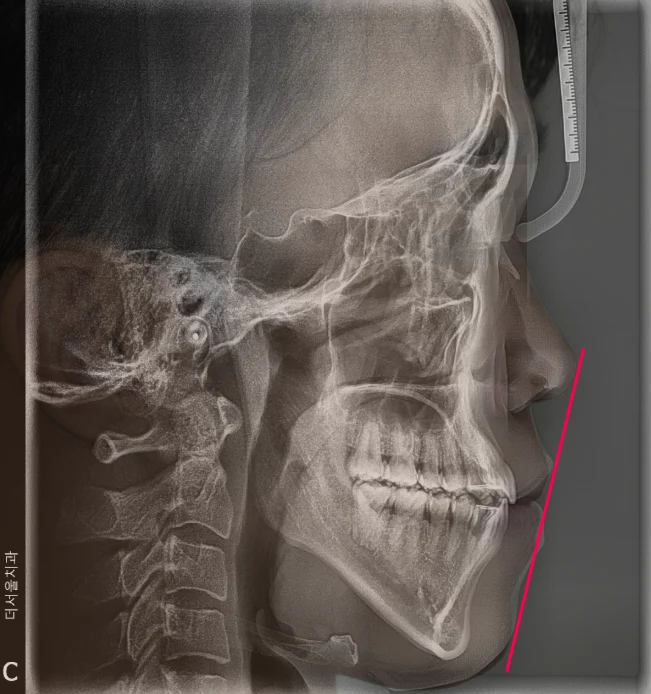
Lateral cephalometric X-rays before and after: lip position against the aesthetic line

Why the patient came in

The patient came in for a protruding mouth and crooked teeth. The front teeth were severely crowded and tilted inward, the dental arches were narrow, and the lips were strained when closed. Crowding like this also makes thorough brushing difficult.

What was done

  1. The patient chose Invisalign clear aligners.
  2. A ClinCheck simulation was used to plan the tooth movements and preview the expected result.
  3. The arches were widened to create space for the crowded teeth, so no teeth were extracted.
  4. At the end of treatment the teeth were evenly aligned and the lips sat behind the aesthetic line on the X-ray.
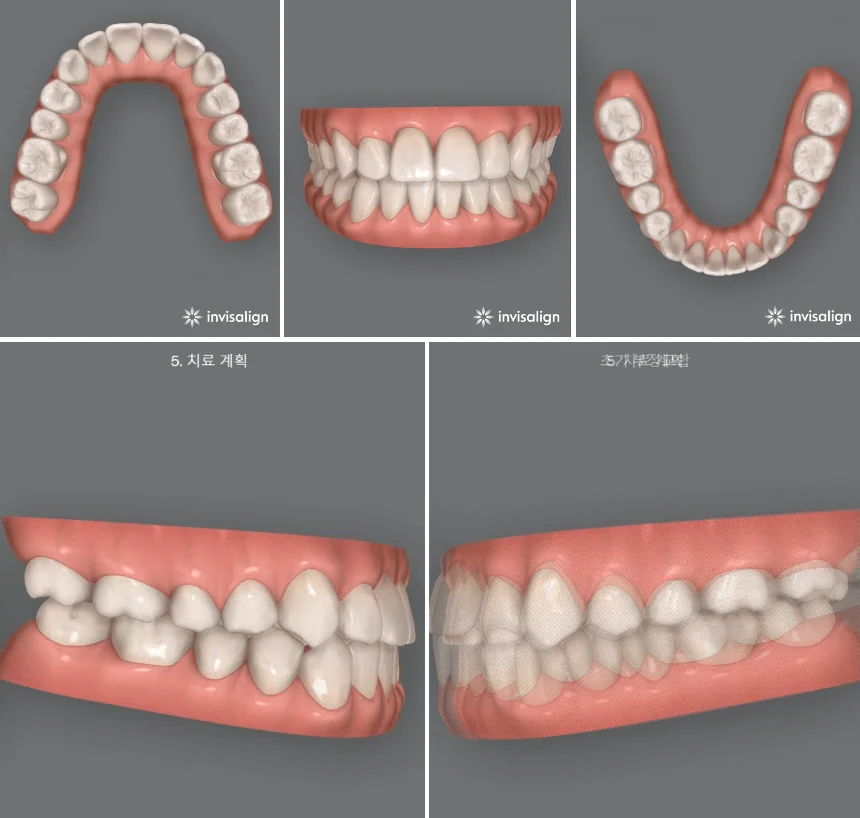
ClinCheck simulation of the planned result

Published with the patient’s consent. Photos and X-rays are from the clinic’s records. Treatment plans and results differ for every patient; only an examination can show what is possible for you. Orthodontic treatment can cause early discomfort, gum inflammation or root resorption. Retainers are needed afterwards to keep the result.


See more before and after cases →

Your dentists

English-speaking dentists in Seongnam

The clinic was founded by two brothers trained at Seoul National University who direct it together. Three further dentists hold Ministry of Health and Welfare specialist certifications. Full credentials →

Dr. Hyeonjoon Park, Clinic Director at The Seoul Dental Clinic

Dr. Hyeonjoon Park

Clinic Director

  • Co-founder and joint clinic director
  • DDS, Seoul National University School of Dentistry
  • Master’s degree, SNU Graduate School of Dentistry
  • Former staff, Dept. of General Dentistry, SNU Dental Hospital
  • Affiliate Associate Fellow, American Academy of Implant Dentistry (AAID)
  • Certified Invisalign Provider; leads orthodontic treatment
  • Course completion, UCLA, USA
  • Member, UPenn Endodontics Study Club, USA
  • Member, International Congress of Oral Implantologists (ICOI)
  • Member, Seoul Prime Orthodontic Study Club
Dr. Hyun Sung Park, Clinic Director at The Seoul Dental Clinic

Dr. Hyun Sung Park

Clinic Director

  • Co-founder and joint clinic director
  • DDS, Seoul National University School of Dentistry
  • Master’s degree, SNU Graduate School of Dentistry
  • Former staff, Dept. of General Dentistry, SNU Dental Hospital
  • Microendodontics Programme, SNU
  • Course completion, UCLA, USA
  • Member, UPenn Endodontics Study Club, USA
  • Certified Invisalign Provider
  • Osstem Implant AIC Programme
  • Member, International Congress of Oral Implantologists (ICOI)
Dr. Yu Jin Kim, Dentist at The Seoul Dental Clinic

Dr. Yu Jin Kim

Dentist

  • Board-certified specialist, Advanced General Dentistry (Ministry of Health and Welfare)
  • Johns Hopkins University, USA
  • Master’s degree, SNU Graduate School of Dentistry
  • Former staff, Osaka University Dental Hospital, Japan
Dr. Min Ji Choi, Dentist at The Seoul Dental Clinic

Dr. Min Ji Choi

Dentist

  • Board-certified specialist, Conservative Dentistry
  • Board-certified specialist, Advanced General Dentistry
  • Internship and residency, Jeonbuk National University Dental Hospital
  • Master’s degree in Conservative Dentistry, Jeonbuk National University
Dr. Jin Young Choi, Dentist at The Seoul Dental Clinic

Dr. Jin Young Choi

Dentist

  • Board-certified specialist, Advanced General Dentistry
  • Clinical training, Faculty of Dentistry, University of British Columbia, Canada
  • Master’s degree, Kyungpook National University Graduate School of Dentistry
  • BA in English Language and Literature, Korea University

Invisalign: frequently asked questions

How much is Invisalign?

Listed at ₩2.5M to ₩7M, by case. Your exact figure is confirmed at consultation.

How long does treatment take?

It depends on your case. Your dentist gives an estimate after examination.

Can I see my result before I start?

You can see a predicted result. The ClinCheck plan shows how your teeth are expected to move, stage by stage, and where they should finish. It is a plan rather than a guarantee, because each person’s teeth respond differently, but it lets you ask questions and request changes before aligners are made.

Who will treat me?

Orthodontic treatment is handled by Dr. Hyeonjoon Park, a clinic director and Certified Invisalign Provider. Your attending dentist does not change during treatment.

Can I eat normally?

You remove aligners to eat, then brush before putting them back.

Will I need attachments?

Sometimes. Your dentist decides if small tooth-colored attachments are needed.

Is English consultation available?

Yes. The clinic states that English-language consultation is available.

Do I need a retainer?

Usually yes. Retainers are priced separately: fixed ₩100,000 to ₩200,000, removable ₩150,000 to ₩200,000.

Is Invisalign cheaper than braces?

Not always. The published range of ₩2.5M to ₩7M overlaps braces at ₩2.8M to ₩3.6M, and your plan sets the figure.

Can I drink coffee with aligners in?

Usually not. Take aligners out for anything other than water, as your dentist advises, and brush before putting them back.

Plan your Invisalign consultation

Contact us and we will explain the options and the published price range in English.

Visit

Visit us: Taepyeong Station Exit 5, Seongnam

2–3F, 1225 Seongnam-daero, Sujeong-gu, Seongnam-si, Gyeonggi-do (Taepyeong Station Exit 5)

Monday – Wednesday09:30 – 20:30
Thursday09:30 – 19:00
Friday09:30 – 18:30
Saturday09:30 – 13:00
SundayClosed
Public holidaysOpen
Lunch breakNone — continuous hours

Parking garage in the building; parking benefits for patients receiving treatment.

Directions from Taepyeong Station Exit 5 → · Naver Map

Entrance sign of The Seoul Dental Clinic