Laminate Veneers: Minimal-Prep Design near Taepyeong Station, Seongnam
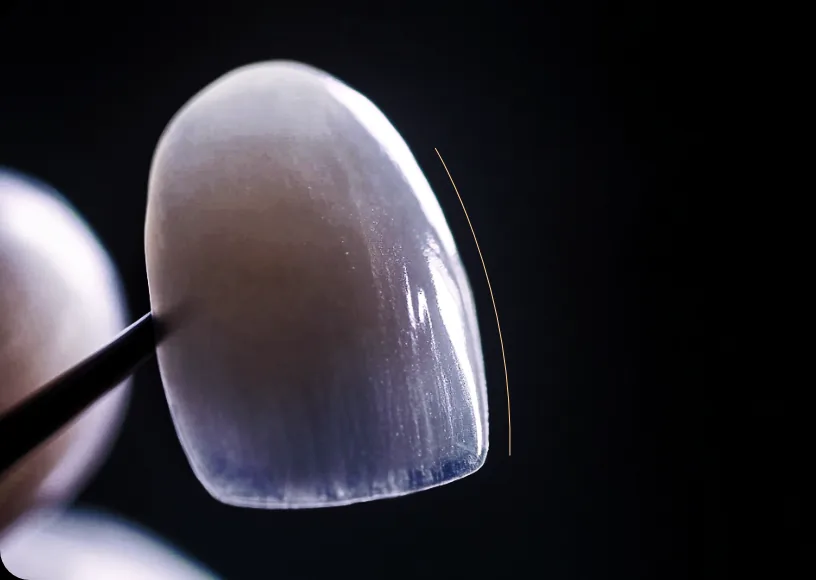
Laminate veneers are thin ceramic shells bonded to the front of teeth to change their shade, shape or minor alignment.
Ask about Veneers
Tap what fits — your message is prepared for you. Nothing is sent until you press send.
Send opens your email app addressed to theseouldc@naver.com. Prefer chat? KakaoTalk channel · Instagram DM · or call +82-31-757-1525.
Message copied. Please call +82-31-757-1525 or email theseouldc@naver.com.
Laminate veneers are thin ceramic shells bonded to the front of teeth to change their shade, shape or minor alignment. At The Seoul Dental Clinic they are designed from facial analysis and a 3D scan, made from lithium disilicate by the Oral Design Seoul laboratory, and published at ₩600,000 per tooth, VAT included. The approach keeps tooth reduction as small as your teeth allow, and an examination decides whether veneers suit you.
What Laminate Veneers Do
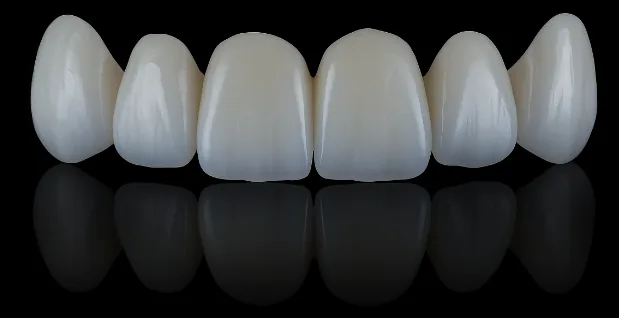
A laminate veneer covers the visible face of a tooth. It can hide staining that whitening cannot remove, reshape a chipped or uneven tooth, close small gaps and make teeth look more even. Several veneers are often placed together so the front teeth match.
Veneers are not the right answer for every problem. Crowded teeth may be better moved with aligners, and a tooth with a large cavity may need a crown. Your dentist will tell you if another option suits you better.
Because a veneer is a permanent change to the tooth surface, it deserves a calm decision. Ask what the alternatives are for your concern, what each involves and what it costs. Whitening, bonding and aligners are all published options at the clinic, and some people find one of them is enough.
The number of veneers depends on your smile. Many people treat the teeth that show most when they smile, which is a design choice you make with your dentist, not a fixed number.
- Suited to: discoloration that whitening does not shift, small chips, worn edges, small gaps, uneven shape.
- Often not suited to: crowding or a bite problem that needs movement, large decay, or heavy grinding that is not controlled.
- Alternatives to discuss: whitening, bonding, aligners, crowns.
Veneers for Taepyeong, Moran, Sujin and Bundang Residents
The clinic is in Sujin-dong, Sujeong-gu, Seongnam, by Taepyeong Station Exit 5. If you live near Moran, Sujin, Sinheung or Gachon University, or travel from Bundang or Seoul, the station location suits a treatment that needs more than one visit.
A veneer case has a design stage, a preparation stage and a fitting stage, plus follow-up, so convenience counts. You can plan a route by subway with a map app; we do not quote travel times.
English consultation is available, so you can explain what you want to change and hear the options in plain language. The clinic is open Monday to Wednesday 09:30–20:30, Thursday 09:30–19:00, Friday 09:30–18:30 and Saturday 09:30–13:00, with no lunch break; it is closed on Sundays and open on public holidays.
Minimal-Prep Approach
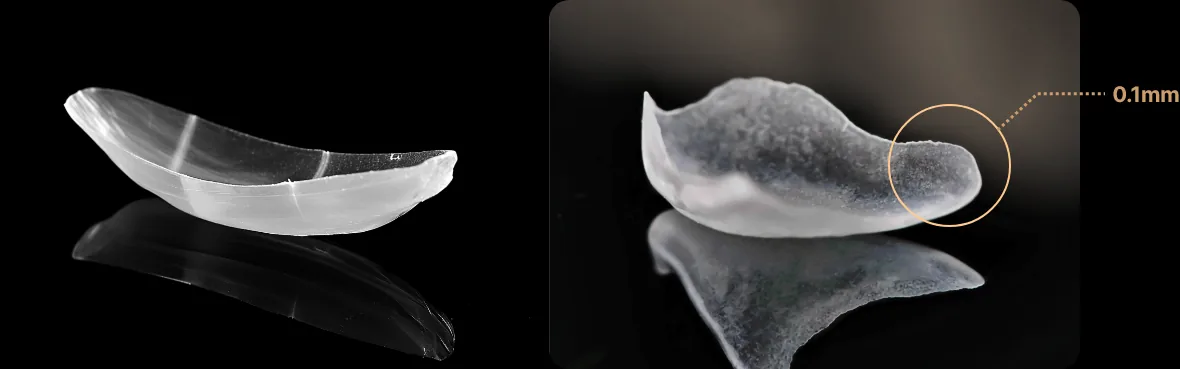
The clinic’s veneers are made very thin, about 0.1 mm at the thinnest part, so that less of your own tooth needs to be reduced. Thicker veneers usually mean more reduction; a thin, well-fitting shell lets more natural enamel stay in place.
Minimal-prep means removing as little enamel as possible, ideally only what is needed for the veneer to sit well. Keeping more of your own enamel helps the bond and keeps options open if you want to change course later.
How much shaping is needed depends on your tooth position, its colour and the result you want. A tooth that sits forward needs less than one that is rotated. A dark tooth may need more material to mask it. Your dentist will explain this tooth by tooth, and we do not promise that no preparation will be needed.
Ask your dentist to explain, for each tooth, how much will be reduced and why. A clear answer is a good sign that the plan has been thought through.
No-preparation is not automatically better. Depending on the position, size and bite of your teeth, some reduction may still be needed for a natural result and a good fit, and your dentist explains why before anything is done.
- Ask how much of each tooth will be reduced.
- Ask whether any tooth could be treated without cutting.
- Ask what happens if you decide later to remove the veneers.
Digital Smile Design
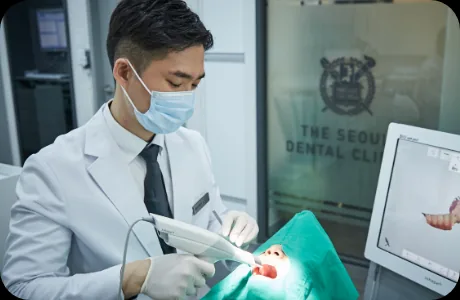
Design starts with your face, not with a shade guide. The clinic analyses your facial proportions, lips and smile line together with tooth shape, size, bite and colour, and uses that data to plan teeth in proportion to your face rather than simply making them whiter or thinner.
Digital design lets you comment on shape, length and proportion before anything is made. It is a planning tool, and the final look depends on your teeth, your lips and the materials.
Photos and records
Photos and impressions or scans of your teeth are taken as the starting point.
Design on screen
A proposed shape and length are drawn up so you can discuss the plan before any cutting happens.
Trial of the design
Where appropriate, the planned look can be previewed so you can comment on shape and shade.
Adjustments
Your feedback is used to refine the design before the final veneers are made.
Material and Laboratory
The aim is a restoration that behaves like a natural tooth: strong enough for daily use, with translucency and colour close to enamel.
Lithium disilicate
Veneers are made from lithium disilicate glass-ceramic blocks, which combines strength with translucency, so thin restorations can still look natural.
Oral Design Seoul
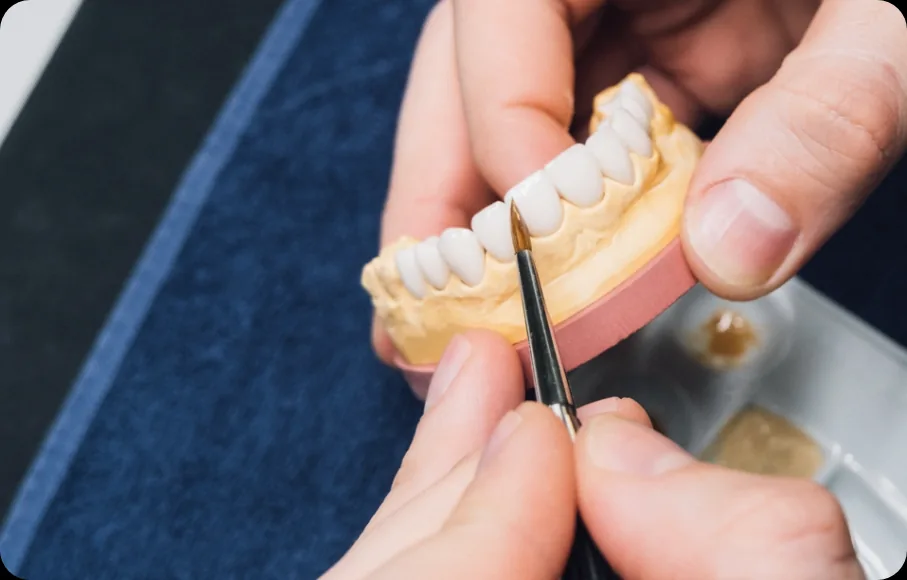
The veneers are made by the Oral Design Seoul dental laboratory, part of an international aesthetic dentistry study group. Technicians finish each veneer by hand from a 3D design based on your face and the condition of your teeth.
Colour stability
Glazed ceramic picks up less staining than natural teeth or resin bonding, so colour tends to stay stable with normal care and check-ups.
How Your Veneers Are Made
The process has three stages, and in suitable cases it can be completed in a single day: a morning visit for scanning and design, and fitting in the afternoon.
3D scan and facial analysis
Your teeth are scanned and your facial proportions and smile line are analysed to set the shape, length and colour.
Laboratory design and fine adjustment
The technician designs and builds the veneers, adjusting translucency and colour layer by layer.
Try-in, refinement and bonding
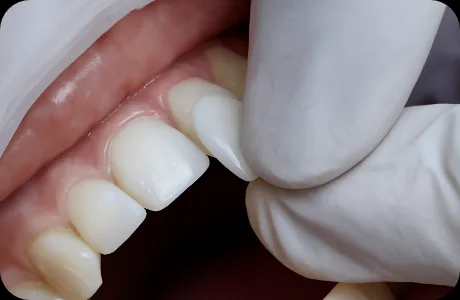
The veneers are tried in, refined where needed and bonded. Your bite is checked before you leave.
Veneer Prices
The published price is per tooth, so the total grows with the number of teeth treated. A treatment of a few teeth costs less than a full set across the smile line, and your quote lists each one.
Preparatory work may also be needed. Scaling or other treatment can come first so that gums are healthy before veneers are fitted. Such items are quoted separately.
| Item | Published price (KRW) |
|---|---|
| Laminate veneer | ₩600,000 per tooth (VAT incl.) |
| Professional whitening (before veneers) | ₩385,000 (VAT incl.) |
| Additional scaling (non-covered) | ₩50,000 |
| Resin bonding, gap (diastema) closure | ₩250,000 |
Price list as published; cosmetic prices include VAT. Insurance-covered scaling follows national insurance rules. Your total depends on how many teeth are treated and on any preparatory work; confirm at consultation.
Visits and Timeline
Veneers generally take more than one appointment: a planning visit, a preparation visit and a fitting visit. The exact number depends on your case and whether other treatment is needed first. Your dentist will give a schedule after examination.
After fitting, regular check-ups are important. If you grind your teeth, a night guard can help protect the veneers. Veneers can chip or loosen and may need replacing over time, so keep good home care and attend cleanings.
If you live abroad or may move, tell the team before you start. A plan that lets you attend the key visits and arrange follow-up near home is better than one that is interrupted halfway.
Side effects can include tooth sensitivity after treatment or chipping of the restoration, so accurate diagnosis beforehand and regular check-ups afterwards are important.
Veneers or Other Options?
Some people arrive wanting veneers and leave choosing something simpler. This table summarizes the usual trade-offs; your dentist applies them to your own teeth.
| Concern | Option to discuss | Published price |
|---|---|---|
| Dull or stained teeth | Professional whitening | ₩385,000 (VAT incl.) |
| One darkened tooth | Whitening after root canal (internal bleaching) | ₩165,000 per tooth (VAT incl.) |
| Crooked teeth | Aligners or braces | Invisalign ₩2.5M–₩7M |
| Chip, uneven edge, small gap | Laminate veneer | ₩600,000 per tooth (VAT incl.) |
Outcomes depend on your case. Bonding is also offered; ask for details at consultation.
Questions to Ask at Your Consultation
Bring a photo of a smile you like if you have one, and be ready to say what bothers you now.
You can send these questions in English before you come.
- How many teeth should be treated, and why those?
- How much of each tooth will be reduced?
- Can I preview the design before the final veneers are made?
- What are the total cost and the number of visits?
- How do I care for the veneers, and do I need a night guard?
Veneer FAQ
Common questions are answered below. Your own case may differ, and your dentist will advise you.
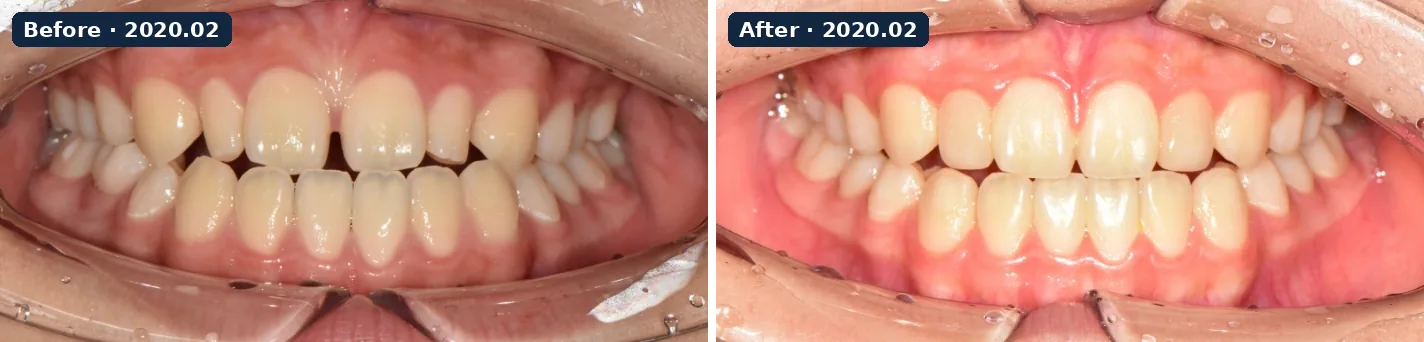
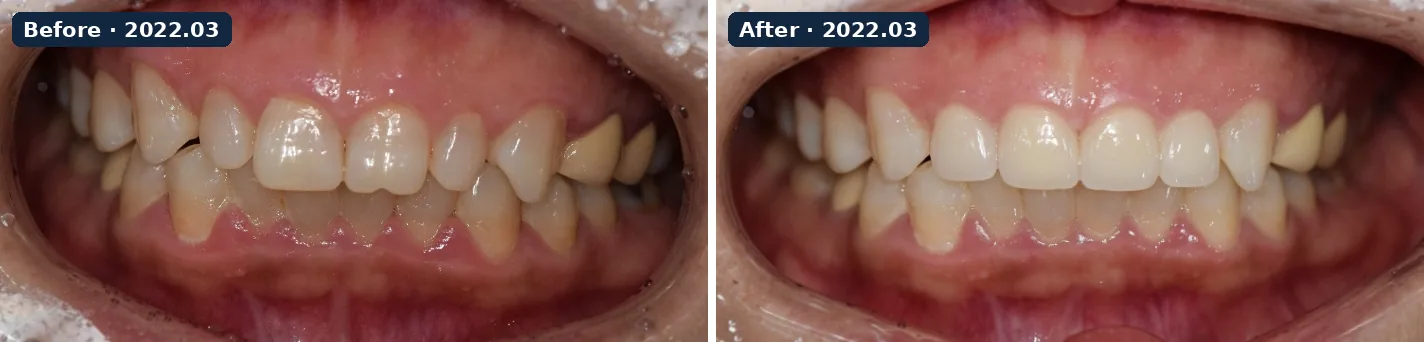
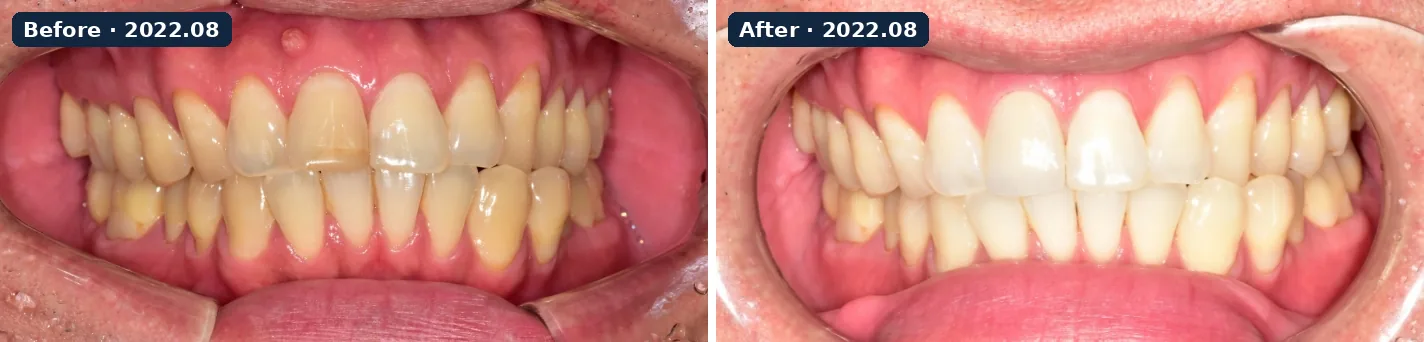
Laminate veneer cases from the clinic
Published with the patients’ consent; before and after images were taken under the same conditions. Results differ for every patient. Veneers can cause tooth sensitivity or chipping of the restoration, so accurate diagnosis and aftercare matter.
English-speaking dentists in Seongnam
The clinic was founded by two brothers trained at Seoul National University who direct it together. Three further dentists hold Ministry of Health and Welfare specialist certifications. Full credentials →

Dr. Hyun Sung Park
Clinic Director
- Co-founder and joint clinic director
- DDS, Seoul National University School of Dentistry
- Master’s degree, SNU Graduate School of Dentistry
- Former staff, Dept. of General Dentistry, SNU Dental Hospital
- Microendodontics Programme, SNU
- Course completion, UCLA, USA
- Member, UPenn Endodontics Study Club, USA
- Certified Invisalign Provider
- Osstem Implant AIC Programme
- Member, International Congress of Oral Implantologists (ICOI)

Dr. Jin Young Choi
Dentist
- Board-certified specialist, Advanced General Dentistry
- Clinical training, Faculty of Dentistry, University of British Columbia, Canada
- Master’s degree, Kyungpook National University Graduate School of Dentistry
- BA in English Language and Literature, Korea University

Dr. Hyeonjoon Park
Clinic Director
- Co-founder and joint clinic director
- DDS, Seoul National University School of Dentistry
- Master’s degree, SNU Graduate School of Dentistry
- Former staff, Dept. of General Dentistry, SNU Dental Hospital
- Affiliate Associate Fellow, American Academy of Implant Dentistry (AAID)
- Certified Invisalign Provider; leads orthodontic treatment
- Course completion, UCLA, USA
- Member, UPenn Endodontics Study Club, USA
- Member, International Congress of Oral Implantologists (ICOI)
- Member, Seoul Prime Orthodontic Study Club

Dr. Yu Jin Kim
Dentist
- Board-certified specialist, Advanced General Dentistry (Ministry of Health and Welfare)
- Johns Hopkins University, USA
- Master’s degree, SNU Graduate School of Dentistry
- Former staff, Osaka University Dental Hospital, Japan

Dr. Min Ji Choi
Dentist
- Board-certified specialist, Conservative Dentistry
- Board-certified specialist, Advanced General Dentistry
- Internship and residency, Jeonbuk National University Dental Hospital
- Master’s degree in Conservative Dentistry, Jeonbuk National University
Video: our dentists explain
In Korean. On YouTube, turn on subtitles and choose Settings → Subtitles → Auto-translate → English.
What this video covers
The dentists describe veneers (called 'laminates' in Korea) as thin shells bonded to the front of the teeth to adjust color, shape and proportion, and stress that the treatment may involve reshaping some enamel and is hard to reverse. They explain that differences in cost generally reflect diagnosis, design, fabrication method, materials and finishing, and that the amount of tooth reduction depends on each person's alignment and goals. They discuss choosing a shape and shade that suit the patient's face rather than copying a trend, when same-day veneers may or may not be appropriate, and that veneers can chip, wear or debond over time. Before deciding, they recommend asking about limits and possible side effects, previewing the design, and planning follow-up care.
- The amount of tooth reshaping varies by case; 'no-prep' labels depend on the individual situation
- Design should fit the face, lips and smile line, not just be as white as possible
- Ask about risks such as sensitivity, chipping, debonding and gum irritation, and about long-term maintenance
Veneers: frequently asked questions
How much do veneers cost?
₩600,000 per tooth, VAT included, on the published price list. Your total depends on how many teeth are treated, and your dentist confirms it at consultation.
Do veneers hurt?
Local anesthesia is used where needed, so the preparation visit should not be sharp pain. Tell your dentist if anything is uncomfortable, and expect some sensitivity afterwards.
Can veneers be done in one day?
In suitable cases, yes: you come in the morning for scanning and design, and the veneers are fitted in the afternoon. More complex cases, or those needing other treatment first, take more visits. Your dentist tells you which applies after examination.
How thin are the veneers?
About 0.1 mm at the thinnest part. Thin veneers allow less tooth reduction, but the right thickness depends on your teeth; sometimes slightly more reduction gives a more natural result.
How long do veneers last?
It depends on your bite, habits, cleaning and whether you grind your teeth. They can chip or loosen and may need replacing, so regular check-ups matter.
Will veneers damage my teeth?
Some enamel is usually reduced, which cannot be put back. The approach aims to keep that to a minimum, and your dentist explains how much for each tooth.
Can I whiten veneers?
No, veneer material does not change shade with whitening. Whiten natural teeth first if you want them to match, then choose the veneer shade.
Can I have just one veneer?
Often yes, but matching one tooth to its neighbors takes care. Your dentist will say whether one veneer will blend or whether neighboring teeth should be treated too.
Can I see the design before treatment?
Where appropriate, the planned look is previewed so you can comment on shape and shade before the final veneers are made.
Can I ask in English?
Yes. English consultation is available, and you can send your questions before you visit.
Related treatments and guides
Discuss Veneers With Us
Tell us what you would like to change and we will explain realistic options in English. Call +82-31-757-1525 or send a message.
Visit us: Taepyeong Station Exit 5, Seongnam
2–3F, 1225 Seongnam-daero, Sujeong-gu, Seongnam-si, Gyeonggi-do (Taepyeong Station Exit 5)
| Monday – Wednesday | 09:30 – 20:30 |
|---|---|
| Thursday | 09:30 – 19:00 |
| Friday | 09:30 – 18:30 |
| Saturday | 09:30 – 13:00 |
| Sunday | Closed |
| Public holidays | Open |
| Lunch break | None — continuous hours |
Parking garage in the building; parking benefits for patients receiving treatment.