Root canal · Taepyeong, Seongnam

Root Canal Treatment near Taepyeong Station, Seongnam

A root canal treats the inside of a tooth when the nerve is infected or badly inflamed, so that you can often keep the natural tooth.

QuotedRoot canal cost after examination
₩100,000Core build-up / post
₩450,000Zirconia crown, back tooth
Exit 5Taepyeong Station, Suin-Bundang Line
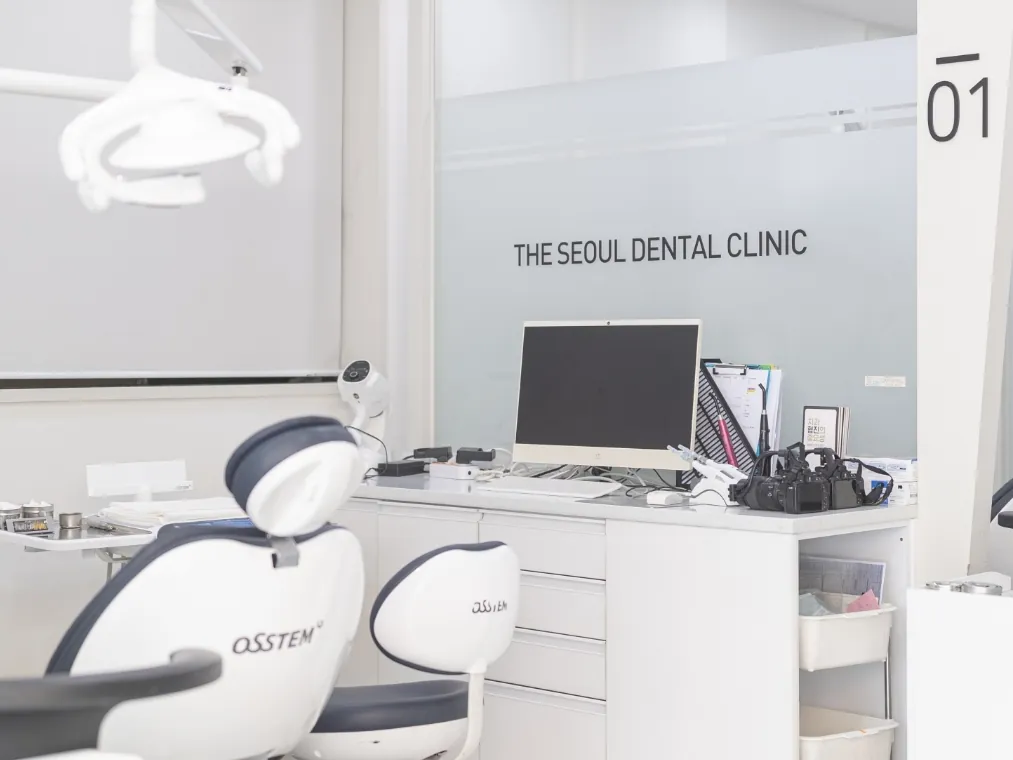
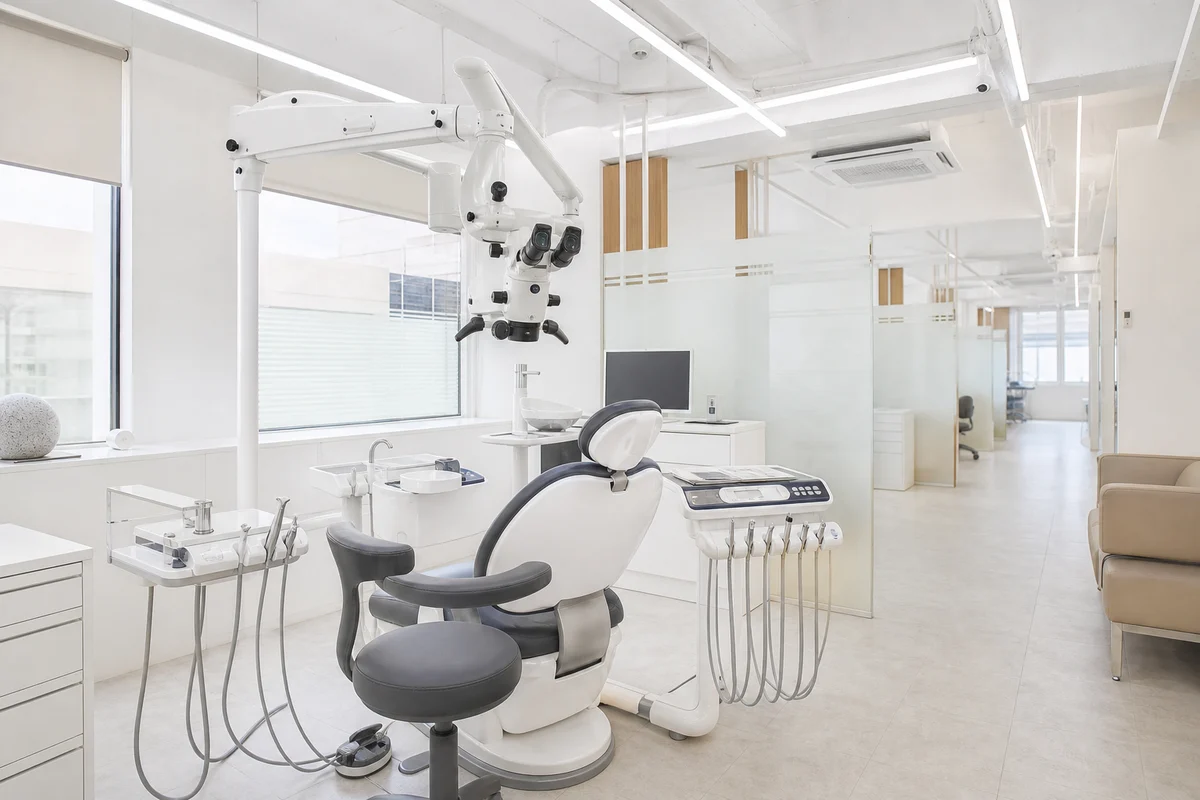
Treatment chairs at The Seoul Dental Clinic

Ask about Root Canal

Tap what fits — your message is prepared for you. Nothing is sent until you press send.

Send opens your email app addressed to theseouldc@naver.com. Prefer chat? KakaoTalk channel · Instagram DM · or call +82-31-757-1525.

The short answer

A root canal treats the inside of a tooth when the nerve is infected or badly inflamed, so that you can often keep the natural tooth. The cost is not published and is quoted after examination. A tooth treated this way usually needs a crown afterward; zirconia crowns are published at ₩450,000 for a back tooth and ₩550,000 for a front tooth.

When You Need a Root Canal

Inside every tooth is a soft core called the pulp, which holds nerves and blood vessels. When deep decay, a crack or an old filling lets bacteria reach it, the pulp can become inflamed or infected. A root canal removes the damaged pulp, cleans the space and seals it so the tooth can stay in your mouth.

The signs that bring people in vary. Some notice lingering pain after hot or cold drinks, pain on biting, a swelling on the gum, or a tooth that has darkened. Others have no pain at all and learn about the problem from an X-ray at a check-up. You cannot tell from symptoms alone, which is why an examination and imaging come first.

Pain that wakes you at night, facial swelling or fever deserve prompt attention. Call the clinic on +82-31-757-1525 rather than waiting. The fee for an emergency visit is not published, and any cost is quoted after examination.

Root canal is not always the answer. If the tooth is too broken down to restore, extraction followed by an implant, bridge or denture may be discussed instead. Your dentist lays out both paths so you can decide.

  • Lingering sensitivity to hot or cold
  • Pain when biting or pressing on the tooth
  • Swelling or a bump on the gum
  • A tooth that has changed color
  • No symptoms but an X-ray finding
Root Canal: how the treatment is planned

Root Canal Treatment for Taepyeong, Moran, Sujin and Bundang Residents

The clinic is by Taepyeong Station Exit 5 in Sujin-dong, Sujeong-gu, Seongnam. If you live or work around Taepyeong, Moran, Sujin, Sinheung, Gachon or Wirye, you can reach a dentist without crossing into central Seoul.

Toothache rarely arrives at a convenient time. Being close to a station helps if you need to be seen quickly and then return for follow-up. Bundang-side residents may find Moran or Bokjeong on the map a useful reference, since both appear on the Suin-Bundang Line and on Line 8. We do not state travel times, so check your route in a map app.

The clinic is open Monday to Wednesday 09:30–20:30, Thursday 09:30–19:00, Friday 09:30–18:30 and Saturday 09:30–13:00, closed on Sundays and open on public holidays. Tell the team when you phone that you have pain so they can advise on the next step. English-language consultation is available.

What Happens During Treatment

Conscious sedation is available as a separate option if dental treatment makes you anxious. Fees for sedation are ₩300,000 for general sedation and ₩400,000 for sedation with an anesthesiologist.

Examination and X-ray

Your dentist checks the tooth, tests how it responds and takes images to see the roots and surrounding bone.

Numbing and access

The area is numbed with local anesthesia and a small opening is made through the top of the tooth to reach the pulp.

Cleaning and shaping

The damaged tissue is removed, the canals are cleaned and shaped, and the space is disinfected.

Filling and sealing

The cleaned canals are filled and sealed, and a temporary or permanent filling closes the access.

Rebuilding

The tooth is built up and protected, usually with a crown, to withstand chewing.

How Many Visits

The number of visits depends on the tooth, how many canals it has, whether there is infection and how the tooth settles between appointments. We do not give a fixed number because it would be a guess.

Some teeth are treated in fewer sittings and some need more. A front tooth with a single canal is generally simpler than a back tooth with several. If an infection is present, your dentist may want to see how the tooth responds before sealing it.

After the canal is sealed, a further visit is usually needed for the crown. If you are a visitor with a fixed departure date, tell the clinic at the start so the plan can be arranged around your stay, and ask what can safely be completed before you leave.

Between visits, avoid chewing hard food on the treated tooth, and call the clinic if swelling, a bad taste or increasing pain develops.

  • Tell the clinic your travel dates early
  • Ask which stage can be finished before you leave
  • Ask what to do if pain returns between visits

Crown After Root Canal

A tooth that has had a root canal can be more brittle, because much of its structure was lost to decay or to the access opening. A crown protects it from fracture, which is why dentists usually recommend one, especially on back teeth.

Front teeth that are largely intact are sometimes restored with a filling instead. Your dentist advises on this based on how much natural tooth is left.

ItemPublished priceNotes
Core build-up / post₩100,000Rebuilds the inside of the tooth to hold a crown
Metal crown₩300,000Strong, but metal in color
PFM crown₩400,000Porcelain over a metal base
Zirconia crown, back tooth₩450,000Tooth-colored ceramic
Zirconia crown, front tooth₩550,000Tooth-colored ceramic for a front tooth

Prices are the published non-covered price list in KRW; VAT may apply. Confirm at consultation.

Root Canal FAQ

Patients tend to ask the same few things: whether it hurts, how long it lasts and whether pulling the tooth would be simpler. The answers depend on the tooth.

Treatment is done under local anesthesia, so you should be numb during the procedure, and you will be told what to expect afterward. Some soreness is common for a few days. We cannot promise an outcome, and the long-term result depends on the tooth, the restoration and your care.

Saving your own tooth is usually worth considering when the tooth can be restored, but not at any cost. A frank discussion of the choices is part of the consultation.

  • Ask what the plan is if the tooth cannot be saved
  • Ask whether a crown is needed and when
  • Ask for the complete quote, including the crown

Aftercare and What to Ask

After treatment, the tooth may feel tender when you bite. Avoid chewing hard foods on that side until the permanent restoration is in place, since a temporary filling is more fragile. Keep brushing and cleaning between teeth as normal.

Questions worth bringing to your visit include how long the temporary filling can safely stay, what signs mean you should call, and what a follow-up X-ray will show. Ask for fees in writing, including the crown and any build-up.

Keep the dentist informed about allergies, medicines and health conditions before any procedure.

Clinical case

Cases from the clinic

Cavity treatment

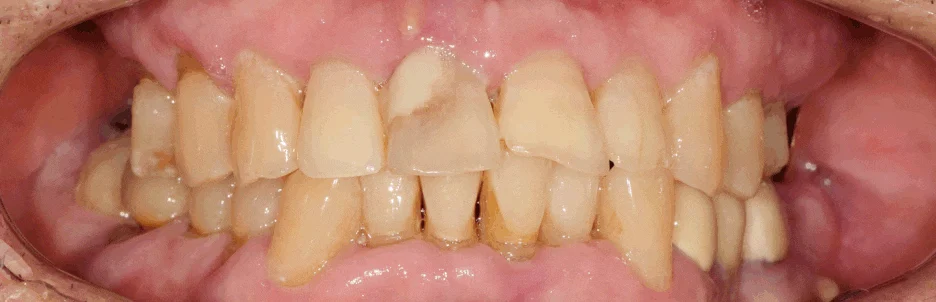
Deep decay under an old filling on a front tooth

Treated by Dr. Hyeonjoon Park

BeforeBefore: Deep decay under an old filling on a front tooth
AfterAfter: Deep decay under an old filling on a front tooth
Front view before and after treatment

Why the patient came in

An upper front tooth (#11) had extensive decay that had developed again around an old filling. The patient had throbbing pain even at rest. This was the last stage of a longer treatment for the same patient.

What was done

  1. Cold and heat tests were used to check the nerve. Because of the pain at rest, root canal treatment was needed.
  2. All decay was removed and the canal was cleaned and disinfected with the tooth kept dry.
  3. The canal was sealed with filling material to the root tip, checked on a high-resolution X-ray.
  4. The tooth was restored with a zirconia crown.
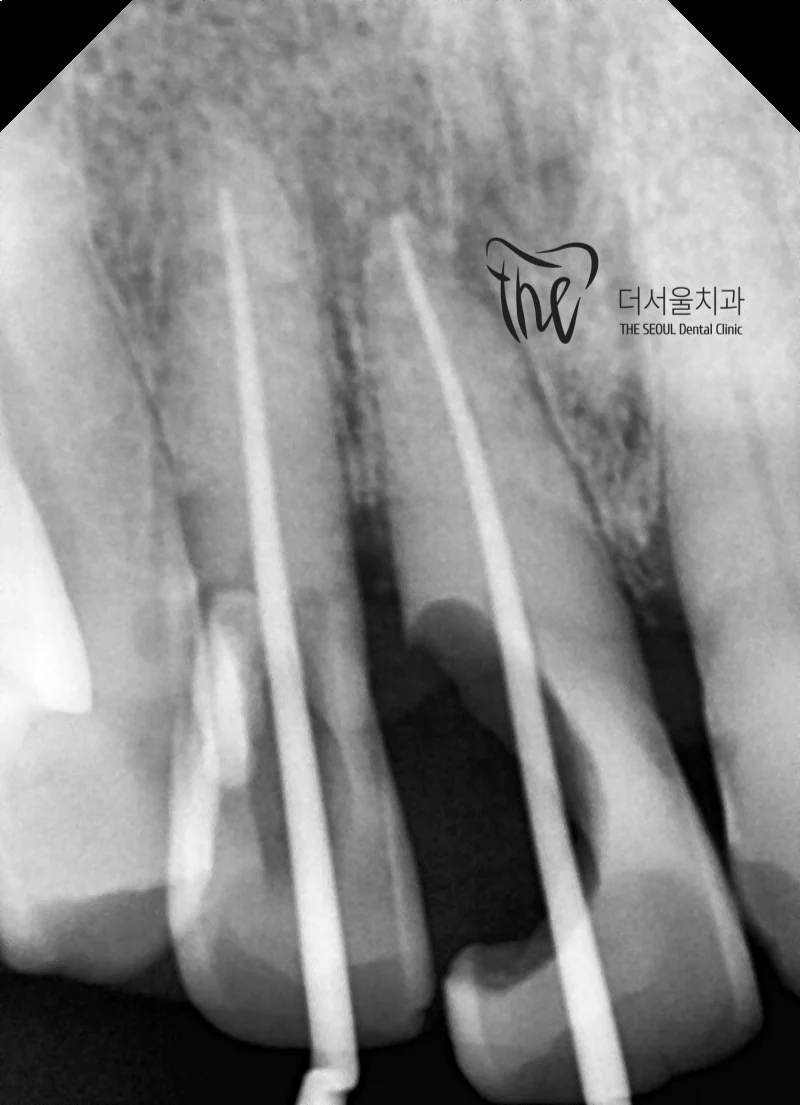
X-ray of the sealed root canals

Published with the patient’s consent. Photos and X-rays are from the clinic’s records. Treatment plans and results differ for every patient; only an examination can show what is possible for you. Root canal treatment can cause tenderness for a few days, and a treated tooth can still fracture without a crown.
Root canal treatment

Why a crown matters after root canal treatment: saving a fractured canine

Treated by Dr. Hyeonjoon Park

BeforeBefore: Why a crown matters after root canal treatment: saving a fractured canine
AfterAfter: Why a crown matters after root canal treatment: saving a fractured canine
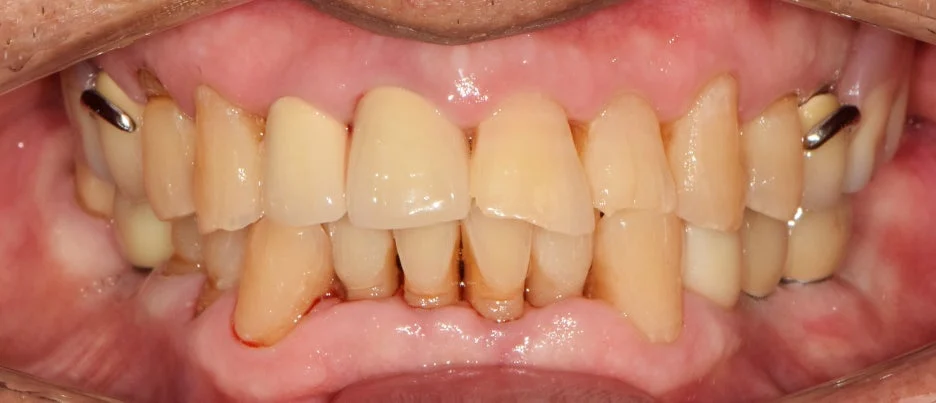
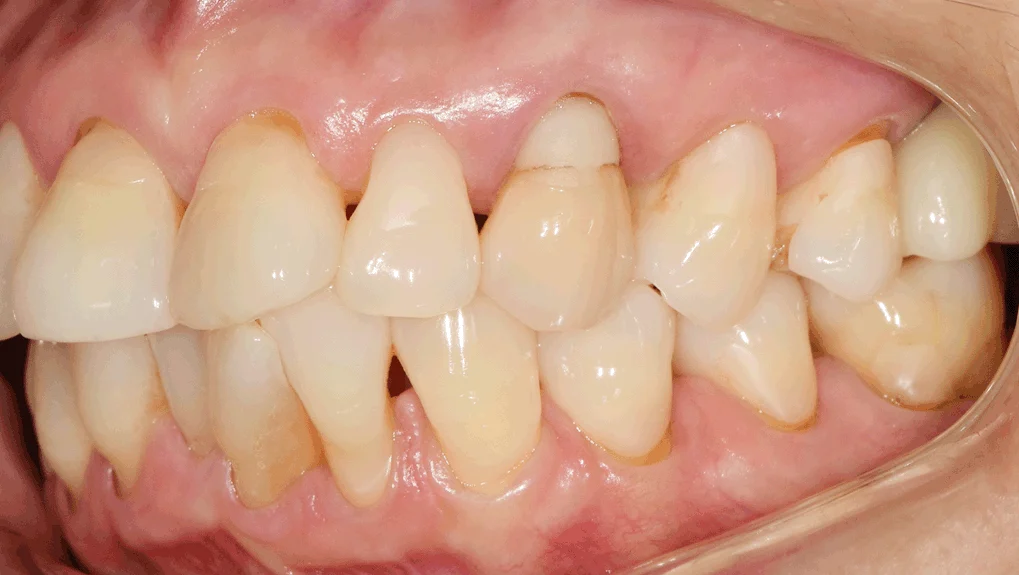
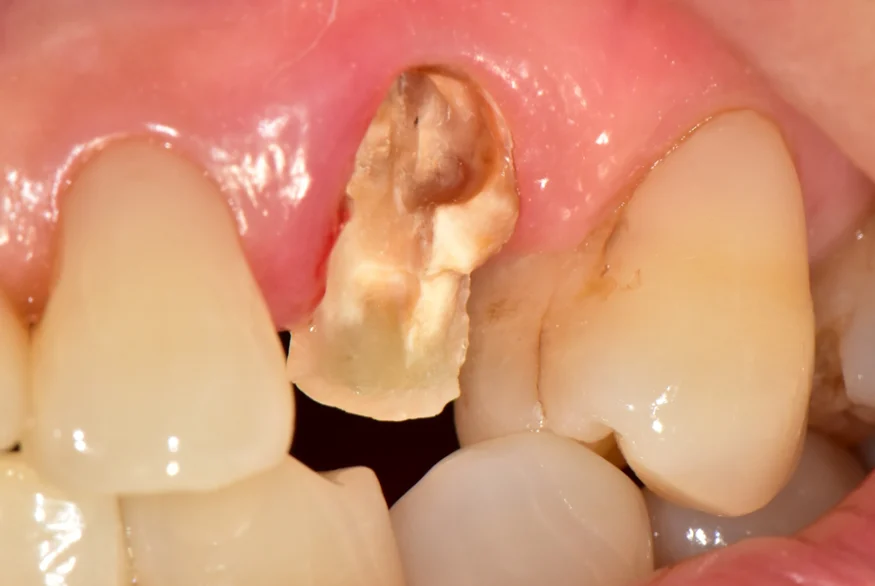
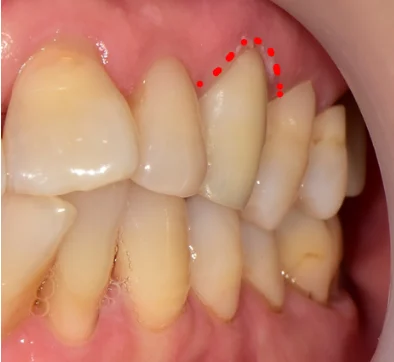
The fractured tooth and the final crown

Why the patient came in

An upper canine (#23) had a root canal treatment done at another clinic but no crown, plus a large glass-ionomer filling from earlier gum-line wear. A crown was recommended at a check-up, but the patient chose to wait. Later the cheek side of the tooth broke off, leaving the tooth hollow.

What was done

  1. The patient preferred to keep the tooth rather than have an implant.
  2. The root canal treatment was redone.
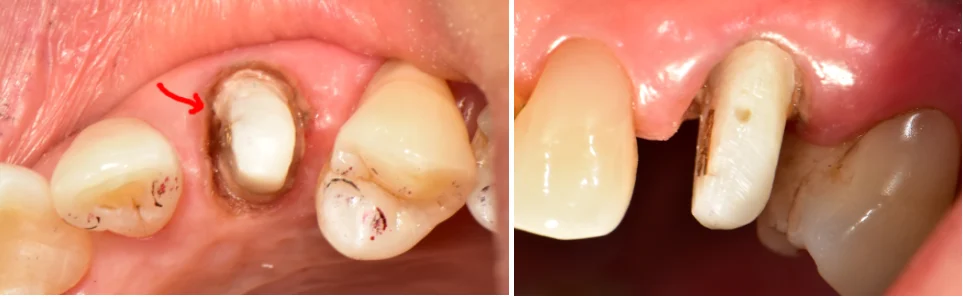
  3. Because very little tooth structure remained, a core build-up was made to give the crown enough support.
  4. A crown was then fitted.
Before the fracture: root-canal-treated canine without a crown
Core build-up before the crown

Published with the patient’s consent. Photos and X-rays are from the clinic’s records. Treatment plans and results differ for every patient; only an examination can show what is possible for you. A root-canal-treated tooth is more brittle, so a crown is usually advised. Retreatment can cause temporary tenderness.

See more before and after cases →

Your dentists

English-speaking dentists in Seongnam

The clinic was founded by two brothers trained at Seoul National University who direct it together. Three further dentists hold Ministry of Health and Welfare specialist certifications. Full credentials →

Dr. Hyun Sung Park, Clinic Director at The Seoul Dental Clinic

Dr. Hyun Sung Park

Clinic Director

  • Co-founder and joint clinic director
  • DDS, Seoul National University School of Dentistry
  • Master’s degree, SNU Graduate School of Dentistry
  • Former staff, Dept. of General Dentistry, SNU Dental Hospital
  • Microendodontics Programme, SNU
  • Course completion, UCLA, USA
  • Member, UPenn Endodontics Study Club, USA
  • Certified Invisalign Provider
  • Osstem Implant AIC Programme
  • Member, International Congress of Oral Implantologists (ICOI)
Dr. Yu Jin Kim, Dentist at The Seoul Dental Clinic

Dr. Yu Jin Kim

Dentist

  • Board-certified specialist, Advanced General Dentistry (Ministry of Health and Welfare)
  • Johns Hopkins University, USA
  • Master’s degree, SNU Graduate School of Dentistry
  • Former staff, Osaka University Dental Hospital, Japan
Dr. Min Ji Choi, Dentist at The Seoul Dental Clinic

Dr. Min Ji Choi

Dentist

  • Board-certified specialist, Conservative Dentistry
  • Board-certified specialist, Advanced General Dentistry
  • Internship and residency, Jeonbuk National University Dental Hospital
  • Master’s degree in Conservative Dentistry, Jeonbuk National University
Dr. Jin Young Choi, Dentist at The Seoul Dental Clinic

Dr. Jin Young Choi

Dentist

  • Board-certified specialist, Advanced General Dentistry
  • Clinical training, Faculty of Dentistry, University of British Columbia, Canada
  • Master’s degree, Kyungpook National University Graduate School of Dentistry
  • BA in English Language and Literature, Korea University
Dr. Hyeonjoon Park, Clinic Director at The Seoul Dental Clinic

Dr. Hyeonjoon Park

Clinic Director

  • Co-founder and joint clinic director
  • DDS, Seoul National University School of Dentistry
  • Master’s degree, SNU Graduate School of Dentistry
  • Former staff, Dept. of General Dentistry, SNU Dental Hospital
  • Affiliate Associate Fellow, American Academy of Implant Dentistry (AAID)
  • Certified Invisalign Provider; leads orthodontic treatment
  • Course completion, UCLA, USA
  • Member, UPenn Endodontics Study Club, USA
  • Member, International Congress of Oral Implantologists (ICOI)
  • Member, Seoul Prime Orthodontic Study Club

Root Canal: frequently asked questions

How much does a root canal cost?

The root canal fee is not published, so it is quoted after examination. Ask for a written quote that includes the crown.

Will I need a crown afterward?

Often yes, especially on back teeth. Zirconia crowns are listed at ₩450,000 (back tooth) or ₩550,000 (front tooth), and a core build-up or post at ₩100,000.

Does a root canal hurt?

It is done under local anesthesia, so you should be numb during treatment. Some tenderness afterward is common, and your dentist will explain what to expect.

Can I choose extraction instead?

Yes, you can discuss it. Your dentist will explain what replacing the tooth involves, since that is a separate cost.

How long does it take?

The number of visits varies by tooth and infection. Ask for an outline at your examination.

Can I have sedation?

Conscious sedation is available as a separate option: ₩300,000 for general sedation or ₩400,000 with an anesthesiologist.

What if the pain comes back?

Call +82-31-757-1525 and describe the symptoms. Do not wait if you have swelling or fever.

Is English support available?

Yes. The clinic states that English-language consultation is available.

Tooth Pain? Get It Checked

Call +82-31-757-1525 and describe your symptoms. We will explain your options in English.

Visit

Visit us: Taepyeong Station Exit 5, Seongnam

2–3F, 1225 Seongnam-daero, Sujeong-gu, Seongnam-si, Gyeonggi-do (Taepyeong Station Exit 5)

Monday – Wednesday09:30 – 20:30
Thursday09:30 – 19:00
Friday09:30 – 18:30
Saturday09:30 – 13:00
SundayClosed
Public holidaysOpen
Lunch breakNone — continuous hours

Parking garage in the building; parking benefits for patients receiving treatment.

Directions from Taepyeong Station Exit 5 → · Naver Map

Entrance sign of The Seoul Dental Clinic