Cosmetic Bonding near Taepyeong Station, Seongnam
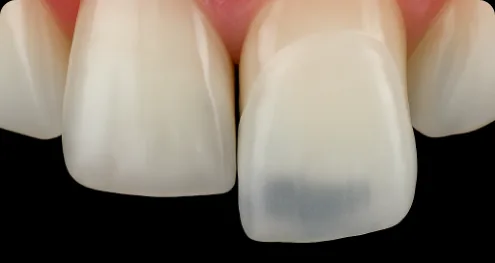
Cosmetic bonding uses tooth-coloured resin to repair chips, narrow small gaps and cover some stains.
Ask about Cosmetic Bonding
Tap what fits — your message is prepared for you. Nothing is sent until you press send.
Send opens your email app addressed to theseouldc@naver.com. Prefer chat? KakaoTalk channel · Instagram DM · or call +82-31-757-1525.
Message copied. Please call +82-31-757-1525 or email theseouldc@naver.com.
Cosmetic bonding uses tooth-coloured resin to repair chips, narrow small gaps and cover some stains. It is often completed in one visit if your case allows, and usually needs little or no drilling. Resin bonding to close a gap (diastema) is published at ₩250,000; for other repairs the figure is confirmed at your consultation.
What Cosmetic Bonding Is
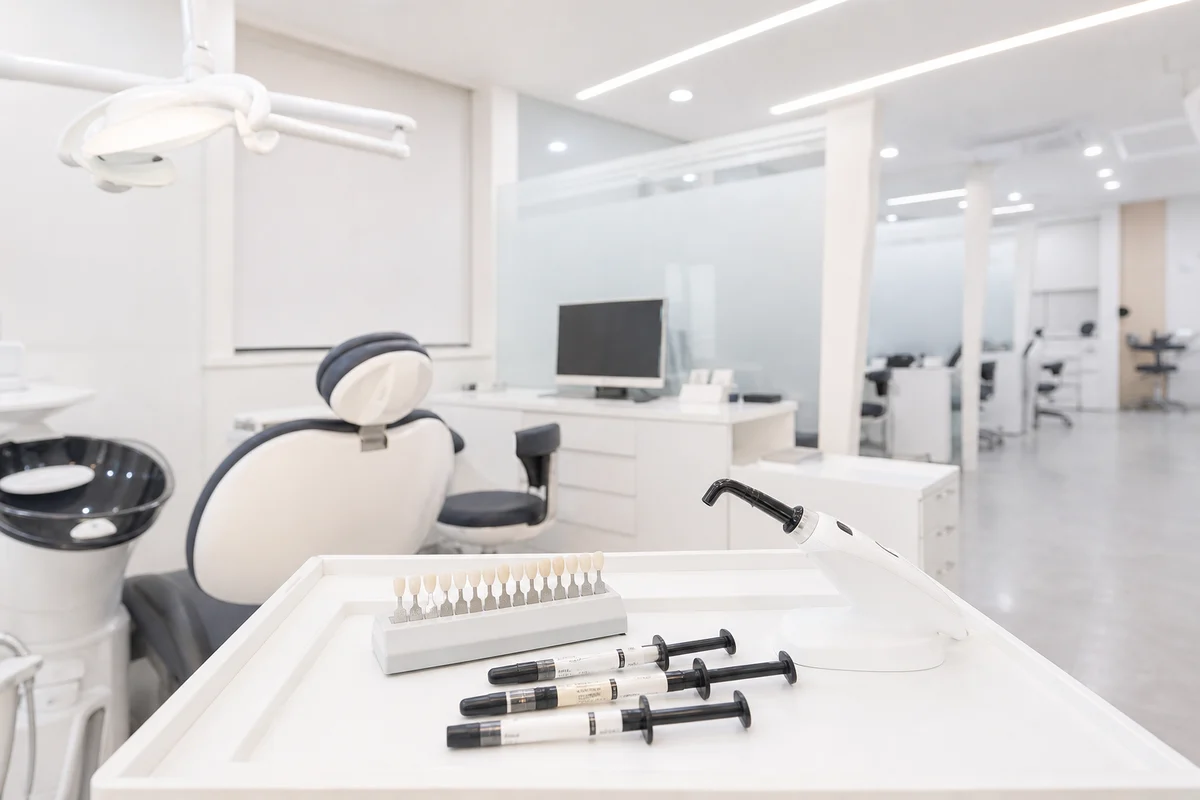
Bonding means shaping tooth-coloured resin onto the tooth, hardening it with a light and polishing it. The dentist chooses a shade that blends with the tooth beside it, so the repair does not stand out.
Because the resin is built directly on the tooth, there is no lab work in many cases. That is why bonding can be a one-visit treatment for suitable problems, which is helpful if you are busy or visiting Korea for a short time.
Resin is a versatile material. The dentist adds it in small layers, shapes it to match the surrounding tooth and checks how your teeth meet before finishing. The tooth structure underneath is mostly left alone.
The clinic publishes resin bonding for gap (diastema) closure at ₩250,000. For chips and other small repairs, the nearest published lines are resin fillings at ₩70K to ₩150K, which are a reference point rather than a quote.
- Resin is shaped directly on the tooth.
- A shade is chosen to match your natural tooth.
- Often one visit when the case allows.
- Little or no drilling is usual.
When Bonding Is a Good Fit
Bonding is best for small, localised changes. It suits patients who want a modest improvement without a bigger procedure.
It is less suitable for large changes, heavy staining across many teeth, or teeth that take a lot of biting force. In those cases veneers, crowns or whitening may be better, and your dentist will explain why.
If you grind or clench your teeth, mention it. Resin can chip under heavy load, and a night guard or another plan may be part of the conversation.
Think about what bothers you most. If it is a single sharp edge, a small chip from an accident, or a narrow space between two front teeth, bonding addresses it directly. If it is the overall colour of your smile, whitening is the more relevant treatment, and if several teeth differ in shape, a broader plan is likely to look more even.
A short consultation is a low-pressure way to find out which of these applies. Your dentist can show you in the mirror what would change and what would stay the same, and tell you honestly if bonding is not the right tool.
- Chips and small cracks in the edge
- Small gaps between teeth
- Uneven edges
- Some localised stains
Bonding for Taepyeong, Moran, Sujin and Bundang Patients
The clinic is in Sujin-dong, Sujeong-gu, Seongnam, by Taepyeong Station Exit 5. People who live or work around Taepyeong, Moran, Sujin, Sinheung or Gachon University can come in for a small cosmetic repair without a trip into central Seoul.
From Bundang, the Suin-Bundang Line stations of Taepyeong, Moran and Bokjeong appear on the local map. We do not quote travel times, so check your route in a map app.
Opening hours are Mon–Wed 09:30–20:30, Thu 09:30–19:00, Fri 09:30–18:30 and Sat 09:30–13:00, with no lunch break; the clinic is closed on Sundays and open on public holidays. Ask for English-language consultation when you book. Describe the tooth you would like to change, and bring a photo if that helps.
Bonding, Veneers or Whitening
Veneers cover more of the tooth and are a larger commitment. Whitening changes colour but cannot reshape a tooth. Your dentist can combine them where it makes sense.
Whitening is often done first, so the bonding shade can be matched to the final tooth colour. Ask your dentist about the order.
| Option | Best for | Published price (KRW) |
|---|---|---|
| Cosmetic bonding | Chips, small gaps, small changes | Gap (diastema) closure ₩250,000; resin fillings ₩70K to ₩150K as a reference |
| Laminate veneers | Bigger changes in shape or colour | ₩600,000 per tooth (VAT included) |
| Professional whitening | Overall tooth colour | ₩385,000 (VAT included) |
Prices are the published non-covered price list in Korean won. Veneer and whitening prices include VAT, and your final figure is confirmed at consultation.
What Happens During Bonding
The visit is usually straightforward. Your dentist explains each stage, and you can ask them to pause at any point.
Many people ask about discomfort. Because the work is often superficial, local anaesthetic is not always needed, but your dentist will discuss it with you and use it if the tooth or your preference calls for it.
Allow time for the bite check at the end. A repair that feels slightly high can cause discomfort later, so tell the dentist if the teeth do not meet the way they did before. Adjusting it at the chair is simple.
Shade choice
The dentist picks a resin shade to match your teeth.
Preparation
The surface is lightly prepared. Local anaesthetic is not always needed.
Shaping
Resin is applied, shaped and hardened with a light.
Polish
The surface is polished and the bite is checked.
Caring for Bonded Teeth
Resin can stain and chip more easily than natural enamel or ceramic. Avoid biting hard objects with bonded teeth, and keep up regular brushing and check-ups.
Resin may need polishing or repair over time. Your dentist will tell you what to expect for your case, and we do not promise a lifespan.
Coffee, tea, red wine and tobacco can darken resin over time. A professional clean at check-ups helps keep the surface smooth.
If you notice a rough edge, a change in colour or a small chip, do not wait for your next scheduled check-up. Small repairs are usually quicker than redoing a larger area that has been left.
- Do not bite nails, pens or ice.
- Brush gently twice a day.
- Attend regular check-ups.
- Tell the clinic if an edge feels rough or has chipped.
Questions to Ask at Your Consultation
These questions help you judge whether bonding is the right level of treatment.
- Is bonding enough for my tooth, or would veneers suit better?
- Should I whiten first?
- What will the fee be for my case?
- How should I care for the tooth?
- What happens if the resin chips?
English-speaking dentists in Seongnam
The clinic was founded by two brothers trained at Seoul National University who direct it together. Three further dentists hold Ministry of Health and Welfare specialist certifications. Full credentials →

Dr. Hyun Sung Park
Clinic Director
- Co-founder and joint clinic director
- DDS, Seoul National University School of Dentistry
- Master’s degree, SNU Graduate School of Dentistry
- Former staff, Dept. of General Dentistry, SNU Dental Hospital
- Microendodontics Programme, SNU
- Course completion, UCLA, USA
- Member, UPenn Endodontics Study Club, USA
- Certified Invisalign Provider
- Osstem Implant AIC Programme
- Member, International Congress of Oral Implantologists (ICOI)

Dr. Jin Young Choi
Dentist
- Board-certified specialist, Advanced General Dentistry
- Clinical training, Faculty of Dentistry, University of British Columbia, Canada
- Master’s degree, Kyungpook National University Graduate School of Dentistry
- BA in English Language and Literature, Korea University

Dr. Hyeonjoon Park
Clinic Director
- Co-founder and joint clinic director
- DDS, Seoul National University School of Dentistry
- Master’s degree, SNU Graduate School of Dentistry
- Former staff, Dept. of General Dentistry, SNU Dental Hospital
- Affiliate Associate Fellow, American Academy of Implant Dentistry (AAID)
- Certified Invisalign Provider; leads orthodontic treatment
- Course completion, UCLA, USA
- Member, UPenn Endodontics Study Club, USA
- Member, International Congress of Oral Implantologists (ICOI)
- Member, Seoul Prime Orthodontic Study Club

Dr. Yu Jin Kim
Dentist
- Board-certified specialist, Advanced General Dentistry (Ministry of Health and Welfare)
- Johns Hopkins University, USA
- Master’s degree, SNU Graduate School of Dentistry
- Former staff, Osaka University Dental Hospital, Japan

Dr. Min Ji Choi
Dentist
- Board-certified specialist, Conservative Dentistry
- Board-certified specialist, Advanced General Dentistry
- Internship and residency, Jeonbuk National University Dental Hospital
- Master’s degree in Conservative Dentistry, Jeonbuk National University
Cosmetic Bonding: frequently asked questions
Does bonding hurt?
It often needs little or no drilling. Tell your dentist if you are worried and they will explain your options.
How long does bonding last?
It depends on the tooth, your bite and your habits. Your dentist can give a realistic expectation.
Is bonding cheaper than veneers?
Veneers are listed at ₩600,000 per tooth, VAT included. Resin bonding for gap closure is listed at ₩250,000, and other bonding is confirmed at consultation.
Can bonding whiten teeth?
Not as a whole-mouth treatment. Professional whitening is listed at ₩385,000, VAT included.
Can bonding close a gap?
It can narrow a small gap in suitable cases. Larger gaps may need aligners or veneers.
Can bonded teeth stain?
Resin can stain over time. Good cleaning and regular check-ups help.
Can a chipped bonded tooth be repaired?
Often, yes. Resin can usually be repaired or polished; ask the clinic.
Is English consultation available?
Yes. The clinic states that English-language consultation is available.
Related treatments and guides
Ask about bonding
Describe the tooth you want to improve and we will tell you in English whether bonding is a fit.
Visit us: Taepyeong Station Exit 5, Seongnam
2–3F, 1225 Seongnam-daero, Sujeong-gu, Seongnam-si, Gyeonggi-do (Taepyeong Station Exit 5)
| Monday – Wednesday | 09:30 – 20:30 |
|---|---|
| Thursday | 09:30 – 19:00 |
| Friday | 09:30 – 18:30 |
| Saturday | 09:30 – 13:00 |
| Sunday | Closed |
| Public holidays | Open |
| Lunch break | None — continuous hours |
Parking garage in the building; parking benefits for patients receiving treatment.