
After Dental Treatment: Normal Healing vs Warning Signs
Published by The Seoul Dental Clinic · Meet the dentists

Mild soreness, slight swelling and tenderness that improve each day are usually part of healing. Pain or swelling that grows, bleeding that will not stop, fever, or a bad taste that persists are reasons to contact your dentist. When in doubt, call.
The basic rule
After most dental procedures, the discomfort should slowly get better. The trend matters more than any single moment. A sore day followed by a slightly better day is reassuring. A sore day followed by a worse one deserves a call.
This page is general information. It cannot diagnose you, and your dentist's instructions for your own procedure come first.
Different procedures have different normal patterns. A deep filling may cause sensitivity for a while, while surgery can bring swelling and bruising. That is why the instruction sheet from your own dentist matters more than any general list. If you did not receive one, ask for it, in English, and keep it somewhere easy to find. Trust your instincts too: if something feels wrong, a short call is better than days of worry.
Normal healing or warning sign?
| What you notice | Usually part of healing | Contact your dentist if |
|---|---|---|
| Pain | Soreness that eases over days, helped by the advice you were given | Pain that increases, throbs constantly, or keeps you awake |
| Swelling | Mild puffiness that peaks early and then settles | Swelling that spreads or keeps growing |
| Bleeding | Light oozing or pink saliva early on | Steady bleeding that does not slow with firm pressure |
| Taste or smell | Slight metallic taste early on | A persistent foul taste, pus or bad smell |
| Bite | A new tooth feeling slightly unfamiliar | A high spot that stops you biting comfortably |
| Temperature | Feeling tired the first day | Fever or chills |

Signs that need prompt attention
Contact the clinic or an urgent service without delay if you notice any of the following.
- Swelling that makes it hard to swallow or breathe.
- Fever together with increasing pain or swelling.
- Bleeding that continues despite firm, steady pressure.
- A loose crown, implant part or filling that you cannot manage.
- Numbness that does not wear off as expected.
If breathing or swallowing is affected, go to an emergency department immediately.
What you can do while you wait
While you arrange to speak to a dentist, keep the area clean as you were instructed and avoid touching it. Eat soft food and do not chew on the treated side.
Take only the medicine your dentist or pharmacist has advised, and mention any other medicine you use. Write down when the problem began and take a clear photo if the area is visible. This helps your dentist assess it.
How to contact the clinic
The Seoul Dental Clinic is by Taepyeong Station, Exit 5, in Sujin-dong, Sujeong-gu, Seongnam, and can be reached on +82-31-757-1525. The clinic states that English-language support is available. It is open Monday to Saturday (Saturday until 13:00) and closed on Sundays; call before you travel so the team expects you.
If you have already flown home, message the clinic with details and photos, and see a local dentist for anything urgent. Emergency visit prices are not published; they are quoted after examination.
Prevention starts at the appointment
Ask your dentist before you leave what is normal for your procedure, what is not, and who to contact. Ask for the instructions in writing, in English, so you can read them again when you are tired or in pain.
Frequently asked questions
How long should soreness last?
It depends on the procedure. It should steadily ease; if it does not, contact your dentist.
Is a little bleeding normal?
Light oozing early on is common. Bleeding that does not slow with firm pressure needs attention.
Can I wait until my next appointment?
For mild, improving symptoms, usually yes. For worsening symptoms, call instead of waiting.
Do I pay for an emergency visit?
The price for an emergency visit is not published. It is quoted after examination.
English-speaking dentists in Seongnam
The clinic was founded by two brothers trained at Seoul National University who direct it together. Three further dentists hold Ministry of Health and Welfare specialist certifications. Full credentials →

Dr. Hyun Sung Park
Clinic Director
- Co-founder and joint clinic director
- DDS, Seoul National University School of Dentistry
- Master’s degree, SNU Graduate School of Dentistry
- Former staff, Dept. of General Dentistry, SNU Dental Hospital
- Microendodontics Programme, SNU
- Course completion, UCLA, USA
- Member, UPenn Endodontics Study Club, USA
- Certified Invisalign Provider
- Osstem Implant AIC Programme
- Member, International Congress of Oral Implantologists (ICOI)

Dr. Hyeonjoon Park
Clinic Director
- Co-founder and joint clinic director
- DDS, Seoul National University School of Dentistry
- Master’s degree, SNU Graduate School of Dentistry
- Former staff, Dept. of General Dentistry, SNU Dental Hospital
- Affiliate Associate Fellow, American Academy of Implant Dentistry (AAID)
- Certified Invisalign Provider; leads orthodontic treatment
- Course completion, UCLA, USA
- Member, UPenn Endodontics Study Club, USA
- Member, International Congress of Oral Implantologists (ICOI)
- Member, Seoul Prime Orthodontic Study Club
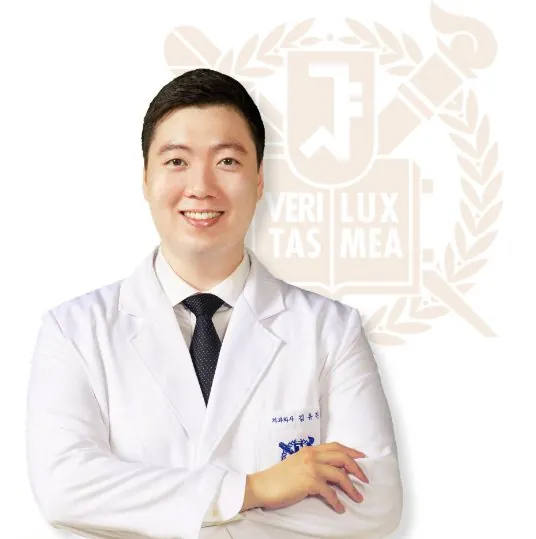
Dr. Yu Jin Kim
Dentist
- Board-certified specialist, Advanced General Dentistry (Ministry of Health and Welfare)
- Johns Hopkins University, USA
- Master’s degree, SNU Graduate School of Dentistry
- Former staff, Osaka University Dental Hospital, Japan

Dr. Min Ji Choi
Dentist
- Board-certified specialist, Conservative Dentistry
- Board-certified specialist, Advanced General Dentistry
- Internship and residency, Jeonbuk National University Dental Hospital
- Master’s degree in Conservative Dentistry, Jeonbuk National University

Dr. Jin Young Choi
Dentist
- Board-certified specialist, Advanced General Dentistry
- Clinical training, Faculty of Dentistry, University of British Columbia, Canada
- Master’s degree, Kyungpook National University Graduate School of Dentistry
- BA in English Language and Literature, Korea University
Unsure about a symptom?
Contact the clinic in Taepyeong with a short description and a photo. It is better to ask than to wait.