
Preventing Cavities and Gum Problems During Orthodontic Treatment
Published by The Seoul Dental Clinic · Meet the dentists
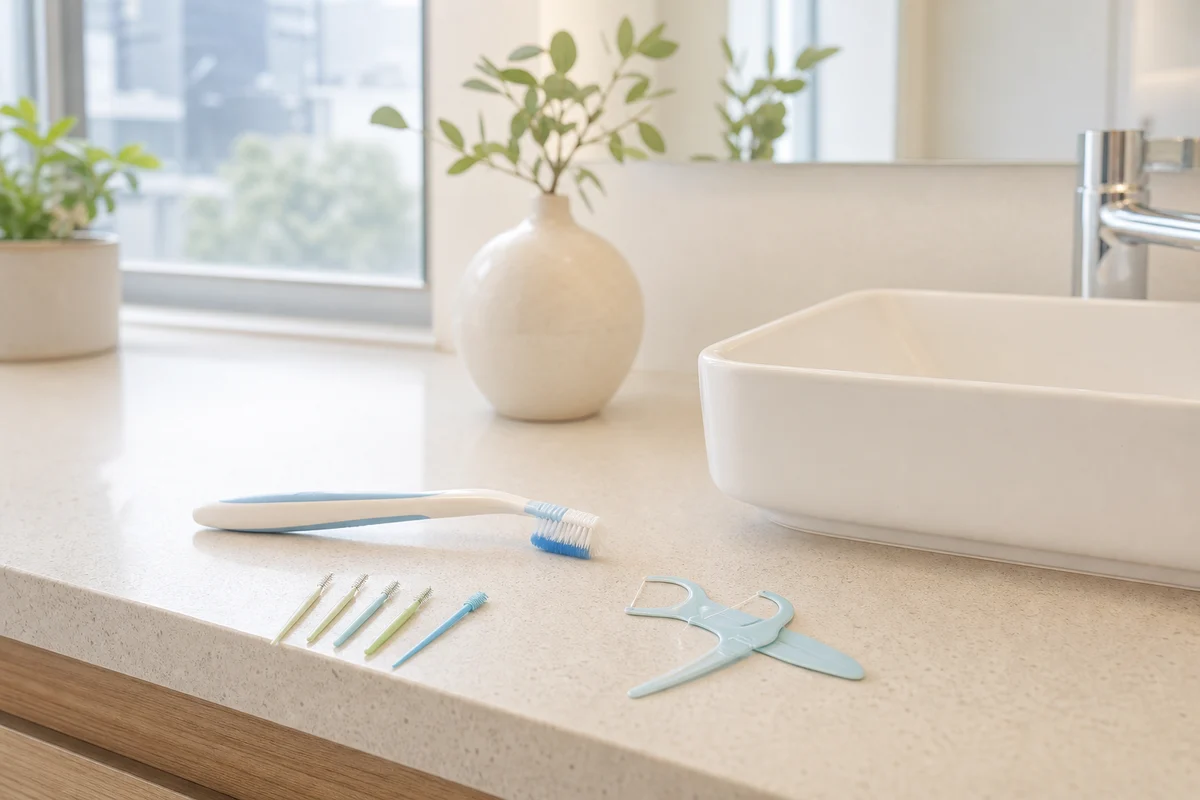
Braces and clear aligners do not cause cavities themselves, but they make it easier for plaque to collect where a toothbrush struggles to reach. Careful brushing around the appliance, cleaning between teeth, fluoride toothpaste and regular check-ups are what keep teeth and gums healthy until the braces come off. Problems found early are usually simpler to deal with.
Why orthodontic treatment raises the risk
Brackets and wires create small ledges and corners where food and plaque collect. A normal toothbrush reaches the flat surfaces well but tends to miss the areas around and under the brackets and below the wire. When plaque stays there, two things can happen.
The first is gum inflammation. Gums next to the appliance become red, swollen and prone to bleeding when you brush. The second is damage to the enamel. Acid produced by plaque bacteria slowly dissolves minerals from the tooth surface, leaving chalky white marks known as white spot lesions. If this continues, the marks can become cavities.
White spots are especially frustrating because they often become obvious only when the brackets are removed, just as you expected to see a finished smile. Prevention during treatment is far easier than fixing marks afterwards.
Clear aligners have their own risk
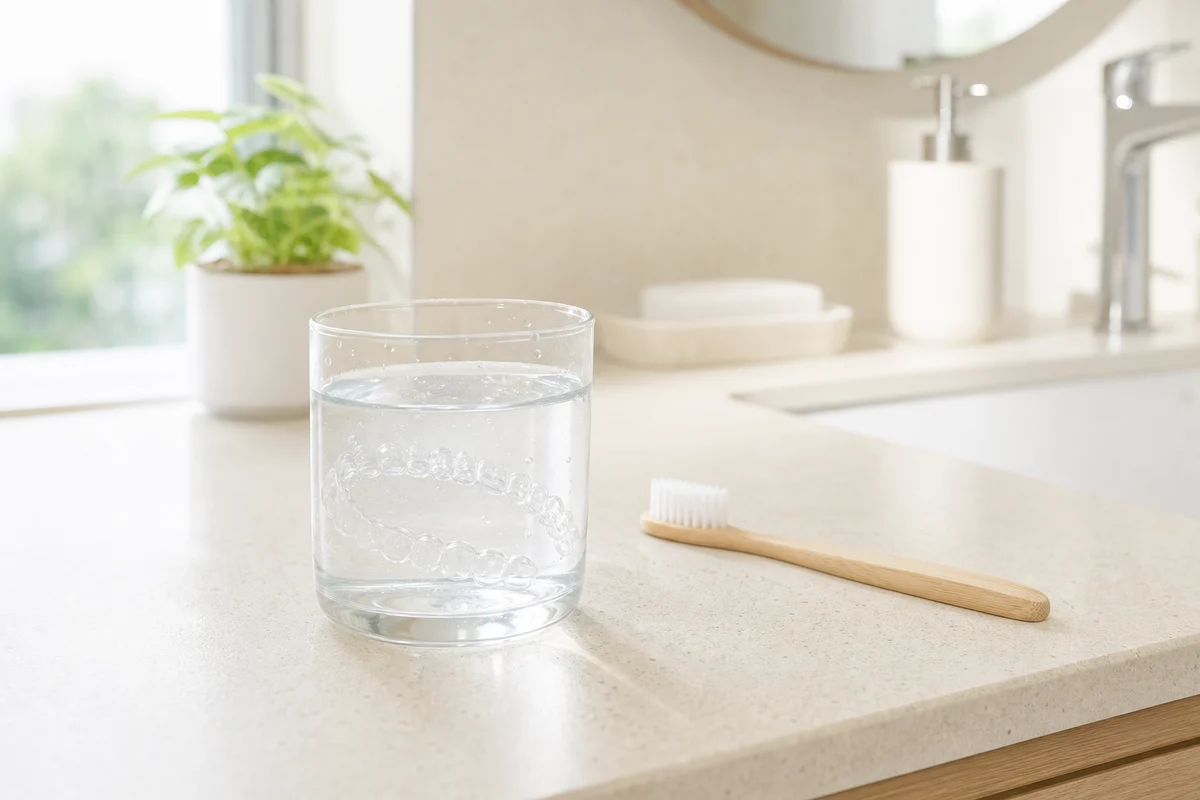
Aligners come out for eating and brushing, so cleaning is usually easier than with fixed braces. The risk comes from habits. If you put aligners back in without brushing, food and sugar are held against your teeth for hours, with saliva unable to wash them away.
The same applies to drinks. Sipping coffee with sugar, juice, soft drinks or sports drinks with aligners in keeps the liquid trapped against the teeth. Plain water is fine. For other drinks, take the aligners out, and rinse or brush before putting them back.
Clean the aligners themselves every day with cool or lukewarm water and a soft brush. Hot water can warp the plastic.
- Brush after eating before putting aligners back in
- Remove aligners for drinks other than water
- Clean aligners daily with a soft brush
- Store them in their case, never wrapped in a napkin
A daily routine that works
These steps suit most people with fixed braces. Your dentist may adjust them for your appliance.
Rinse after eating
Rinse with water to loosen food. After acidic food or drinks, waiting a short while before brushing is gentler on softened enamel.
Brush around every bracket
Angle the brush toward the gum to clean above the brackets, then toward the biting edge to clean below them. An orthodontic brush with a V-shaped bristle pattern helps.
Clean under the wire and between teeth
Use small interdental brushes under the wire and between teeth. Floss threaders or a water flosser help with the areas a brush cannot reach.
Use fluoride toothpaste
Fluoride helps the enamel resist acid. Spit out the excess rather than rinsing heavily, so some fluoride stays on the teeth.
Take extra care at night
Saliva flow drops during sleep, so the bedtime clean matters most. Your dentist may suggest a fluoride mouthwash.
Food and drink during treatment
Sticky foods such as caramel, chewy sweets and rice cakes cling to brackets and are hard to clean away. Hard foods such as ice, hard sweets and whole nuts can break a bracket off the tooth. Frequent soft drinks and acidic juices weaken enamel, especially when sipped through the day.
This does not mean a strict diet. Cut firm food into small pieces, chew with your back teeth, and keep sugary drinks to mealtimes. Drinking water between meals helps wash away food. If a bracket does come loose, keep it and contact the clinic. Bracket re-bonding is listed at ₩30,000.
Care needs by appliance type
A general guide. Your dentist sets your own check-up interval.
| Metal or ceramic braces | Self-ligating braces | Clear aligners | |
|---|---|---|---|
| Cleaning difficulty | Higher | Moderate | Lower, if habits are good |
| Interdental brushes | Essential | Essential | Recommended |
| Main risk | Plaque around brackets | Plaque around brackets | Wearing aligners over unbrushed teeth |
| Fluoride toothpaste | Strongly advised | Strongly advised | Advised |
Ceramic brackets can also pick up stains from coffee, tea and curry, so brushing after these helps.
Warning signs and check-ups
Tell your dentist at your next visit, or sooner if it is getting worse, if you notice any of the following. Small problems found early are usually simpler to manage.
Bleeding when you brush is a sign of gum inflammation. Keep cleaning gently and thoroughly rather than avoiding the area. Sensitivity to cold or sweet things can be an early sign that enamel is weakening. White or chalky patches near brackets suggest mineral loss and should be checked. Worsening bad breath often points to plaque trapped around the appliance.
Orthodontic adjustment visits focus on tooth movement, but they are also a chance to check gums and enamel. Many patients benefit from professional cleaning every three to six months during treatment, depending on how well plaque is controlled. Insurance-covered scaling follows national health insurance rules, and additional non-covered scaling is listed at ₩50,000.
If enamel looks weakened, your dentist may suggest a professionally applied fluoride treatment. Cavities found during orthodontic treatment can usually be treated without stopping the orthodontics.
At The Seoul Dental Clinic, orthodontic treatment is handled by Dr. Hyeonjoon Park, one of the clinic directors and a Certified Invisalign Provider. The clinic is by Taepyeong Station, Exit 5, in Seongnam, with English-language support. After the appliance comes off, wearing your retainer as instructed protects the result.
- Gums that bleed or look swollen
- New sensitivity to cold or sweet food
- White or chalky marks near brackets
- Bad breath that does not improve with cleaning
- A loose bracket or a wire that is poking
When the braces come off
The day the brackets are removed is a good moment for a thorough check. Your dentist cleans away the remaining adhesive, polishes the teeth and looks closely at the enamel that was hidden around each bracket. Any white marks or early cavities are easier to spot at this point.
Mild white marks sometimes become less noticeable over the following months as saliva and fluoride help the enamel recover some of its minerals. Deeper marks or cavities may need treatment, and your dentist will explain the options for your teeth rather than suggesting cosmetic work you do not need.
Your cleaning habits still matter afterwards. Fixed retainers bonded behind the front teeth collect plaque in much the same way as braces, so keep using interdental brushes or floss threaders there. Removable retainers need the same daily cleaning as aligners. Fixed retainers are listed at ₩100,000 to ₩200,000 and removable retainers at ₩150,000 to ₩200,000.
Frequently asked questions
Are cavities more likely during orthodontic treatment?
The risk rises because plaque collects around brackets and under wires. Thorough cleaning and fluoride toothpaste keep it low.
How often should I brush with braces?
Ideally after every meal, and always thoroughly before bed. Add interdental brushes for the areas under the wire.
Can clear aligners cause cavities?
They can if you wear them over unbrushed teeth or sip sugary drinks with them in. Brush before putting them back.
Why are my gums swollen with braces?
Usually because plaque is building up along the gum line. Better cleaning and a professional cleaning often help; tell your dentist if it persists.
Can white spots be fixed after braces?
Early marks can sometimes improve with fluoride and good care, but prevention is easier. Ask your dentist about options for your teeth.
English-speaking dentists in Seongnam
The clinic was founded by two brothers trained at Seoul National University who direct it together. Three further dentists hold Ministry of Health and Welfare specialist certifications. Full credentials →

Dr. Hyun Sung Park
Clinic Director
- Co-founder and joint clinic director
- DDS, Seoul National University School of Dentistry
- Master’s degree, SNU Graduate School of Dentistry
- Former staff, Dept. of General Dentistry, SNU Dental Hospital
- Microendodontics Programme, SNU
- Course completion, UCLA, USA
- Member, UPenn Endodontics Study Club, USA
- Certified Invisalign Provider
- Osstem Implant AIC Programme
- Member, International Congress of Oral Implantologists (ICOI)

Dr. Hyeonjoon Park
Clinic Director
- Co-founder and joint clinic director
- DDS, Seoul National University School of Dentistry
- Master’s degree, SNU Graduate School of Dentistry
- Former staff, Dept. of General Dentistry, SNU Dental Hospital
- Affiliate Associate Fellow, American Academy of Implant Dentistry (AAID)
- Certified Invisalign Provider; leads orthodontic treatment
- Course completion, UCLA, USA
- Member, UPenn Endodontics Study Club, USA
- Member, International Congress of Oral Implantologists (ICOI)
- Member, Seoul Prime Orthodontic Study Club

Dr. Yu Jin Kim
Dentist
- Board-certified specialist, Advanced General Dentistry (Ministry of Health and Welfare)
- Johns Hopkins University, USA
- Master’s degree, SNU Graduate School of Dentistry
- Former staff, Osaka University Dental Hospital, Japan

Dr. Min Ji Choi
Dentist
- Board-certified specialist, Conservative Dentistry
- Board-certified specialist, Advanced General Dentistry
- Internship and residency, Jeonbuk National University Dental Hospital
- Master’s degree in Conservative Dentistry, Jeonbuk National University

Dr. Jin Young Choi
Dentist
- Board-certified specialist, Advanced General Dentistry
- Clinical training, Faculty of Dentistry, University of British Columbia, Canada
- Master’s degree, Kyungpook National University Graduate School of Dentistry
- BA in English Language and Literature, Korea University
Questions about care with braces?
Book a check-up in Taepyeong, Seongnam, and ask for a cleaning routine that suits your appliance.