
Dental Implants with Diabetes, Osteoporosis or a Heart Condition
Published by The Seoul Dental Clinic · Meet the dentists

Having diabetes, osteoporosis or a heart condition does not on its own rule out a dental implant. What matters is how well the condition is controlled, which medicines you take and for how long, and how the surgery is planned around them. Your dentist decides after reviewing your health information, sometimes together with your own doctor.
Why general health matters for an implant
An implant is a small post placed in the jawbone. Over the following months the bone grows tightly around it, a process called osseointegration, and only then is the final crown attached. Anything that slows healing, affects the bone or changes how you bleed can affect that process.
Diabetes, osteoporosis and heart conditions are three of the most common reasons patients ask whether an implant is possible. Each one affects treatment in a different way, so there is no single rule that covers all three. A person with well-controlled diabetes may need very little change to the usual plan, while someone on certain bone medicines may need a careful review before anything is decided.
The aim of the pre-implant review is not to find a reason to say no. It is to understand your situation well enough to choose the timing, the scope of surgery and the precautions that suit you, or to explain honestly when another option, such as a bridge or a denture, is more sensible for now.
Diabetes: control matters more than the diagnosis
With diabetes, the key question is how well blood sugar has been controlled recently. Dentists usually look at your HbA1c, a blood test that reflects average blood sugar over roughly the past two to three months. A recent result tells far more than a single reading on the day.
When blood sugar is poorly controlled, wounds tend to heal more slowly and infections are more likely, and both can affect how the bone bonds to an implant. When control is stable, many people with diabetes are assessed in much the same way as anyone else, with extra attention to gum health and follow-up.
If your recent numbers are not where they should be, the usual answer is not never but not yet. Working with your own doctor to improve control and then being reassessed is a common and reasonable path. On the day of surgery, tell the team how you take insulin or tablets, especially if you are asked to fast for sedation, because missed meals can cause low blood sugar.
- Bring your most recent HbA1c result and the date of the test
- List every diabetes medicine, including insulin type and timing
- Mention any slow-healing wounds or recent infections
- Ask how gum health will be checked before and after surgery
Osteoporosis: the medicine history is the key detail
Osteoporosis itself means lower bone density, and your dentist will look closely at the jawbone on imaging. The more important detail is often the treatment. Some osteoporosis medicines, such as bisphosphonates and certain injections, slow down the normal turnover of bone. In a small number of people taking these drugs, the jawbone can heal poorly after surgery, a condition known as medication-related osteonecrosis of the jaw.
The level of concern depends on which medicine you take, whether it is a tablet or an injection, how long you have taken it and why it was prescribed. Higher doses used for cancer treatment are viewed very differently from standard osteoporosis doses. This is why your dentist will ask for exact names and dates rather than simply whether you have osteoporosis.
Do not stop an osteoporosis medicine on your own to make implant surgery possible. Any change should be discussed between your dentist and the doctor who prescribed it. Sometimes the plan stays the same with extra precautions, sometimes timing is adjusted, and sometimes a non-surgical option is the better choice.
Heart conditions and blood thinners
For heart and blood vessel conditions, the main questions are blood pressure, bleeding and how your body handles the stress of a procedure. Your blood pressure is checked before treatment, and if it is very high on the day, surgery may be postponed.
Many patients take anticoagulants or antiplatelet medicines to prevent clots or strokes. In most cases these are not stopped for dental surgery, because stopping them suddenly can be more dangerous than managing bleeding locally with stitches and pressure. The final decision depends on the medicine and dose, and it is made together with the doctor who prescribed it.
A recent heart attack or stroke usually means elective surgery waits until your doctor agrees it is appropriate. Some heart conditions, such as artificial heart valves or a past heart infection, may need antibiotics before surgery. For people who become very anxious, conscious sedation may be discussed, because stress can raise blood pressure and pulse. Sedation is listed at ₩300,000 (general) and ₩400,000 (with an anesthesiologist), and whether it suits you is decided after the health review.
What is checked for each condition
The table summarises the usual focus of the review. It is general information, and your own checks depend on your history.
| Diabetes | Osteoporosis | Heart condition | |
|---|---|---|---|
| Main test or record | Recent HbA1c | Bone density result and medicine history | Blood pressure, heart history, ECG if available |
| Medicines to list | Tablets and insulin | Bisphosphonates, injections, duration | Blood thinners, antiplatelets, blood pressure medicines |
| Main concern | Slower healing, infection | Poor jawbone healing with some medicines | Bleeding and blood pressure changes |
| Input from your doctor | When control is unstable | Often helpful for injectable or long-term medicines | Usually helpful before surgery |
Bring copies of results if you have them. Records in English or another language are fine.
How the review usually goes
The order below is typical. Your dentist may combine steps or add others.
Health history
You go through your conditions, diagnoses, medicines and allergies with the dentist. Bring the medicine packets or a written list with generic names, especially if your prescriptions come from another country.
Examination and imaging
The dentist examines your gums and bite and takes imaging to see the bone. A 3D scan is often used for implant planning. Its fee is not published and is quoted after examination.
Results and doctor's input
Recent test results are reviewed. If needed, you are asked to bring a letter or opinion from your own doctor before a decision is made.
A plan you understand
Timing, scope of surgery and precautions are set out. Some people proceed as planned, some in stages, and some are advised to wait or choose another option.
Surgery and follow-up
On the day, your health is checked again before treatment. Afterwards you receive written aftercare instructions and a follow-up schedule.
What to bring to your consultation
The more complete your information, the faster your dentist can give you a clear answer. Phone photos of documents are fine. If your doctor is overseas, a short letter summarising your condition and medicines is very useful.
The Seoul Dental Clinic is by Taepyeong Station, Exit 5, in Sujin-dong, Sujeong-gu, Seongnam, and offers a free consultation before treatment with English-language support. Implant treatment there is provided by the clinic's dentists, including the clinic directors Dr. Hyun Sung Park and Dr. Hyeonjoon Park.
- A full list of medicines and supplements, with doses
- Recent blood test results, including HbA1c if you have diabetes
- Bone density results and the name and start date of any osteoporosis medicine
- A note from your doctor about heart conditions or blood thinners
- Any previous dental X-rays or scans
Frequently asked questions
Can I get an implant if I have diabetes?
Often yes, if your blood sugar is well controlled. Your dentist will usually ask for a recent HbA1c result and decide after examination.
Should I stop my blood thinner before implant surgery?
Not on your own. In many cases it is continued and bleeding is managed locally, but the decision is made with the doctor who prescribed it.
I take bisphosphonates. Is an implant impossible?
Not necessarily. The type, dose and duration of the medicine matter, so your dentist reviews your history, often with your prescribing doctor, before advising.
I was told elsewhere that I cannot have an implant. Can I ask again?
Yes. A second review with up-to-date results is reasonable, though the answer depends on your current health and bone.
What if my results are not good enough right now?
Treatment is often postponed rather than ruled out. Improving control and being reassessed later is a common path.
English-speaking dentists in Seongnam
The clinic was founded by two brothers trained at Seoul National University who direct it together. Three further dentists hold Ministry of Health and Welfare specialist certifications. Full credentials →

Dr. Hyun Sung Park
Clinic Director
- Co-founder and joint clinic director
- DDS, Seoul National University School of Dentistry
- Master’s degree, SNU Graduate School of Dentistry
- Former staff, Dept. of General Dentistry, SNU Dental Hospital
- Microendodontics Programme, SNU
- Course completion, UCLA, USA
- Member, UPenn Endodontics Study Club, USA
- Certified Invisalign Provider
- Osstem Implant AIC Programme
- Member, International Congress of Oral Implantologists (ICOI)

Dr. Hyeonjoon Park
Clinic Director
- Co-founder and joint clinic director
- DDS, Seoul National University School of Dentistry
- Master’s degree, SNU Graduate School of Dentistry
- Former staff, Dept. of General Dentistry, SNU Dental Hospital
- Affiliate Associate Fellow, American Academy of Implant Dentistry (AAID)
- Certified Invisalign Provider; leads orthodontic treatment
- Course completion, UCLA, USA
- Member, UPenn Endodontics Study Club, USA
- Member, International Congress of Oral Implantologists (ICOI)
- Member, Seoul Prime Orthodontic Study Club
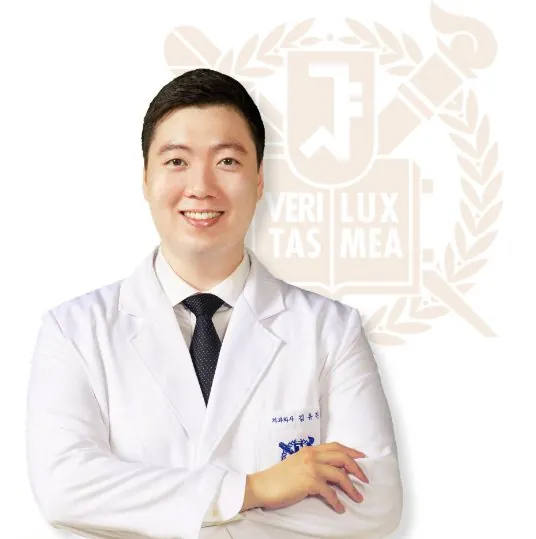
Dr. Yu Jin Kim
Dentist
- Board-certified specialist, Advanced General Dentistry (Ministry of Health and Welfare)
- Johns Hopkins University, USA
- Master’s degree, SNU Graduate School of Dentistry
- Former staff, Osaka University Dental Hospital, Japan

Dr. Min Ji Choi
Dentist
- Board-certified specialist, Conservative Dentistry
- Board-certified specialist, Advanced General Dentistry
- Internship and residency, Jeonbuk National University Dental Hospital
- Master’s degree in Conservative Dentistry, Jeonbuk National University

Dr. Jin Young Choi
Dentist
- Board-certified specialist, Advanced General Dentistry
- Clinical training, Faculty of Dentistry, University of British Columbia, Canada
- Master’s degree, Kyungpook National University Graduate School of Dentistry
- BA in English Language and Literature, Korea University
Ask whether an implant suits your health
Bring your medicine list and recent results to a consultation in Taepyeong, Seongnam, and talk through the options in English.