Implant dentures · Taepyeong, Seongnam

Implant-Supported Dentures near Taepyeong Station, Seongnam

An implant-supported denture, also called an overdenture, uses dental implants and magnetic attachments to help hold a denture in place.

₩500KMagnetic attachment
₩150K–1.8MDentures range
₩350K+MegaGen implant + PFM crown
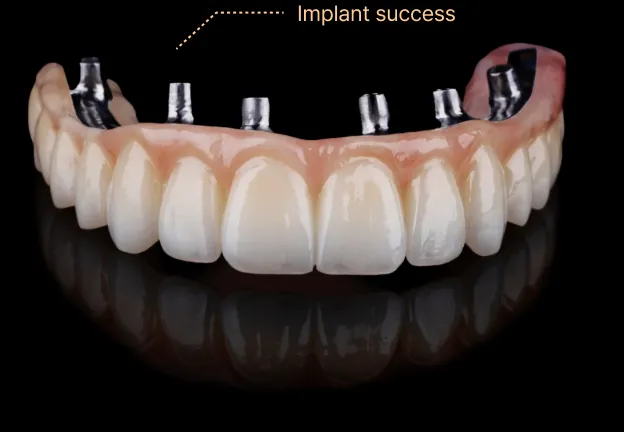
Full-arch implant bridge model on implant abutments

Ask about Implant Dentures

Tap what fits — your message is prepared for you. Nothing is sent until you press send.

Send opens your email app addressed to theseouldc@naver.com. Prefer chat? KakaoTalk channel · Instagram DM · or call +82-31-757-1525.

The short answer

An implant-supported denture, also called an overdenture, uses dental implants and magnetic attachments to help hold a denture in place. The published price for the magnetic attachment is ₩500,000. The implants and the denture itself (complete denture ₩1,800,000 per arch) are priced separately and confirmed after examination.

Why Dentures Become Loose

A conventional denture rests on the gums and relies on suction and a close fit to stay put. That fit is never fixed. After teeth are lost, the jawbone and gums change shape gradually, and a denture that fitted well at first can begin to move when you talk or chew.

Lower dentures are often the hardest to keep stable, because the tongue takes up space and there is less gum surface to grip. Many people end up using adhesive, avoiding certain foods or simply eating less in company.

Looseness can also come from wear on the denture teeth, from weight change, or from a denture that is simply old. A reline or a new denture is sometimes enough. When it is not, adding implants gives the denture something firm to attach to.

Your dentist can tell which of these applies by looking at the denture, your gums and imaging. It is better to know the cause than to guess.

  • Gums and bone change shape after tooth loss
  • Lower dentures often move more than upper ones
  • Worn or old dentures lose their fit
  • Adhesive is a stopgap, not a fix
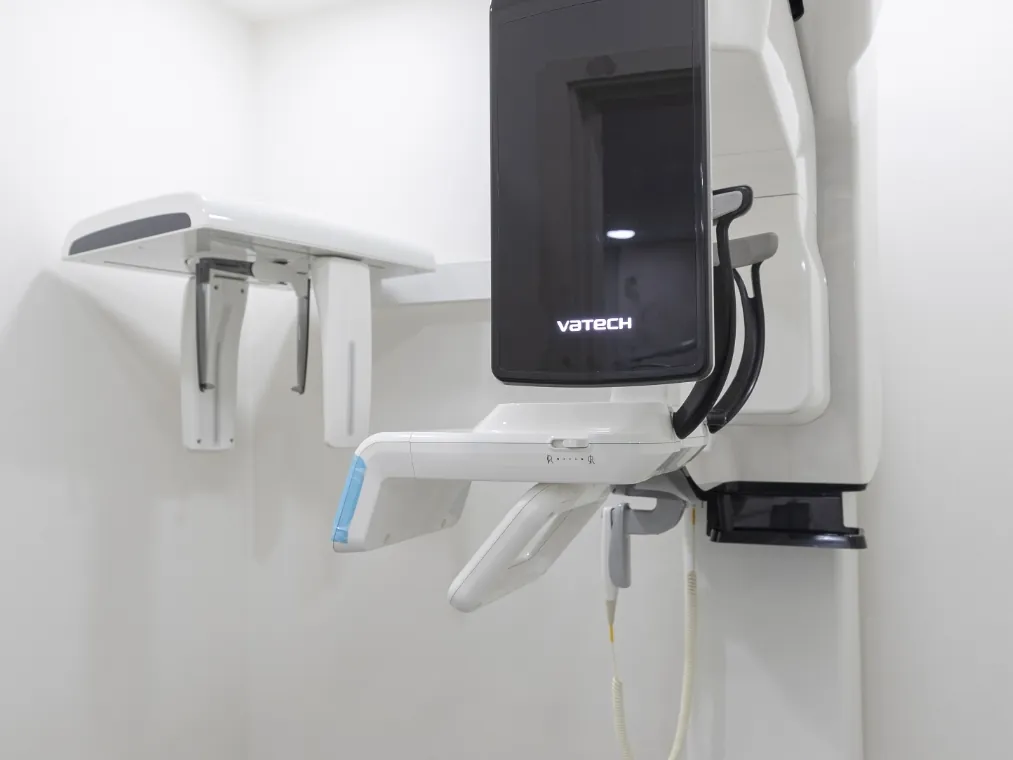
Panoramic X-ray and CT unit at the clinic

Implant Dentures for Taepyeong, Moran, Sujin and Bundang Residents

The clinic is by Taepyeong Station Exit 5 in Sujin-dong, Sujeong-gu, Seongnam. Patients from Taepyeong, Moran, Sujin, Sinheung, Gachon, Wirye and the Bundang side can reach us without going into central Seoul.

This kind of treatment involves several visits: examination, implant placement, healing checks and then fitting the attachments to your denture. Being near a station helps, particularly for older patients who prefer to travel by subway.

Moran and Bokjeong appear on both lines on the local map, and Sujin and Sinheung are on the Line 8 side. We do not quote travel times, so check your route in a map app. There is a parking garage in the building, with parking benefits for treated patients.

You can discuss the plan in English, and the clinic states that English-language consultation is available.

How Magnetic Attachments Work

A magnetic overdenture has two parts that meet. A small metal keeper or magnet part sits on the implant in your jaw, and a matching magnet is built into the underside of the denture. When you seat the denture, the two parts draw together and hold it in place.

Because the attachment is magnetic rather than a mechanical clip, the denture is simple to place and remove. Many people find this easier to manage than a clip that needs to be pressed in at an angle. The published price for the magnetic attachment is ₩500,000.

The denture still rests on the gums, and the magnets add retention. It is not the same as a fixed bridge that you never remove. You take the denture out at night or as advised, and clean both the denture and the attachments.

Whether magnets suit you depends on how many implants are placed, where they sit and what your bite is like. Your dentist explains the alternatives if a different attachment is more appropriate.

Magnets are not suitable for everyone. Tell your dentist about any implanted medical device, such as a pacemaker.

Options and Prices

The total depends on how many implants you need, the brand, and whether a new denture is made. We do not state a fixed number of implants in advance; your dentist decides after imaging.

If you only want to stabilize a denture you already own, ask whether it can be adapted. This is judged case by case.

ItemPublished priceWhat to know
Magnetic attachment (overdenture)₩500,000Attachment part only
DenturesComplete ₩1,800,000 per arch; partial ₩1,400,000Reline ₩150,000; repair ₩200,000; immediate ₩300,000 per arch
MegaGen implant + PFM crown₩350,000PFM crown included
DIO implant₩550,000Implant only; crown separate if needed
Osstem implant₩650,000 standard; ₩800,000 premiumImplant only; crown separate if needed
Full-arch implants₩3.5M to ₩9.5M per archAlternative to a removable denture

Prices are the published non-covered price list in KRW. Implant crowns are separate items (PFM ₩350,000, zirconia ₩450,000). Confirm at consultation.

Care and Maintenance

Daily cleaning matters as much as the treatment itself. Remove the denture, clean it with a soft brush and denture cleaner, and clean the attachment parts on the implants. Gums around implants should be kept clean to prevent inflammation.

Attachments can wear over time, and the fit of a denture changes as gums and bone adjust. Expect to return for check-ups so that parts can be adjusted or replaced when needed. We do not state a replacement timetable because it varies with use.

Keep the denture out of very hot water, and store it as your dentist advises. If you grind your teeth, tell the clinic, since this can affect both the denture and the implants.

Smoking and poorly controlled diabetes can affect healing around implants. Be open about your health so the plan is realistic.

  • Clean the denture and attachments every day
  • Brush gums and the implant area gently
  • Attend scheduled check-ups
  • Call early if the denture feels loose or a part is damaged

Overdenture FAQ

If you already wear a denture, you probably have questions about whether it can be kept, how long the work takes and what it costs. The answers below are general; your own plan is made after an examination.

The clinic does not promise a particular result. Comfort and stability depend on bone, gum health, the number of implants and how well the area is cleaned.

  • Ask for the whole plan in writing
  • Ask how many implants are proposed and why
  • Ask what is covered if an attachment needs replacing

Who This Suits

An overdenture is often considered by people who wear a full denture and want it more stable, or who find that a lower denture moves too much. It may also appeal if you do not wish to commit to a fixed full-arch solution.

If you want teeth that stay in all the time, a fixed full-arch option may be worth discussing, with its published range of ₩3.5M to ₩9.5M. Your dentist can compare both honestly, including the maintenance each one needs.

How Treatment Is Planned

Timings vary between patients, so your dentist advises on the schedule once the plan is set.

Examination and imaging

Your dentist checks your gums, bone and current denture and takes the images needed for a plan.

Choosing the approach

You discuss a removable overdenture against a fixed full-arch option, with prices side by side.

Implant placement

Implants are placed as planned, then given time to integrate. Ask whether guided placement is planned for your case.

Attachments and fitting

Magnetic parts are fitted to the implants and denture, and the bite is checked.

Clinical case

A case from the clinic

Full-arch implants

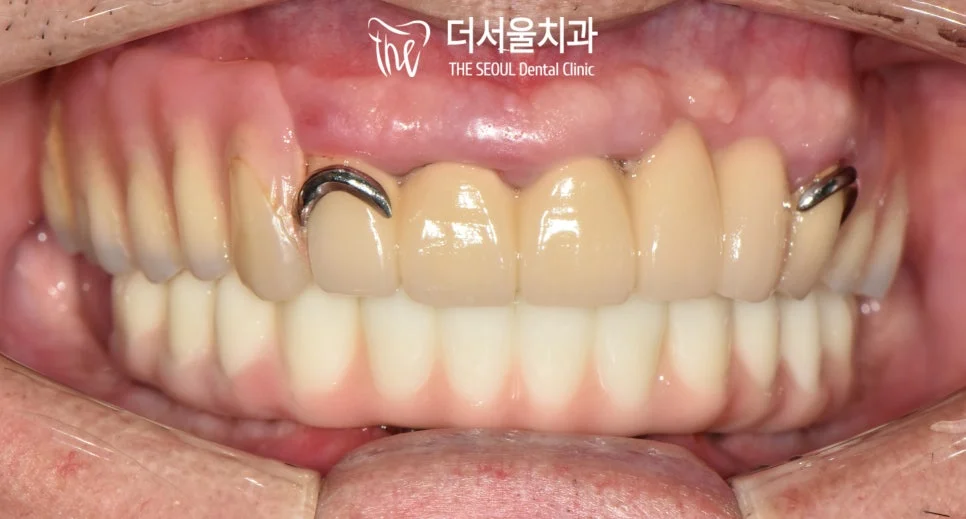
Full-arch implants after years of a loose lower denture

Treated by Dr. Hyeonjoon Park

BeforeBefore: Full-arch implants after years of a loose lower denture
AfterAfter: Full-arch implants after years of a loose lower denture
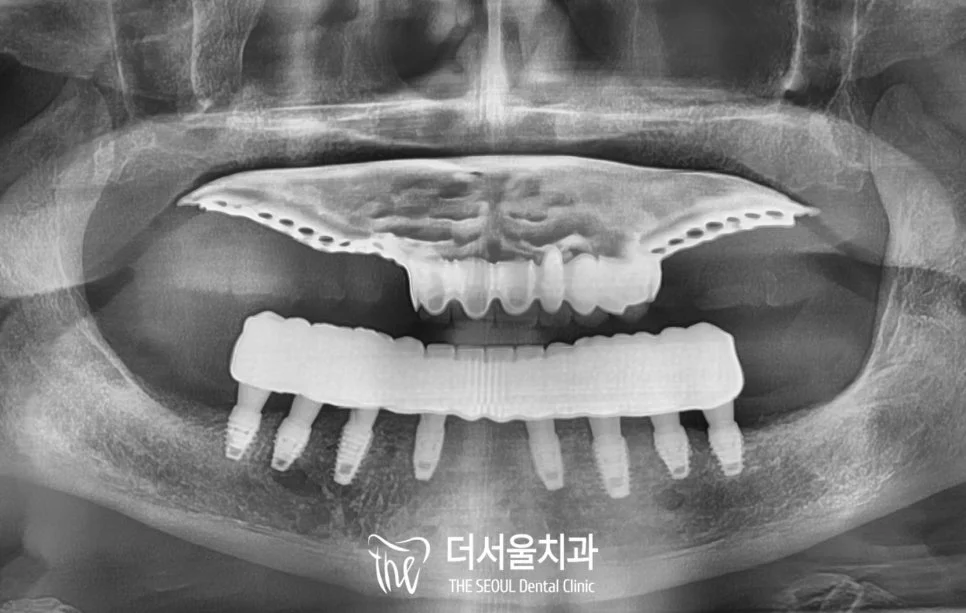
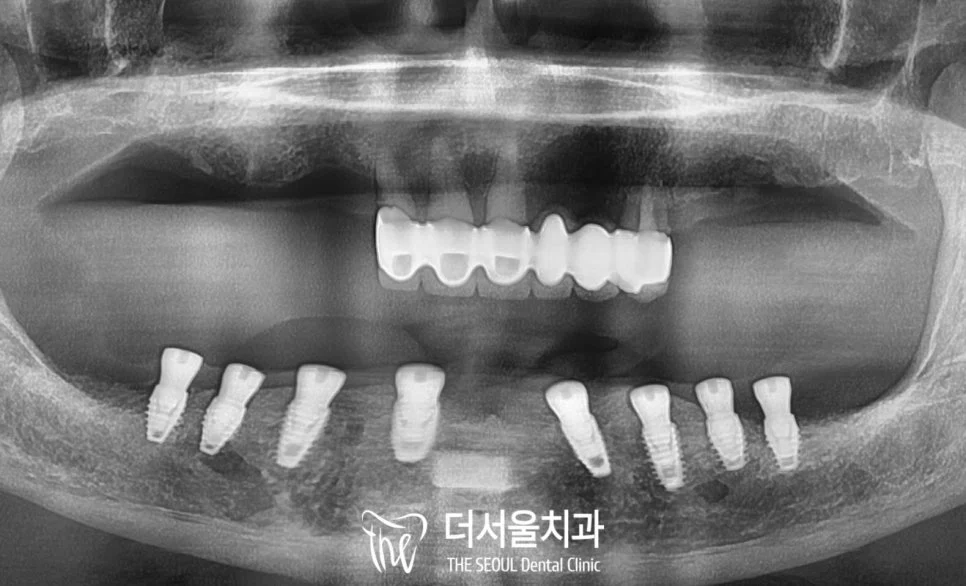
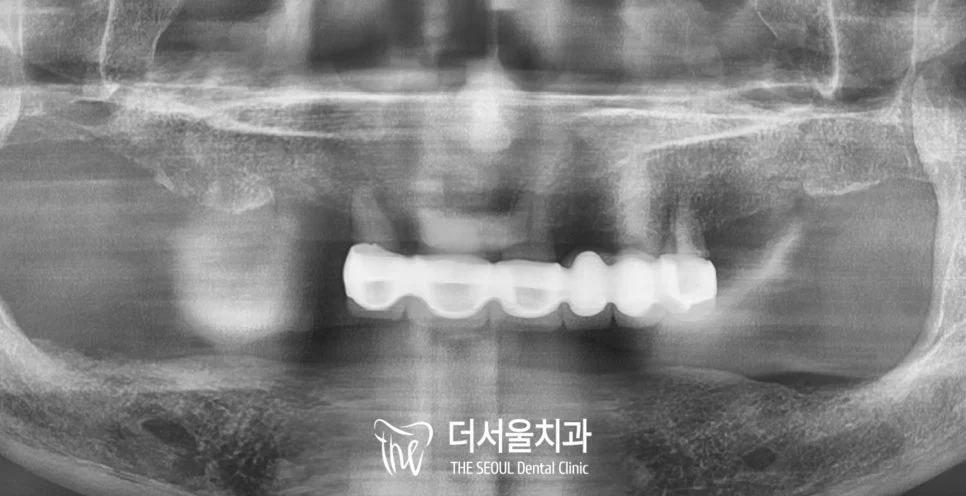
Panoramic X-rays before and after treatment
BeforeBefore: Full-arch implants after years of a loose lower denture
AfterAfter: Full-arch implants after years of a loose lower denture
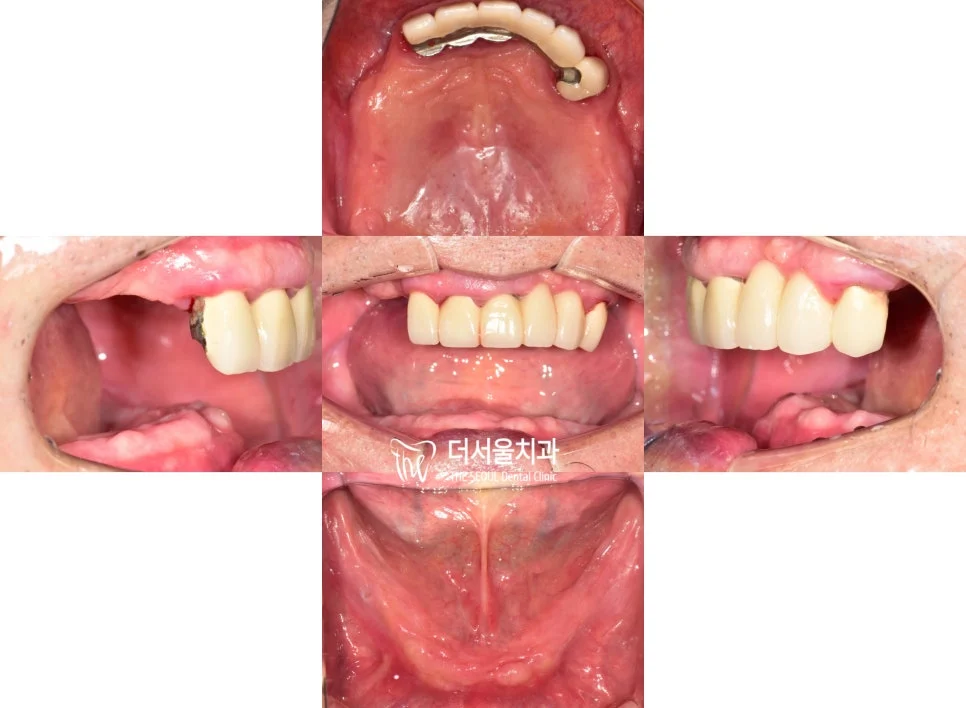
Intraoral photos before and after treatment

Why the patient came in

The patient had worn a lower denture for many years. It moved while eating and had to be removed and cleaned after every meal. The panoramic X-ray showed that long-term denture wear had left the lower jawbone low and thin.

What was done

  1. 3D CT and an intraoral scan were used to plan implant positions, angles and lengths on the computer before surgery.
  2. Eight implants were placed in the lower jaw, together with a bone graft.
  3. Fixed temporary teeth were connected to the implants the day after surgery.
  4. About three months later, custom abutments and the final full-arch prosthesis were fitted.
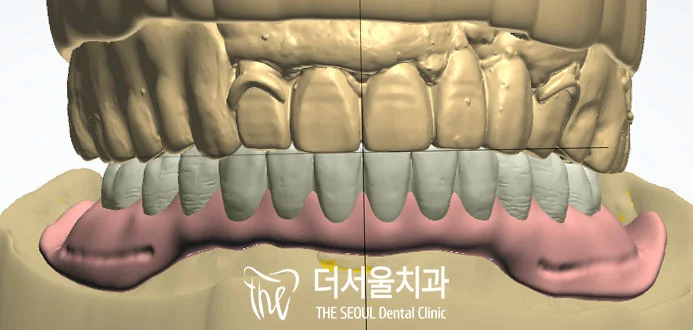
Digital design of the prosthesis from the scan data
X-ray after implant placement with temporary teeth

Published with the patient’s consent. Photos and X-rays are from the clinic’s records. Treatment plans and results differ for every patient; only an examination can show what is possible for you. Implant surgery can cause swelling, bruising or discomfort for some days, and implants need regular check-ups and careful cleaning to avoid peri-implantitis.
See more before and after cases →

Your dentists

English-speaking dentists in Seongnam

The clinic was founded by two brothers trained at Seoul National University who direct it together. Three further dentists hold Ministry of Health and Welfare specialist certifications. Full credentials →

Dr. Hyun Sung Park, Clinic Director at The Seoul Dental Clinic

Dr. Hyun Sung Park

Clinic Director

  • Co-founder and joint clinic director
  • DDS, Seoul National University School of Dentistry
  • Master’s degree, SNU Graduate School of Dentistry
  • Former staff, Dept. of General Dentistry, SNU Dental Hospital
  • Microendodontics Programme, SNU
  • Course completion, UCLA, USA
  • Member, UPenn Endodontics Study Club, USA
  • Certified Invisalign Provider
  • Osstem Implant AIC Programme
  • Member, International Congress of Oral Implantologists (ICOI)
Dr. Hyeonjoon Park, Clinic Director at The Seoul Dental Clinic

Dr. Hyeonjoon Park

Clinic Director

  • Co-founder and joint clinic director
  • DDS, Seoul National University School of Dentistry
  • Master’s degree, SNU Graduate School of Dentistry
  • Former staff, Dept. of General Dentistry, SNU Dental Hospital
  • Affiliate Associate Fellow, American Academy of Implant Dentistry (AAID)
  • Certified Invisalign Provider; leads orthodontic treatment
  • Course completion, UCLA, USA
  • Member, UPenn Endodontics Study Club, USA
  • Member, International Congress of Oral Implantologists (ICOI)
  • Member, Seoul Prime Orthodontic Study Club
Dr. Yu Jin Kim, Dentist at The Seoul Dental Clinic

Dr. Yu Jin Kim

Dentist

  • Board-certified specialist, Advanced General Dentistry (Ministry of Health and Welfare)
  • Johns Hopkins University, USA
  • Master’s degree, SNU Graduate School of Dentistry
  • Former staff, Osaka University Dental Hospital, Japan
Dr. Min Ji Choi, Dentist at The Seoul Dental Clinic

Dr. Min Ji Choi

Dentist

  • Board-certified specialist, Conservative Dentistry
  • Board-certified specialist, Advanced General Dentistry
  • Internship and residency, Jeonbuk National University Dental Hospital
  • Master’s degree in Conservative Dentistry, Jeonbuk National University
Dr. Jin Young Choi, Dentist at The Seoul Dental Clinic

Dr. Jin Young Choi

Dentist

  • Board-certified specialist, Advanced General Dentistry
  • Clinical training, Faculty of Dentistry, University of British Columbia, Canada
  • Master’s degree, Kyungpook National University Graduate School of Dentistry
  • BA in English Language and Literature, Korea University
Video

Video: our dentists explain

In Korean. On YouTube, turn on subtitles and choose Settings → Subtitles → Auto-translate → English.

Uncomfortable Dentures: Implant-Supported Alternatives Explained4:41 · The Seoul Dental Clinic on YouTube
What this video covers

The dentists explain why conventional dentures, which rest on the gums rather than being anchored like natural teeth, can move during eating and speaking, and why they may loosen over time as the gums and jawbone change. They compare two implant-based options: a removable implant-supported overdenture, which uses implants to improve retention, and a fixed full-arch implant prosthesis that the patient does not take out at home and that the dental team removes only for maintenance. They stress that suitability depends on bone condition, general health, bite, ability to keep the area clean, and the level of stability the patient expects. For anyone whose current denture is painful, they advise not forcing themselves to keep wearing it, keeping it clean, and having it checked or adjusted.

  • Conventional dentures sit on the gums and can shift, especially when chewing
  • Overdentures are removable; fixed implant prostheses stay in and need careful home care and regular checkups
  • Eligibility depends on jawbone, general health, bite, and hygiene, so an individual exam comes first

More videos on the clinic’s YouTube channel →

Implant Dentures: frequently asked questions

How much is an implant denture?

The magnetic attachment is ₩500,000. Implants and the denture are priced separately, and the total is confirmed after examination in a written quote.

Will my current denture work with implants?

Sometimes it can be adapted, depending on its condition and fit. Your dentist checks this at examination.

How many implants will I need?

It varies by case and by whether it is an upper or lower denture. Your dentist decides after imaging.

Do I take the denture out at night?

Usually you remove it for cleaning and rest, as your dentist advises. It is not a fixed bridge.

Is it painful?

Implant placement is done under local anesthesia, and you will be told what to expect afterward. Conscious sedation is available separately.

How long does treatment take?

The healing time varies, so we do not give a fixed schedule. Your dentist outlines the stages at consultation.

Can I choose the implant brand?

Yes, to the extent that it suits your case. Published implant prices start at ₩350,000 for MegaGen implant + PFM crown.

Can I get a fixed option instead?

Full-arch implants are listed at ₩3.5M to ₩9.5M per arch. Ask your dentist to compare it with an overdenture for your mouth.

Ask the clinic about implant dentures

Send us your question in English and we will reply with next steps. A free consultation is available for the English/international consultation as published; exact plans and fees are quoted after examination. Phone +82-31-757-1525.

Visit

Visit us: Taepyeong Station Exit 5, Seongnam

2–3F, 1225 Seongnam-daero, Sujeong-gu, Seongnam-si, Gyeonggi-do (Taepyeong Station Exit 5)

Monday – Wednesday09:30 – 20:30
Thursday09:30 – 19:00
Friday09:30 – 18:30
Saturday09:30 – 13:00
SundayClosed
Public holidaysOpen
Lunch breakNone — continuous hours

Parking garage in the building; parking benefits for patients receiving treatment.

Directions from Taepyeong Station Exit 5 → · Naver Map

Entrance sign of The Seoul Dental Clinic